





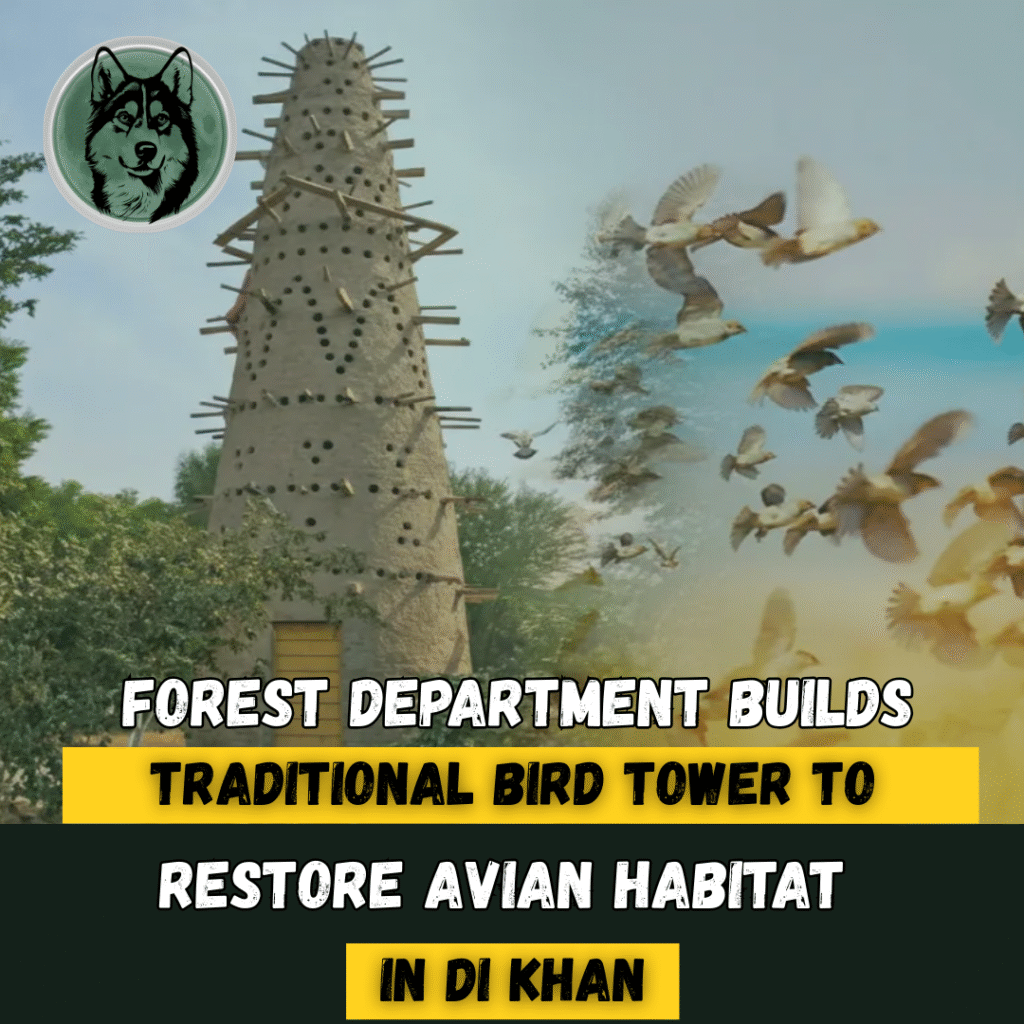
32-foot tower expected to attract birds from multiple regions
A Heritage-Inspired Conservation Effort
In a pioneering initiative for Dera Ismail Khan, the Forest Department has constructed the city’s first bird tower within the urban forest located near Qureshi Mor. The tower, built using traditional mud-and-wood techniques, aims to provide a safe nesting environment for local bird species struggling to survive amid increasing urban development and rapid loss of tree cover.
MNA Faisal Amin Gandapur, the visionary behind the project, explained that the structure was inspired by Iran’s centuries-old pigeon houses. These historic towers, especially prominent during the Safavid era, were originally created to collect pigeon droppings used as natural fertilizer—particularly for watermelon fields. Gandapur stated that if this pilot proves successful, similar towers may be introduced both within DI Khan and across other cities in Khyber-Pakhtunkhwa.
Built for the Birds, Backed by History
Although newly completed and yet to be populated, the 32-foot tower is strategically located to attract birds from surrounding regions including Punjab, Balochistan, and Waziristan. Forest officials expect that once birds become familiar with the structure, it will gradually turn into a thriving nesting site.
District Forest Officer Aminul Islam confirmed that the tower is designed to host species such as sparrows, pigeons, parrots and doves. To encourage early settlement, the department plans to offer millet and other grains around the tower base.
Ancient Inspiration Meets Modern Urban Need
The concept draws from a long and culturally rich tradition. Iran’s pigeon towers—some of which date back at least 800 years—have been described by travellers like Ibn Battuta, while conquerors including Tamerlane are believed to have commissioned such structures in Central Asia. French explorer Jean-Baptiste Tavernier documented them extensively in the 16th century, particularly in Isfahan and Yazd, where many still stand today.
By reviving these methods, DI Khan’s bird tower offers both a functional conservation tool and an educational reminder of historical environmental practices.
A Step Toward Urban Ecological Restoration
As cities expand and natural habitats shrink, urban bird species face increasing challenges. The DI Khan bird tower represents a creative attempt to counter this trend serving not just as habitat support but as a visible symbol of the city’s commitment to wildlife preservation.
Officials hope the project will raise public awareness and encourage citizens to participate in urban conservation efforts, ensuring that nature remains an integral part of city life.