


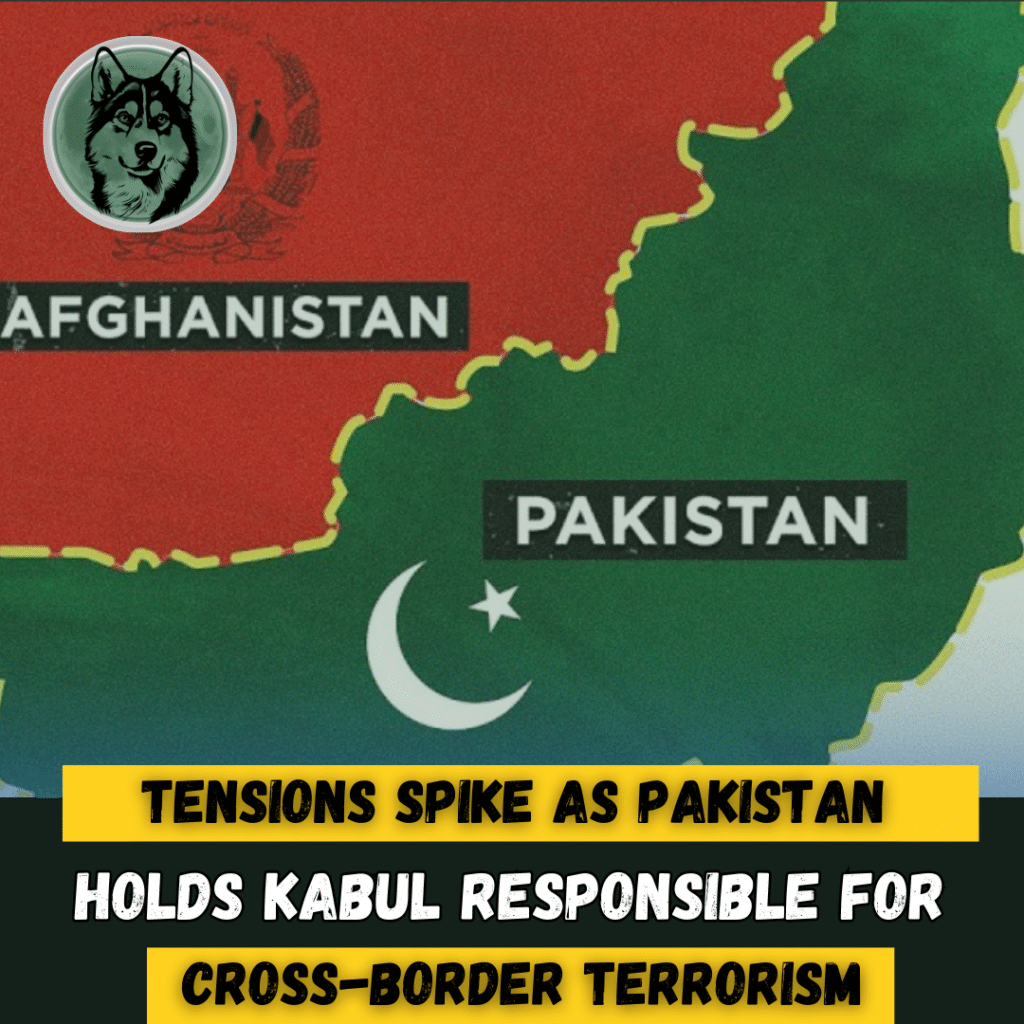
Foreign Office issues strongest warning yet as attacks from Afghan soil escalate.
Pakistan Issues Sharp Warning to Kabul Over Cross-Border Attacks
ISLAMABAD: Pakistan delivered its sternest message yet to the Afghan Taliban regime, declaring that the country’s patience is nearly exhausted as terrorist attacks from Afghan soil continue unabated.
Foreign Office spokesperson Tahir Andrabi stressed that Pakistan “cannot let trade become a licence to kill Pakistanis,” noting that recent assaults on civilians, traders, and security personnel have crossed Islamabad’s red line.
Pakistan Links Trade and Transit to Afghan Action Against Terror Groups
Andrabi made it clear that the suspension of border crossings and trade routes with Afghanistan is directly tied to the Taliban leadership’s failure to restrain TTP-linked groups, specifically Fitna al-Khwarij and Fitna al-Hindustan.
He warned that without decisive Afghan action, regional connectivity projects such as TAPI, CASA1000, and UAP could also face setbacks.
Pakistan has signaled openness to mediation by Turkey, Iran, and Russia, though Andrabi clarified that recent delays in diplomatic visits are due to scheduling issues not a lack of cooperation by Islamabad.
Regional Diplomacy: Turkey Expected to Play a Key Role
A high-level Turkish delegation comprising the foreign minister, defence minister, and intelligence chief is expected to visit Islamabad soon as Ankara attempts to help restore stability between Pakistan and the Taliban regime.
Pakistan to Kabul: Third-Party Influence Should Not Distort Bilateral Ties
Responding to reports of the Afghan trade minister’s visit to India, Andrabi stated that Pakistan respects Afghanistan’s sovereign engagements. However, he stressed that Pak-Afghan relations must remain independent and rooted in mutual merit, not shaped by outside actors.
???????? Pakistan Cautious Over Modi’s ‘No-War’ Comments
On India-Pakistan relations, Andrabi urged caution toward Indian Prime Minister Narendra Modi’s assurances of avoiding war.
He said such statements “must be taken with a pinch of salt,” citing India’s continued hostile rhetoric, military posturing, and destabilizing actions.
He acknowledged past US efforts—especially President Trump’s intervention to defuse tensions, but noted that Islamabad remains vigilant.
Pakistan Reasserts Strong Support for Palestine at UNSC
Pakistan reaffirmed its principled stance on Palestine by voting in favour of the Gaza resolution at the UN Security Council.
Andrabi condemned Israel for continued violations of ceasefire agreements and international law, urging the global community to safeguard holy sites—particularly Masjid Al-Aqsa—and prevent settler violence.
Pakistan reiterated its commitment to a two-state solution based on justice and international law.
What Happened?
Pakistan’s Foreign Office issued a firm warning to Kabul in response to escalating cross-border terror attacks traced back to Afghan territory.
Why It Matters?
Because Pakistan has signaled that trade, transit routes, and major regional energy projects may be impacted, putting economic and strategic cooperation at stake.
How It Affects the Region? If Kabul fails to act against TTP sanctuaries, regional stability could deteriorate further, affecting security, trade, and connectivity from Central Asia to South Asia.