





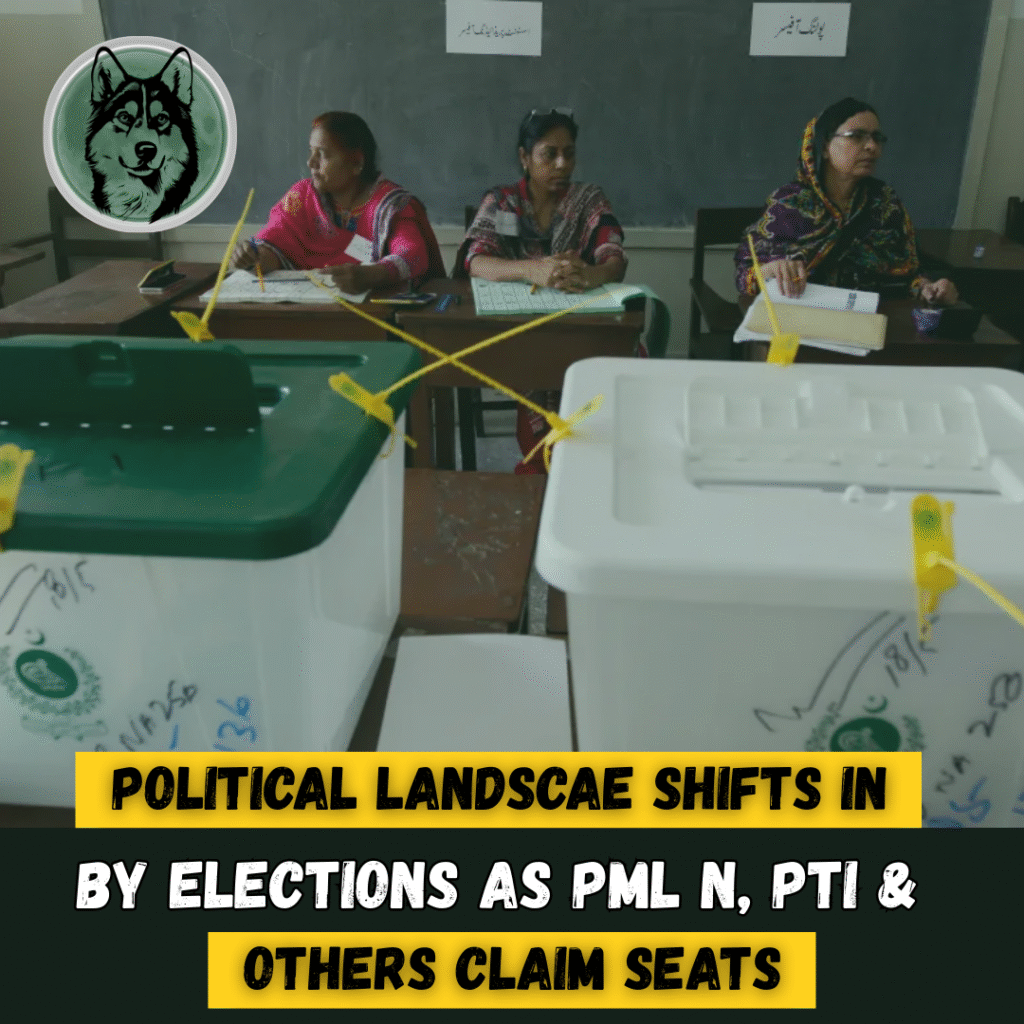
By-elections highlight organizational challenges for opposition parties in several regions.
The recent by-elections in Pakistan concluded with several constituencies across the National and Punjab Assemblies seeing decisive results, according to unofficial figures. Polling took place in Lahore, Faisalabad, Sahiwal, Dera Ghazi Khan, Sargodha, Mianwali, Muzaffargarh, and Haripur between 8 am and 5 pm.
Election observers noted a politically charged environment, but voter turnout remained low in many areas, raising concerns about public engagement in the democratic process.
Officials and party representatives have interpreted the results differently, with some parties claiming organizational success while others face challenges in mobilizing support.
DETAILED RESULTS (UNOFFICIAL)
National Assembly Constituencies
- NA-129 Lahore: Candidate from PML-N won with 63,441 votes; runner-up received 29,099 votes. Turnout: 18.26%.
- NA-143 Sahiwal: Winner received 136,313 votes, with runner-up at 13,120 votes.
- NA-185 Dera Ghazi Khan: Leading candidate received 82,413 votes; second-place 49,262 votes.
- NA-96 Faisalabad: PML-N candidate led among 16 contestants.
- NA-104 Faisalabad: Winner led over independent candidate following seat vacancy.
- NA-18 Haripur: Leading candidate obtained 109,968 votes; runner-up received 86,558 votes.
Punjab Assembly Constituencies
- PML-N led in six seats, while PPP secured one seat.
- The elections reflected uneven competition and varying regional party strength.
WHY THESE RESULTS MATTER
- Electoral Trends: The by-elections illustrate ongoing regional party dominance and organizational capabilities.
- Opposition Challenges: Certain opposition parties struggled to mount competitive campaigns in key constituencies.
- Voter Engagement Concerns: Low turnout highlights potential political disengagement or fatigue among citizens.
- Implications for Future Elections: Outcomes may influence strategies and alliances ahead of larger provincial and national contests.
IMPACT & CRITICAL ANALYSIS
- Impact: The results affect the balance of power in both federal and provincial legislatures, with implications for policy-making and governance.
- Critical Analysis: While the by-elections provide insights into party strengths, low participation and disqualification cases may have skewed competitiveness. Dependence on traditional strongholds raises questions about national-level appeal. Overall, the results underscore organizational capacity and voter loyalty patterns, without definitively predicting future outcomes.