

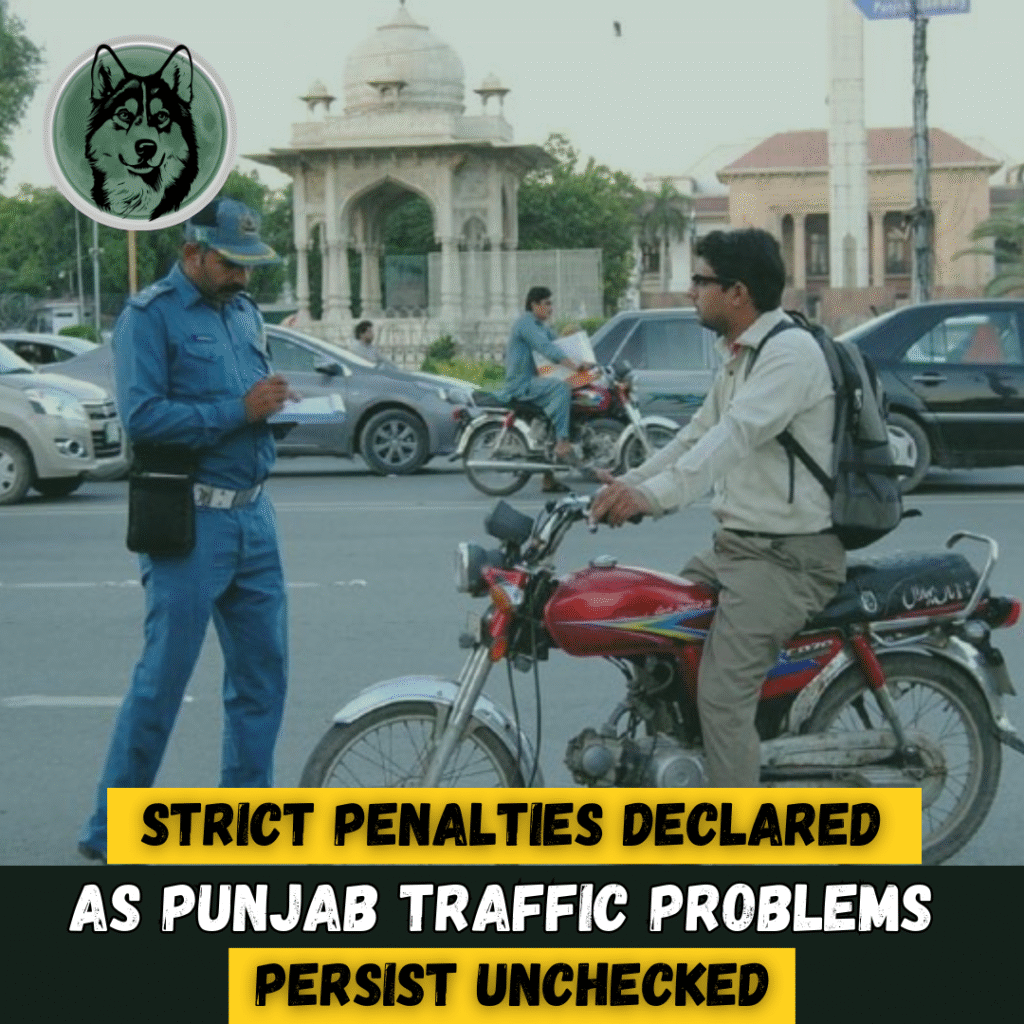
Province-wide crackdown highlights government focus on punishment over long term planning
Government Proposes Tough Measures Amid Ongoing Traffic Problems
Punjab Chief Minister Maryam Nawaz has announced sweeping traffic reforms in a province-wide crackdown. Vehicles repeatedly challaned will now face auction, and government vehicles violating traffic rules will have no exemptions.
While the announcement sounds strict, experts and citizens question whether punitive measures alone can solve systemic traffic failures that have plagued Punjab cities for years.
Thirty Day Deadline for Lahore Traffic Improvement
Maryam Nawaz reportedly set a thirty day deadline for noticeable improvement in Lahore traffic. Officials were briefed on modern traffic systems, road safety, rooftop riding, helmet use, and other violations.
This raises questions: Can traffic flow improve meaningfully in just thirty days? Are authorities equipped with the resources, planning, and technology required for sustainable change?
Crackdown on Underage Driving and Dangerous Practices
The chief minister ordered strict action against underage driving, rooftop riding, and overspeeding, including possible imprisonment for six months in certain cases.
While safety enforcement is necessary, critics ask: Why has underage driving persisted for so long? Is punishment enough without proper awareness campaigns, safe public transport, and strict licensing protocols?
Rickshaws, U Turns, and Parking Management
To improve Lahore traffic, rickshaws will be banned on five model roads, and U turns will be remodeled across Punjab. Marriage halls without proper parking will be prohibited from operating.
These measures prompt further questions: Will removing rickshaws and banning halls without parking address the root cause of traffic chaos? Or is this a temporary fix that inconveniences citizens without solving congestion issues?
Equal Enforcement or Symbolic Action?
Maryam Nawaz stressed that enforcement must be uniform and that no one will be spared fines for violations.
However, critics argue: Will these measures be applied consistently? Historically, VIP vehicles and government officials have avoided penalties. Can the traffic police truly enforce equality without political interference?
Deeper Analysis of Situation:
Despite announcements of auctions, strict deadlines, and crackdowns, Punjab traffic problems have persisted for decades. Heavy congestion, poor planning, chaotic parking, and lack of public transport infrastructure continue to cripple cities.
Why does the government rely on short-term punitive actions instead of long-term solutions? How will auctions and fines reduce daily traffic stress for ordinary commuters? Will these measures truly improve safety or merely serve as a political showpiece?
Experts warn that without infrastructure investment, better traffic management systems, public transport reforms, and awareness campaigns, these strict penalties risk being symbolic rather than transformative.