




Ten sugar mills allegedly collude to fix cane prices and delay crushing
Competition Commission Issues Show-Cause Notices
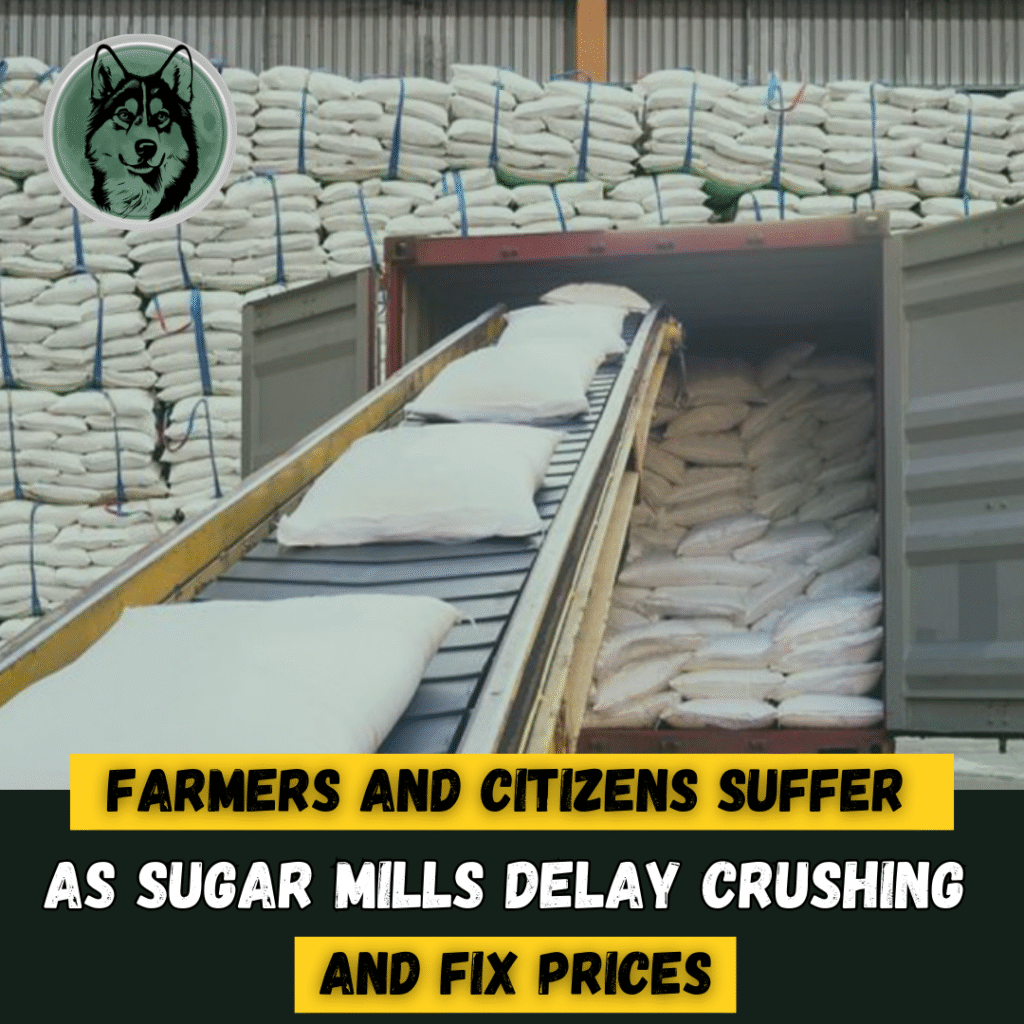
The Competition Commission of Pakistan has issued show-cause notices to ten Punjab-based sugar mills for allegedly forming a cartel. The mills are accused of delaying sugarcane crushing and fixing cane purchase prices at Rs400 per maund, despite earlier directives from the Punjab Sugarcane Commissioner to begin crushing on November 15.
This move raises critical questions: Why are commercial entities allowed to manipulate markets at the expense of farmers and consumers? Why did government authorities fail to prevent collusion in a critical sector that directly impacts millions of citizens?
Details of the Alleged Collusion
According to the CCP, representatives of the ten mills allegedly met at Fatima Sugar Mills on November 10 and agreed to start crushing on November 28, setting a uniform price of Rs400 per 40 kilograms. Attendees included major mills such as Sheikho Sugar Mills, Thal Industries, JK One Sugar Mills, Ashraf Sugar Mills, and others. Some joined online, suggesting organized coordination across the sector.
Critical question: How is it possible that multiple large mills can openly collude without early detection by market regulators? Are checks and balances in Pakistan’s agricultural and commercial regulatory framework sufficient to protect farmers and consumers?
Impact on Farmers and Market Supply
The CCP highlighted a clear imbalance of power between sugar mills and local farmers. Instead of allowing each mill to negotiate prices based on supply and demand with farmer representatives, the mills allegedly colluded to unilaterally fix the cane price.
This artificial pricing undermines farmers’ incomes and distorts the market, potentially leading to shortages and price spikes in retail sugar. Citizens are left to bear the consequences of corporate greed while regulators react only after public and media pressure.
Potential Market Manipulation and Consumer Harm
Early-season delays in crushing not only affect farmer revenue but also create an opportunity for mills to manipulate sugar availability, driving retail prices higher. With sugar being a staple commodity, these delays have direct economic consequences for millions of Pakistanis, particularly lower-income households.
Why does the government allow critical commodities to be subject to such manipulation? Why are preventive measures not in place to stop collusion before it impacts the market?
CCP Directives and Legal Implications
The Competition Commission has demanded written explanations from the mills within 14 days, warning that failure to justify their actions could lead to legal proceedings. The CCP has made it clear that forming agreements to fix prices or coordinate business decisions violates Section 4 of the Competition Act 2010.
This situation underscores systemic failures in enforcement and monitoring, raising questions about why regulatory mechanisms have historically failed to protect both farmers and consumers from predatory practices.
Digging Deeper into Sugar Mills Mafia:
The sugar cartel allegations reveal a persistent pattern of collusion and regulatory weakness. Government agencies react after the fact, but systemic reforms remain absent. How can citizens trust regulators when market manipulation is rampant? How can farmers survive when powerful corporate actors control prices and delay production for profit?
Without strong enforcement, transparent pricing mechanisms, and proactive monitoring, Pakistanis will continue to face inflated prices and farmers will remain vulnerable to exploitation by big business.