



Mayor Murtaza Wahab apologises to grieving family
KMC and KWSB officials suspended after death of three year old boy
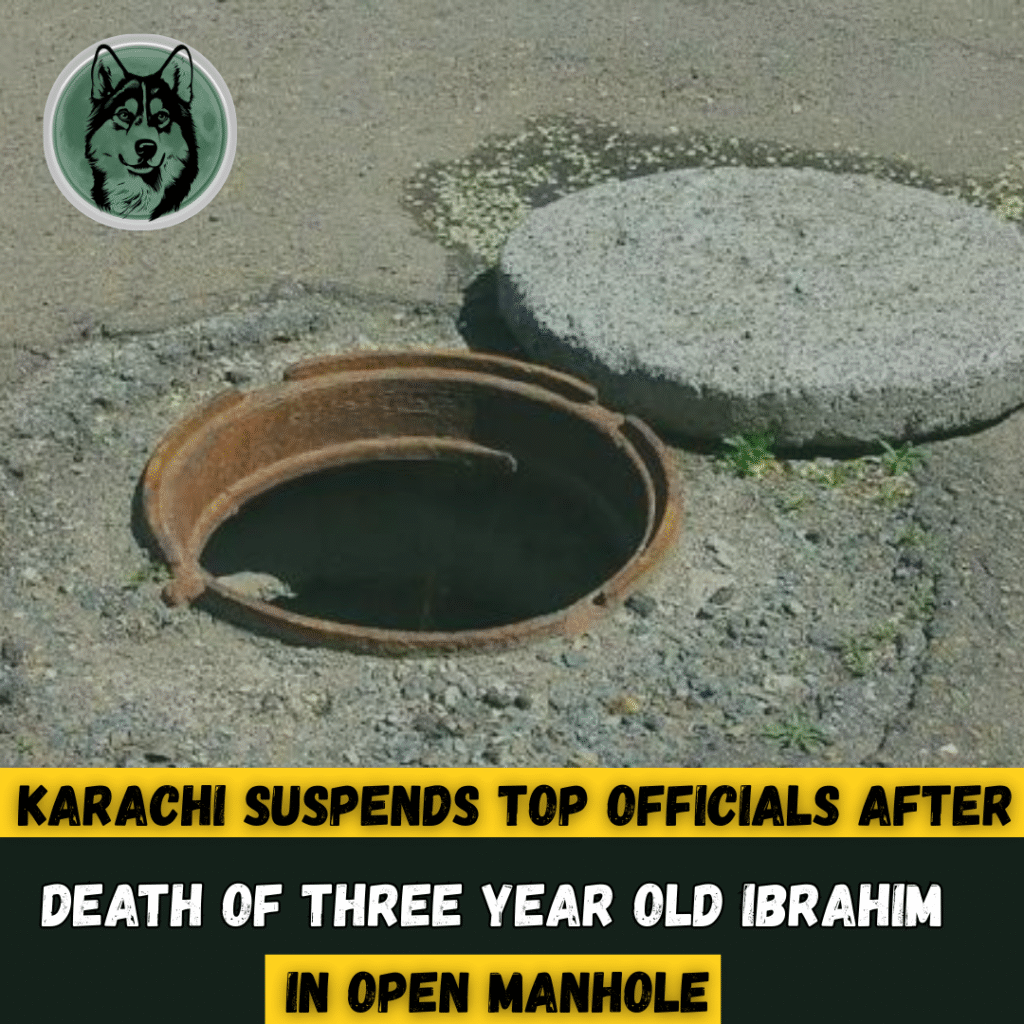
The Sindh Local Government Department has suspended several senior officials from the Karachi Metropolitan Corporation, District Municipal Corporation, Karachi Water and Sewerage Board, and the office of the Assistant Commissioner following the tragic death of a three year old boy who fell into an open manhole near Nipa Chowrangi.
Those suspended include KMC Municipal Services Senior Director Imran Rajput, Gulshan e Iqbal TMC Assistant Engineer Rashid Fayyaz, KWSB Executive Engineer Waqar Ahmed, Gulshan e Iqbal Assistant Commissioner Amir Ali Shah, and Mukhtiarkar Salman Farsi.
All officials have been reassigned to various departments during the suspension period and will continue receiving salaries in accordance with rules.
The action follows directives issued by Sindh Chief Minister Murad Ali Shah after the death of three year old Ibrahim, whose body was recovered nearly fourteen hours later near Sir Syed University.
KMC shifts blame to BRT project and nearby store
In its report submitted to the Local Government Department, the KMC placed responsibility on the Red Line BRT project and the management of a departmental store, Chase Up.
KMC alleged that excavation for the BRT corridor had damaged the drainage system, creating the dangerous conditions that led to the fatal accident.
BRT management strongly rejects allegations
The Red Line BRT project management issued a detailed statement refuting the accusations.
The team expressed deep sorrow over Ibrahim’s death but stressed that the incident occurred far from any construction zone related to the project.
The statement clarified that:
- No excavation or construction activity was happening near the site
- The road surface remained intact
- The area where the accident occurred was part of a private store’s parking zone
- The BRT project has no administrative responsibility for sewerage or nullah networks there
Calling the KMC claims a serious oversight, the project reiterated adherence to strict Occupational Health and Safety standards under its Asian Development Bank funding.
Karachi Mayor apologises to grieving family
Karachi Mayor Murtaza Wahab visited Ibrahim’s family and offered a public apology.
He described the tragedy as unbearable, shameful, and deeply painful, emphasising that the administration must ensure public safety and cannot afford such lapses.
Ibrahim’s grandfather said the family hopes authorities will introduce strong preventive measures to avoid similar incidents. Wahab also highlighted the city’s ongoing struggle with infrastructure challenges, noting that Karachi has two hundred forty five thousand manhole covers, of which eighty eight thousand were replaced last year.
Eyewitness accounts reveal delays and lack of resources
Ibrahim slipped into the manhole around 11 pm while walking ahead of his mother among parked motorcycles outside the store.
His body travelled nearly half a kilometre through three internal sewage channels before being found.
Local residents and volunteers joined the search but faced delays due to:
- Lack of sewerage maps
- Shortage of machinery
- Delayed excavation assistance
Family members spent fifteen thousand rupees on private machinery before KMC teams resumed operations. BRT machinery arrived approximately sixteen hours later to assist in clearing the main drainage line.
Inquiry committee formed
An investigation team constituted on the orders of the chief minister visited the site along with the Gulshan e Iqbal Assistant Commissioner and local police. The committee inspected the manhole location, surrounding structures, and the point where the body surfaced.
The findings will be submitted to the chief minister for further action.
Why this incident matters for urban safety and public accountability The death of three year old Ibrahim has exposed severe gaps in Karachi’s urban safety management. Open manholes, weak coordination between departments, and delayed responses demonstrate systemic failures rather than isolated errors.
The competing claims between KMC and the BRT project highlight chronic issues of fragmented responsibility where agencies deflect blame instead of ensuring reliable infrastructure oversight.
For residents, the tragedy reinforces long standing fears about basic safety hazards in the city. The suspensions may offer immediate administrative response, but long term accountability and structural reform will determine whether Karachi can prevent similar tragedies in the future.