


Australia moves beyond UN restrictions, launching its own autonomous sanctions system.
Australia Sanctions Senior Taliban Figures Over Systematic Suppression of Women and Girls
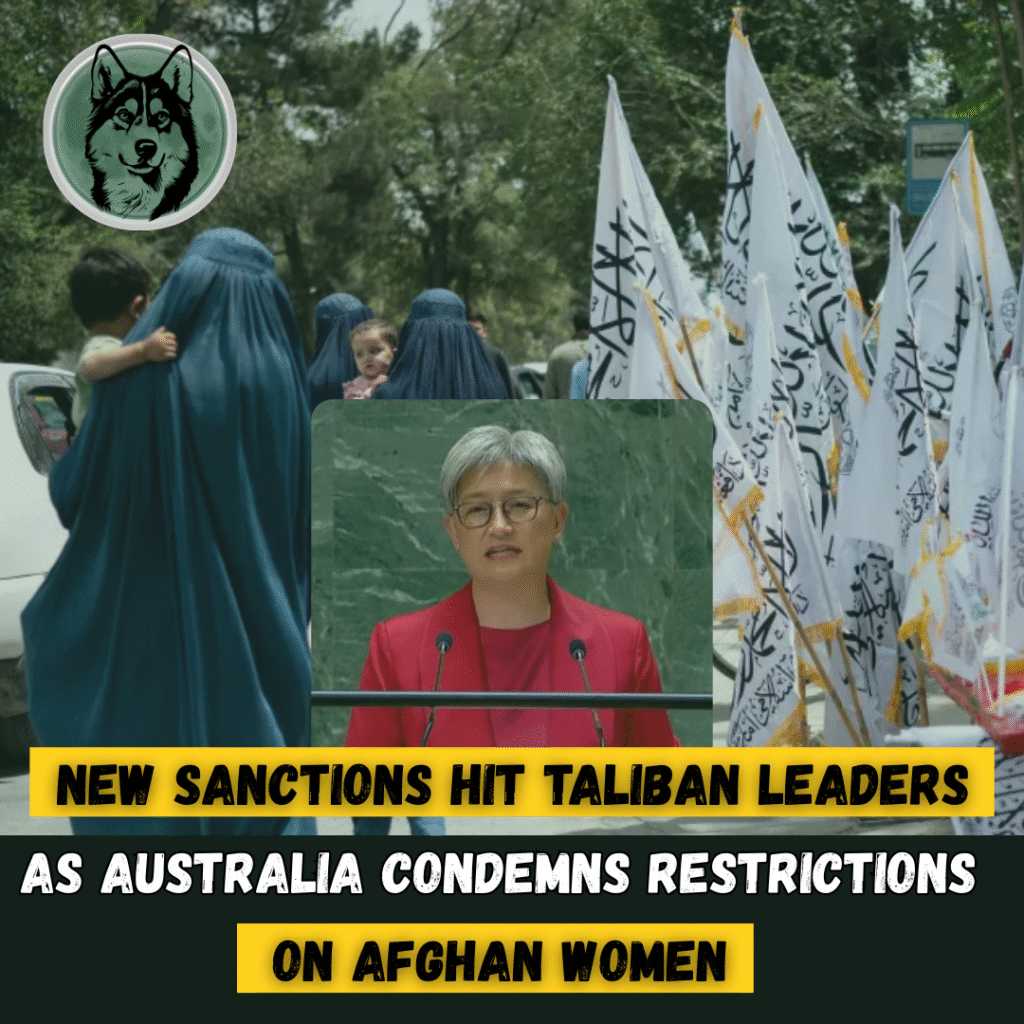
CANBERRA: Australia has imposed travel bans and financial sanctions on four senior Taliban officials, citing grave and worsening violations of women’s rights in Afghanistan, Foreign Minister Penny Wong announced on Saturday. The move marks the first use of Australia’s newly established autonomous sanctions framework for Afghanistan.
Officials said the measures aim to increase pressure on the Taliban leadership, which has rolled back nearly all freedoms for women and girls since taking power in August 2021.
Canberra Rolls Out Independent Sanctions Regime
The newly created framework allows Australia to bypass existing UN restrictions and institute its own sanctions, including:
- Targeted travel bans
- Asset freezes
- An arms embargo
- Prohibitions on providing weapons-related services
The Australian government says the mechanism is designed to “directly hold Taliban figures accountable” for policies that have dismantled gender rights, eliminated democratic governance, and undermined rule of law.
Four Taliban Leaders Blacklisted
The sanctions apply to:
- Muhammad Khalid Hanafi, Minister for the Propagation of Virtue and Prevention of Vice
- Neda Mohammad Nadeem, Minister of Higher Education
- Abdul-Hakim Sharei, Minister of Justice
- Abdul Hakim Haqqani, Chief Justice
These officials are accused of personally shaping and enforcing policies that restrict:
- Women’s access to education
- Employment opportunities
- Freedom of movement
- Participation in public and civic life
Penny Wong said Australia could not stand idle as “basic rights are stripped away, and millions of women are pushed out of society.”
Gender Apartheid Deepens Under Taliban Rule
Since retaking control, the Taliban have imposed sweeping restrictions, triggering what international agencies describe as one of the world’s most extreme gender-rights crises.
Key developments include:
- Ban on female university students (Dec 2022)
- Closure of most secondary schools for girls
- Prohibition of women working in NGOs and public institutions
According to UN estimates, 1.4 million girls — roughly 80% of school-aged girls — are denied education.
The economic fallout has been devastating: removing women from the workforce has contributed to rising poverty, leaving millions reliant on humanitarian aid.
ICC Arrest Warrants Add International Pressure
In July 2025, the International Criminal Court (ICC) issued arrest warrants for Chief Justice Haqqani and Taliban leader Haibatullah Akhunzada, citing crimes against humanity involving the persecution of women and girls.
The Taliban has dismissed such allegations as “politically motivated,” insisting that women’s rights are upheld “within the framework of Islamic law.”
Australia Expands Beyond UN Blacklist
The sanctions add to more than 140 Taliban individuals and entities already restricted under the UN Security Council framework.
Australia’s new system also introduces a humanitarian permit, ensuring that aid efforts can continue without violating sanctions, an attempt to protect Afghan civilians while punishing the leadership.
Australia’s move reflects a growing international recognition that UN measures alone have been insufficient to influence Taliban behavior. However:
- Sanctions may have limited immediate impact, as Taliban leaders rarely travel and often operate outside the international banking system.
- Critics argue that sanctions risk further isolating Afghanistan, potentially worsening humanitarian suffering for ordinary people.
- Supporters counter that silence legitimizes the Taliban’s gender persecution, which some experts describe as “gender apartheid.”
- The new autonomous sanctions regime gives Australia flexibility, but its effectiveness will depend on whether other nations adopt similar or coordinated measures.
The decision highlights a broader geopolitical challenge: the world is struggling to sway a leadership that rejects external pressure and continues to impose extreme interpretations of governance and societal roles.
What happened?
Australia sanctioned four senior Taliban officials and launched a stand-alone sanctions framework targeting human rights violations.
Why does it matter?
The move increases international pressure on the Taliban and highlights worsening gender-based restrictions in Afghanistan.
Where did it take place?
The announcement was made in Canberra, with implications across Afghanistan.
How does it affect Afghanistan?
Sanctions may limit Taliban engagement internationally but could deepen economic isolation unless balanced with humanitarian exemptions.