




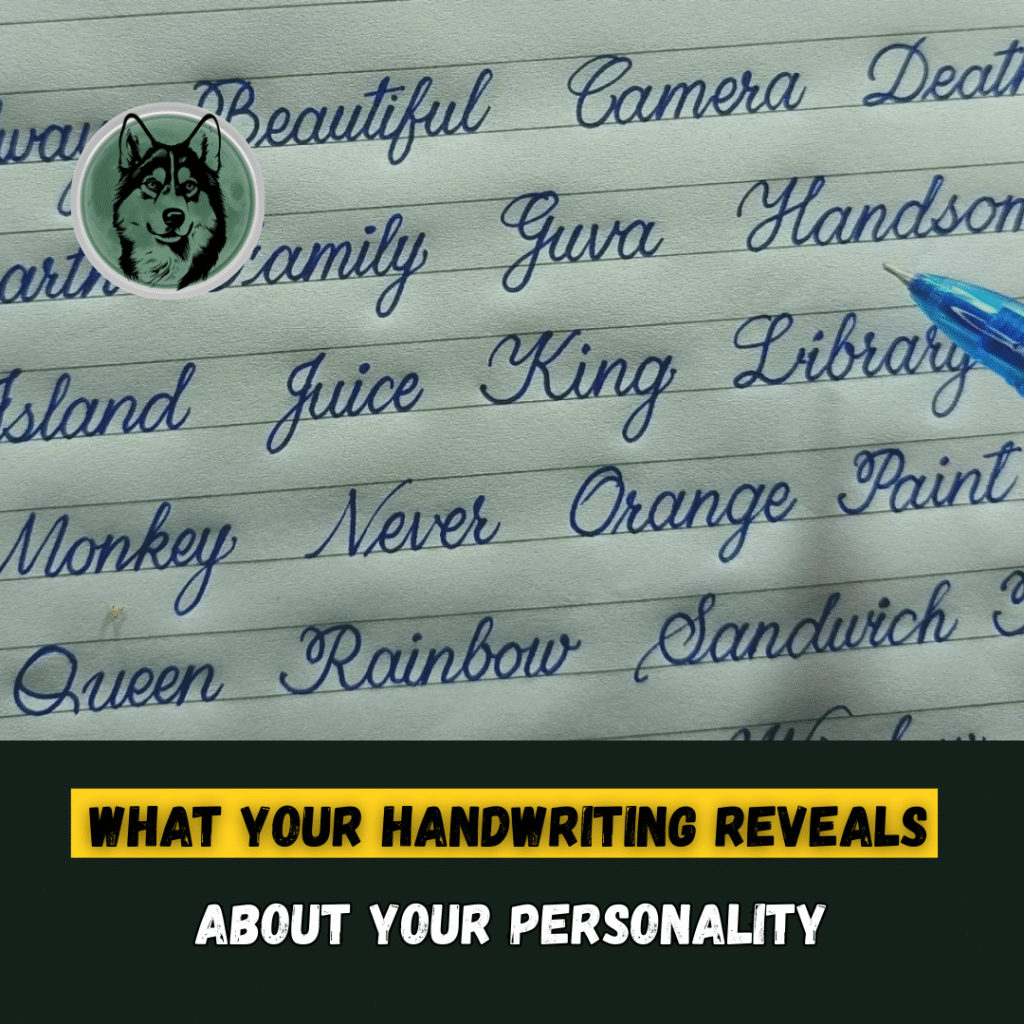
Have you ever wondered why your handwriting looks different from your friends’ or colleagues’? Beyond being a functional tool, handwriting can serve as a window into your personality, emotions, and even mental state. Psychologists and graphologists—experts in handwriting analysis—believe that the way we write reflects traits that may not be obvious in our everyday interactions.
Whether you’re doodling in a notebook, jotting down a to-do list, or signing your name, your penmanship can provide subtle clues about who you are.
The Science Behind Handwriting Analysis
Handwriting analysis, or graphology, studies how the size, pressure, slant, spacing, and consistency of letters correspond to personality traits. While it’s not an exact science, it offers insights that often match real behavioral tendencies.
Key aspects analyzed include:
- Size of letters – Big, small, or medium letters can indicate confidence or introversion.
- Slant – Leftward, rightward, or vertical slant can reflect emotional expression.
- Pressure – Heavy or light pressure shows energy levels and stress.
- Spacing – Between words, letters, and lines, revealing social tendencies.
- Consistency – Uniformity in style signals organization or emotional stability.
What Different Handwriting Traits Suggest
1. Size of Letters
- Large letters: Outgoing, confident, and sociable. People with large handwriting often enjoy attention and express themselves openly.
- Small letters: Detail-oriented, focused, and introspective. Such writers may prefer working behind the scenes.
- Medium letters: Balanced, adaptable, and practical. These individuals often maintain a healthy mix of introversion and extroversion.
2. Slant of Writing
- Right slant: Open to new experiences, friendly, and emotionally expressive.
- Left slant: Reserved, introspective, and sometimes protective of feelings.
- No slant (vertical): Logical, objective, and self-reliant. They separate emotion from decisions.
3. Pressure of Pen
- Heavy pressure: Energetic, decisive, and intense. May experience strong emotions and stress deeply.
- Light pressure: Sensitive, empathetic, and adaptable. Can be flexible but sometimes lack determination.
4. Word and Letter Spacing
- Wide spacing between words: Enjoy personal freedom and independence. Need space to think and reflect.
- Narrow spacing: Social, enjoy close connections, and may dislike being alone.
- Connected letters: Logical and methodical thinkers who process information step by step.
- Disconnected letters: Creative, intuitive, and often think “outside the box.”
5. Consistency and Uniformity
- Consistent handwriting: Organized, disciplined, and reliable. They plan ahead and value stability.
- Inconsistent handwriting: Flexible, adaptable, sometimes unpredictable. Creativity often accompanies this trait.
What Your Signature Reveals
Your signature is like your public mask.
- Large, legible signature: Confident and self-assured.
- Small or scribbled signature: Humble, private, or cautious.
- Embellished signature: Desire for recognition, expressive personality.
- Simple signature: Practical, straightforward, and no-nonsense attitude.
Why Handwriting Matters Today
Even in the digital age, handwriting remains relevant. Signing documents, writing personal notes, or journaling allows for self-expression that typing cannot replicate. Graphology can even help in:
- Career guidance: Understanding strengths and personality fit.
- Personal development: Recognizing areas to improve, like patience or emotional control.
- Relationship insights: Observing tendencies toward introversion or extroversion.
Tips to Analyze Your Handwriting
- Write a paragraph naturally without thinking about style.
- Observe the size, slant, pressure, spacing, and consistency.
- Compare traits with the descriptions above.
- Reflect on whether your handwriting matches your personality and habits.
Your handwriting is more than a way to put words on paper—it’s a mirror of your mind, emotions, and character. By paying attention to the subtle signals your writing gives, you can learn about yourself, your strengths, and your hidden tendencies.