


With assets frozen and offices to be sealed, Pakistan steps up enforcement against extremist group.
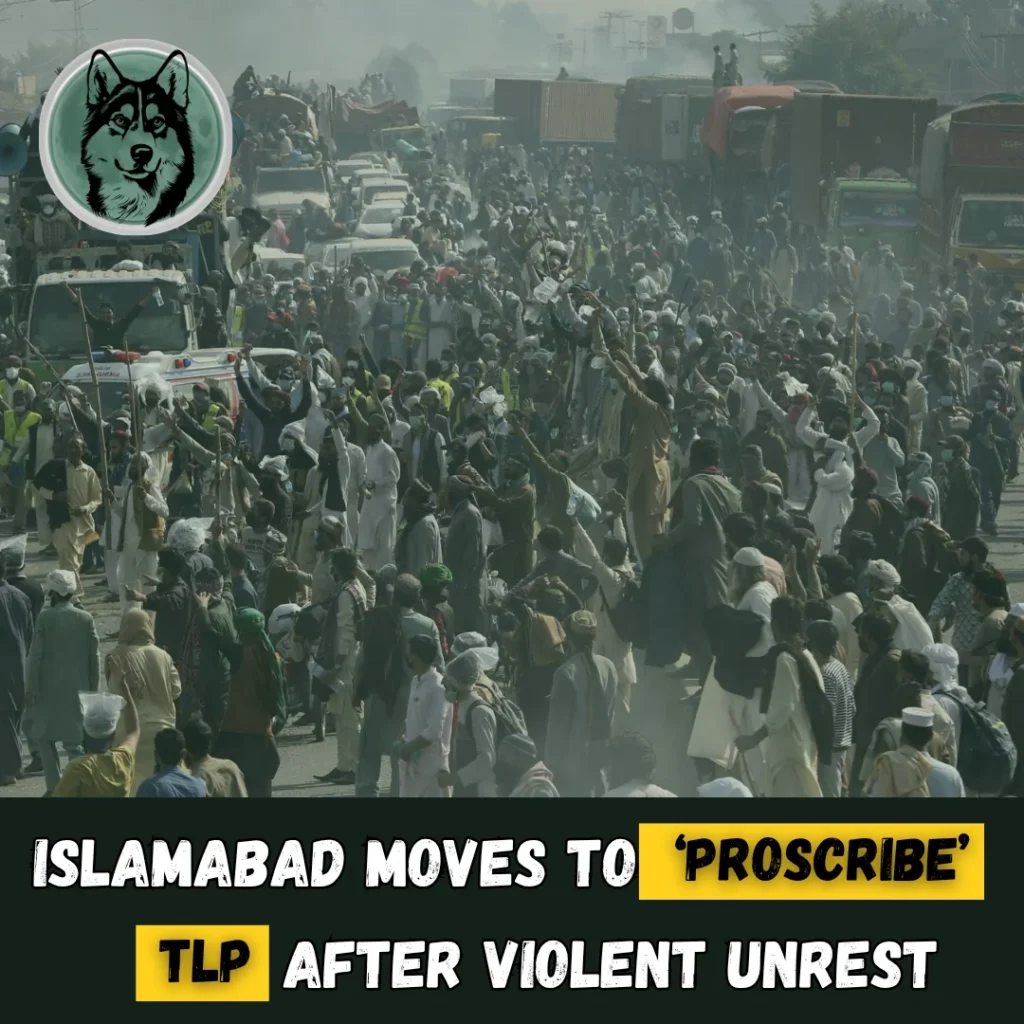
The federal cabinet of Pakistan has taken a major step by approving the formal banning of the religious-political organisation Tehreek-e-Labbaik Pakistan (TLP).
The decision, taken during a session chaired by the Prime Minister, follows a detailed briefing from the Interior Ministry, based on Punjab’s recommendation that the group should be proscribed under anti-terrorism legislation.
According to the government summary, the group has been repeatedly involved in orchestrating violent protests, engaging in arson and vandalism, attacking law enforcement personnel during demonstrations, and undermining state authority.
Many of the recent incidents took place in Punjab, including attempts by the group to mobilise large marches toward Islamabad.
Under the process that now begins, the Interior Ministry will prepare a notification for publication in the official gazette, thereby giving legal effect to the proscription.
Once in force, the group’s movement will be restricted, its offices may be sealed, bank accounts frozen, and its leadership held accountable under terrorism law.
From a political viewpoint, this ban reflects the government’s determination to enforce the writ of the state, particularly in light of recent protests that had evidently shaken public order.
Punjab’s Information Minister remarked that no sect, mosque, or madrassa was targeted — the aim was solely those who challenge the State or disrupt peace.
Yet analysts caution that the bigger issue lies in the ideology underpinning groups like TLP.
Banning the organisation is one thing; ensuring the movement does not regroup or transform into another form is another.
Past experience shows that bans alone often provide deniability rather than a lasting solution.
For citizens and stakeholders, the key question will be whether law-enforcement can sustain consistent and lawful action — from asset freezes to closure of offices — and whether the government can amplify counter-narratives to reduce the appeal of extremist mobilisation.