





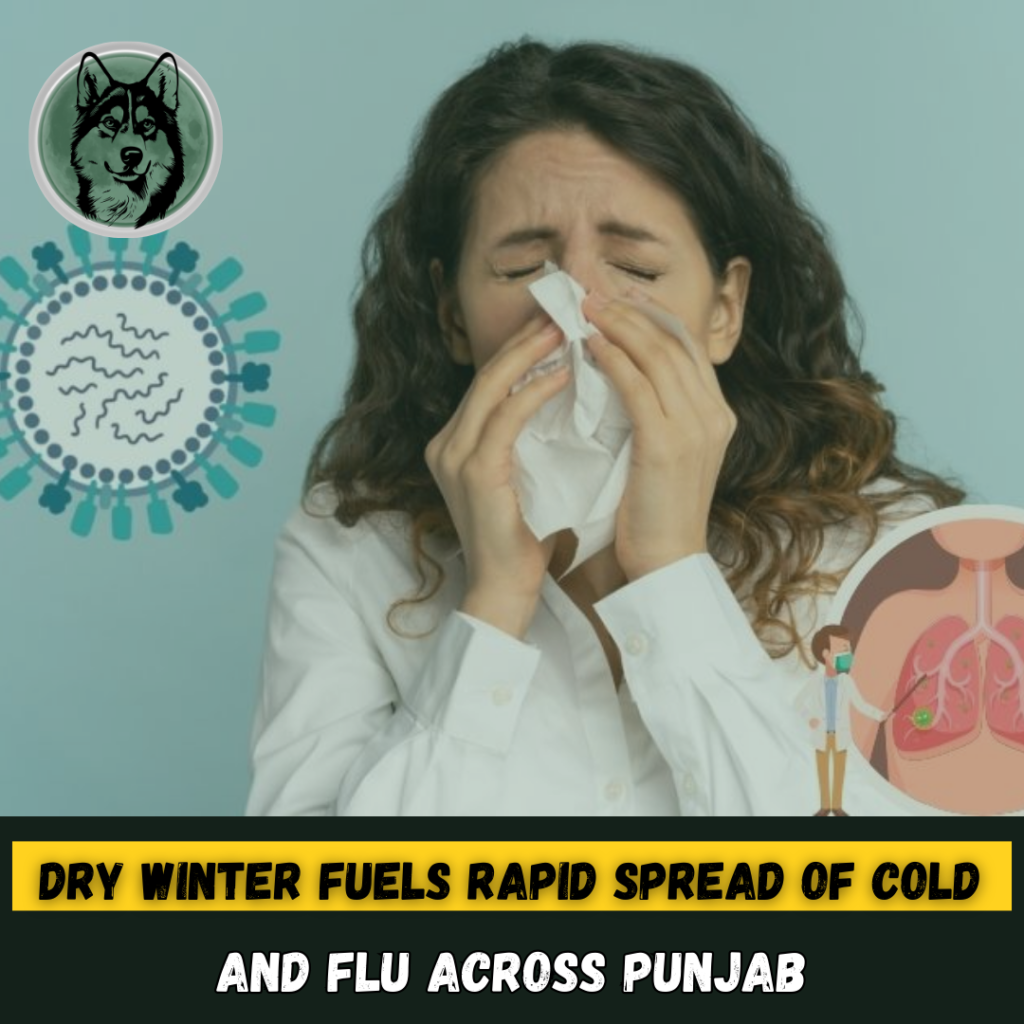
Dry weather, pollution and weak immunity cited as major contributing factors
Seasonal illnesses tighten grip across Punjab
Cold, flu, cough, fever and throat-related ailments are spreading rapidly across Punjab as dry winter conditions persist, placing growing pressure on public and private healthcare facilities. Districts including Layyah have reported a notable increase in patients suffering from influenza-like symptoms, with doctors attributing the surge to cold temperatures, dry air and seasonal vulnerability.
Hospitals across the province are witnessing an influx of patients daily, particularly children and senior citizens, groups considered most at risk during winter months.
Rising cases: What the numbers show
Health department data indicates that tens of thousands of influenza-like illness cases have been registered across Punjab in recent weeks. In just under two weeks, over 50,000 patients reportedly sought treatment at government hospitals for symptoms such as fever, sore throat, persistent cough and breathing difficulties.
At the national level, health surveillance systems have recorded more than 300,000 suspected influenza-like cases, with laboratory testing confirming circulation of seasonal influenza strains. Medical experts warn that actual figures may be higher due to underreporting and self-medication practices.
Hospitals under strain as patient load increases
Outpatient departments in major cities and district headquarters hospitals are operating under increased strain, with overcrowded waiting areas and extended consultation hours becoming common. Doctors report that respiratory and throat complaints now account for a significant portion of daily admissions.
In smaller districts such as Layyah, limited resources and staff shortages further complicate the situation, raising concerns about the healthcare system’s capacity if the trend continues into peak winter.
Preparedness and official response
Health authorities have placed hospitals on high alert, directing medical facilities to ensure availability of essential medicines, trained staff and emergency support. Surveillance mechanisms have been strengthened to monitor the spread of seasonal illnesses, while vaccination drives are being encouraged for high-risk populations, including the elderly and those with chronic conditions.
Public awareness campaigns are also being amplified, focusing on hygiene practices, early medical consultation and preventive care.
Critical analysis: Why this surge matters
Experts say the current spike highlights systemic gaps in preventive healthcare, particularly in seasonal preparedness and public awareness. Factors such as air pollution, weak immunity, delayed treatment and lack of vaccination uptake continue to worsen outcomes.
Without sustained preventive strategies and timely public cooperation, seasonal illness waves risk evolving into broader public health challenges — especially for vulnerable communities with limited access to quality healthcare.
Doctors advise precautionary measures
Medical professionals urge citizens to:
Wear warm clothing, avoid unnecessary exposure to cold air, use lukewarm water, stay hydrated and seek early medical advice if symptoms worsen.
Ignoring early signs, doctors warn, may lead to complications, particularly among children and older adults.