




Why the Bowtie Model Matters
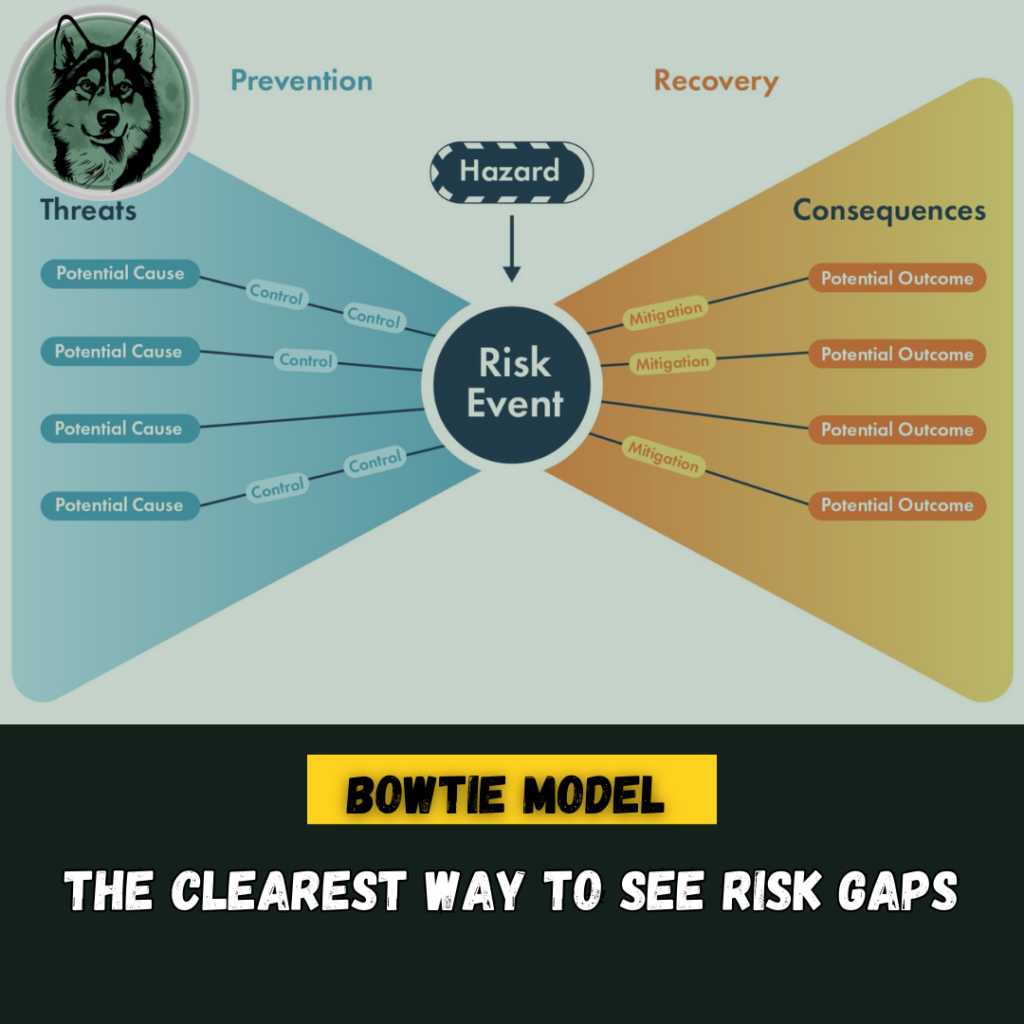
Think of the Bowtie as one moment of failure placed at the center, with two clear responsibilities on each side. It visually exposes where control is lost and where systems silently fail.
Center – The Most Critical Point: The Top Event
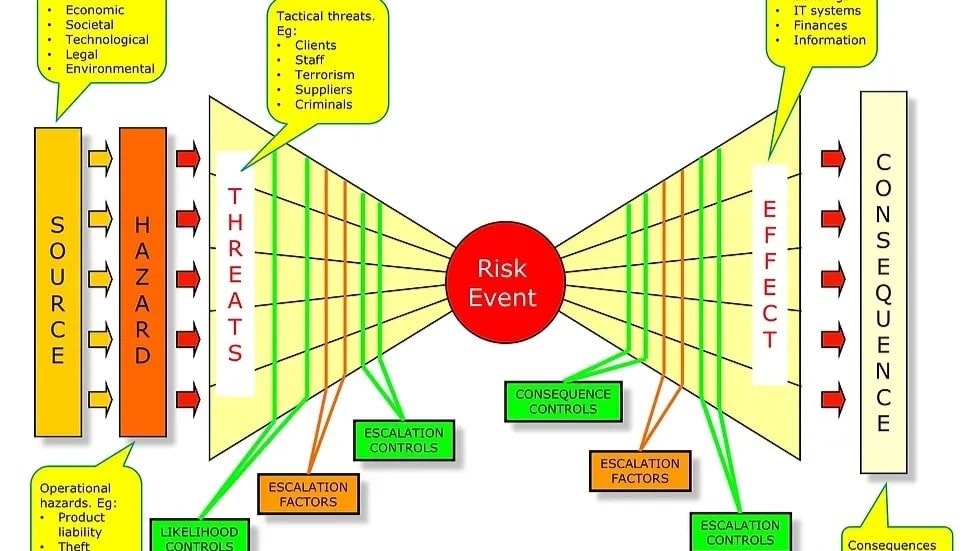
Top Event = Loss of Control
This is the exact moment when safety stops working.
Not the injury
Not the accident
Not the loss
It is the point where control is lost.
Examples of Top Events
• Loss of control of hazardous energy
• Fire ignition
• Fall from height
Everything before the Top Event is about stopping it.
Everything after the Top Event is about surviving it.
Left Side – Before the Event (Prevention Side)
Purpose
Stop the Top Event from happening.
Simple Flow
Threats → Barriers → Top Event
Threats (What Can Cause Loss of Control?)
• Human error
• Equipment failure
• Unsafe methods
• Poor supervision
Preventive Controls (Minimum Three – Must Be Strong)
Engineering Controls
Physical safety built into the system such as guards, interlocks, and automation.
Procedures and Rules
Clear SOPs, permits, and step-by-step work methods.
People Readiness
Training, competency assurance, and effective supervision.
Gap Meaning on the Left Side
If a threat exists and nothing is stopping it, the system is already weak.
Right Side – After the Event (Damage Control Side)
Purpose
Reduce harm after control is lost.
Simple Flow
Top Event → Barriers → Consequences
Consequences (What Can Happen Next?)
• Injury or death
• Fire or explosion
• Property damage
• Business shutdown
Mitigating Controls (Minimum Three – Must Be Ready)
Emergency Response
Fire systems, alarms, emergency shutdown mechanisms.
Medical and Rescue
First aid, ambulance access, rescue plans.
Crisis and Command
Clear roles, communication channels, and decision authority.
Gap Meaning on the Right Side
If response is slow or confused, damage multiplies.
When Both Sides Fail – The Last Three Safety Nets
Contain the Damage
Isolate hazards, shut down systems, stop escalation.
Protect the Business
Activate business continuity and recovery plans.
Fix the System
Learn from failure, redesign controls, strengthen weak barriers.
One Perfect Line for Training and AuditsLeft side prevents loss of control.
Center shows where control is lost.
Right side limits the damage.
Gaps live where barriers are missing or weak.