


Pakistan’s right to self-defense reaffirmed under UN Charter
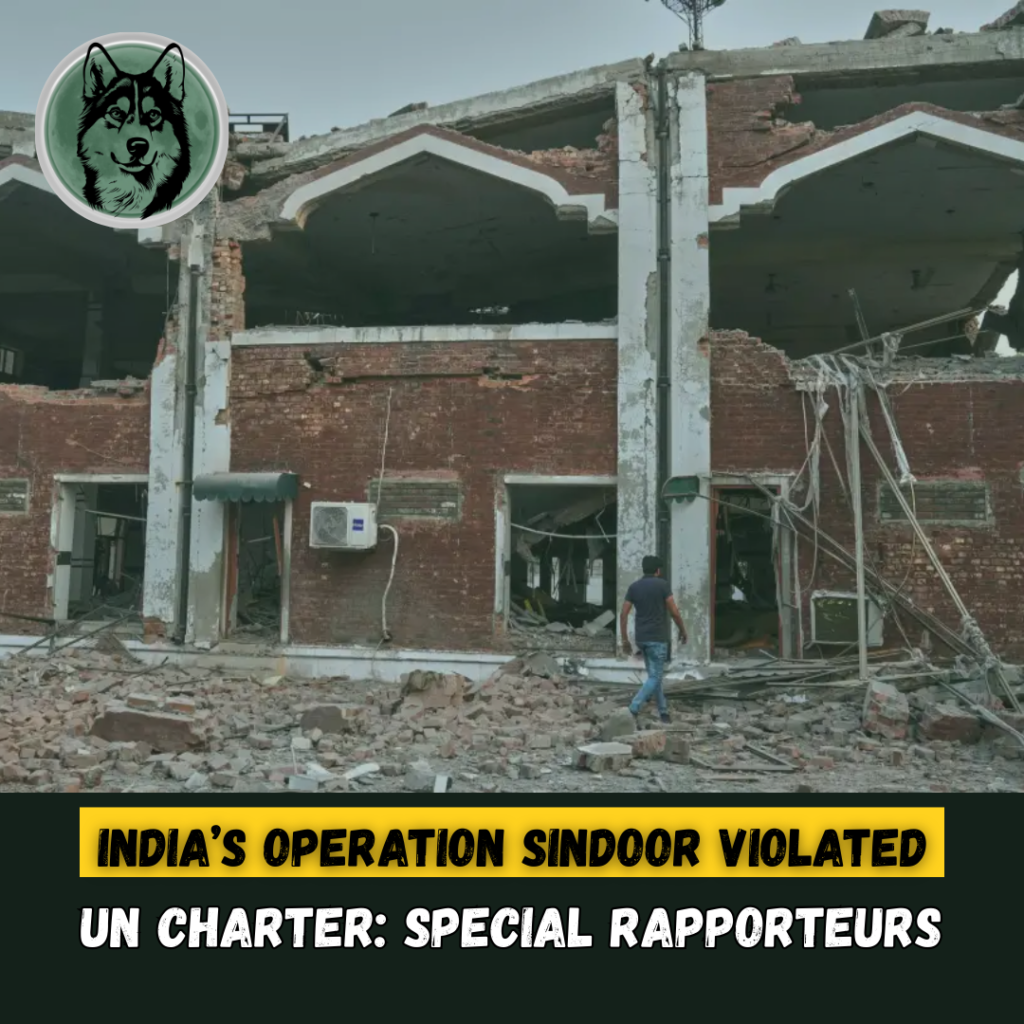
The United Nations has raised serious concerns over India’s May 7 military strikes on Pakistani territory, stating that the actions constituted a breach of international law and the UN Charter, according to a report issued by UN special rapporteurs.
The report, which examined developments in the Indo-Pak conflict, focused on India’s military operation referred to as Operation Sindoor, strongly objecting to New Delhi’s unilateral use of force without multilateral authorization.
Violation of UN Charter Highlighted
UN experts noted that India launched the strikes despite Pakistan’s denial of involvement in the Pahalgam attack and Islamabad’s call for an impartial international investigation. The report emphasized that India failed to formally inform the UN Security Council before carrying out the military action, raising concerns about compliance with international norms.
The rapporteurs concluded that the strikes were inconsistent with the principles of the UN Charter governing the use of force and respect for state sovereignty.
Civilian Harm and Human Rights Concerns
According to the UN report, India’s actions resulted in damage to civilian infrastructure, including mosques, and caused civilian deaths and injuries. The experts stressed that the use of force affecting civilians may violate the fundamental right to life, protected under international human rights law.
They further observed that India did not provide evidence establishing Pakistan’s state-level involvement in the Pahalgam incident, weakening the legal basis for the strikes.
Unilateral Force Cannot Be Justified
The report underlined that terrorism cannot justify unilateral military action, warning that such conduct increases the risk of further escalation between nuclear-armed neighbors.
UN experts reiterated that international law requires disputes to be addressed through lawful and collective mechanisms, rather than unilateral force.
Pakistan’s Right to Self-Defense
Citing Article 51 of the UN Charter, the report acknowledged that Pakistan retains the right to self-defense if India’s actions are deemed to constitute an armed attack. The rapporteurs described the strikes as a serious violation of Pakistan’s sovereignty and the principle of non-interference.
Indus Waters Treaty Also Addressed
The UN experts also reaffirmed Pakistan’s position on the Indus Waters Treaty, warning that any disruption or threat to water flows would impact the basic human rights of millions. They emphasized that water cannot be used as political or economic leverage and that no party has the right to unilaterally suspend the treaty.