





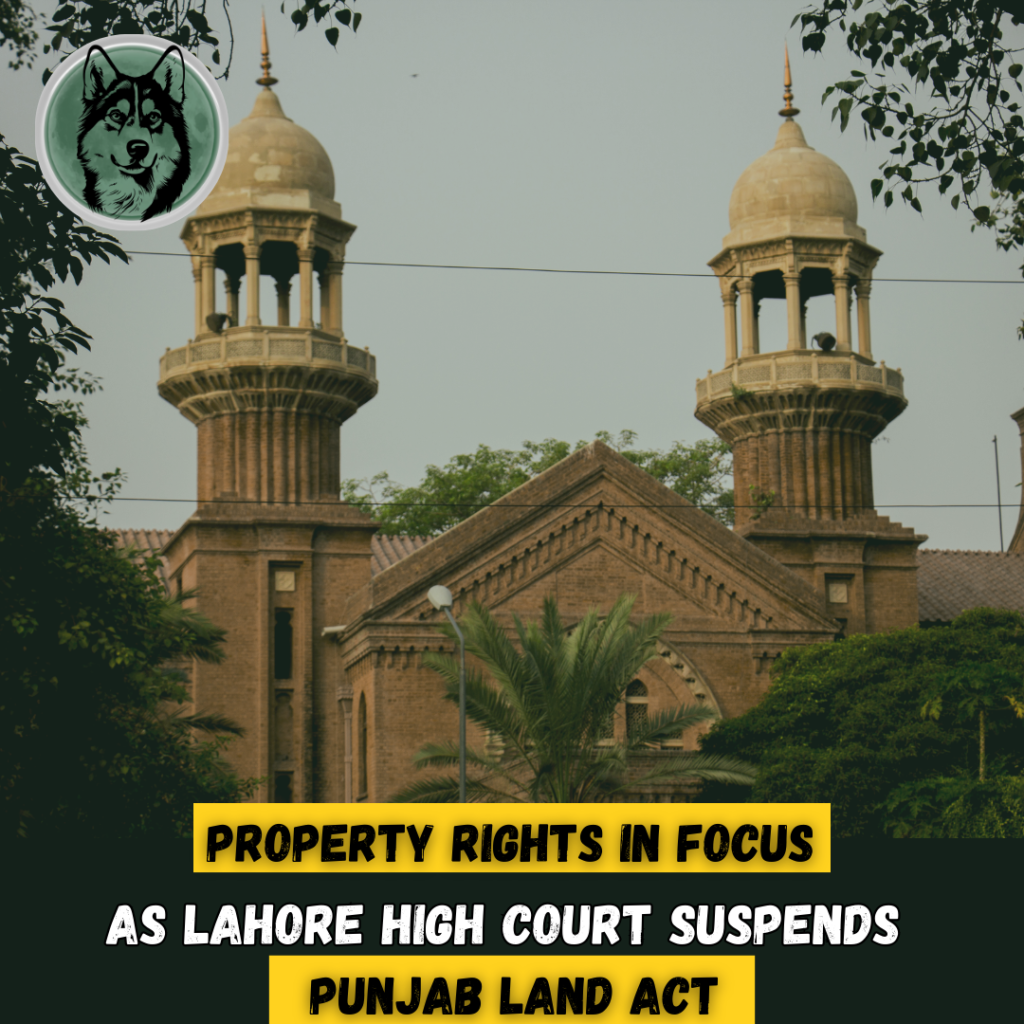
Chief Justice Aalia Neelum suspends Punjab Protection of Ownership of Immovable Property Act, 2025, citing threats to civil rights and judicial authority
LHC Suspends Punjab Land Protection Law
LAHORE: The Lahore High Court (LHC) on Monday suspended the enforcement of the Punjab Protection of Ownership of Immovable Property Act, 2025, raising serious constitutional and legal concerns over the powers granted to executive authorities in land dispute matters.
Chief Justice Aalia Neelum issued the interim order while hearing petitions filed by Abida Parveen and others, who challenged actions taken by dispute resolution committees formed under the newly enacted law.
Dispute Committees’ Decisions Put on Hold
Along with suspending the law itself, the court also stayed all decisions made under the Act, particularly those involving the transfer or removal of possession of disputed properties.
The chief justice directed that possession of properties be restored to the status quo as it existed before complaints were filed with the committees.
Strong Judicial Criticism of the Law
Expressing deep concern, CJ Neelum questioned the intent and implications of the legislation, remarking that if the law remained in force, “even Jati Umra could be vacated within half an hour.”
She warned that the Act appeared to concentrate excessive authority in the hands of executive officials, undermining the civil justice system.
“It seems some people want to hold all powers,” the chief justice observed.
‘Civil Setup and Judicial Supremacy Undermined’
The court noted that the law effectively dismantled the civil judicial framework, depriving citizens of their fundamental right to appeal.
CJ Neelum highlighted that:
- Deputy commissioners were empowered to decide property possession
- No appellate remedy was available to affected citizens
- The Act restricted even the High Court’s ability to grant a stay
“If it were up to the authorities, they would even suspend the Constitution,” she remarked.
Government Concedes Committees Overstepped Authority
During the hearing, an additional advocate general admitted that dispute resolution committees had exceeded their legal mandate, acknowledging that:
- Committees lacked authority to grant possession
- Such powers rested with tribunals headed by former judges
- No such tribunals had been notified in the contested cases
He also confirmed that committees could not act in matters already pending before civil courts.
Absence of Advocate General Noted
Punjab Chief Secretary Zahid Akhtar Zaman and other senior officials were present in court, though the advocate general did not appear, citing illness.
CJ Neelum responded pointedly, noting she herself was unwell and advised bed rest, yet continued to preside over the proceedings.
Full Bench to Hear Constitutional Challenge
The chief justice announced that a full bench of the LHC would be constituted to hear the matter in detail and adjourned the proceedings until further orders.
All actions and proceedings under the Act have been stayed indefinitely.
Government Weighs Legal Options
Separately, a provincial law officer said the Punjab government is considering:
- Filing an appeal before the Supreme Court
- Approaching the Federal Constitutional Court
- Seeking review by the proposed full bench (though chances remain slim)
Background of the Controversial Law
The ordinance, approved by Chief Minister Maryam Nawaz on October 31, aimed to resolve land disputes within 90 days. It was later replaced by the Act on December 18, 2025.
Earlier hearings had already drawn judicial criticism over the involvement of the Punjab Enforcement Regulatory Authority, with CJ Neelum questioning why revenue officials appeared eager to act as judges in matters pending before courts.