



Privatization seen as key to restoring aviation credibility and easing fiscal burden
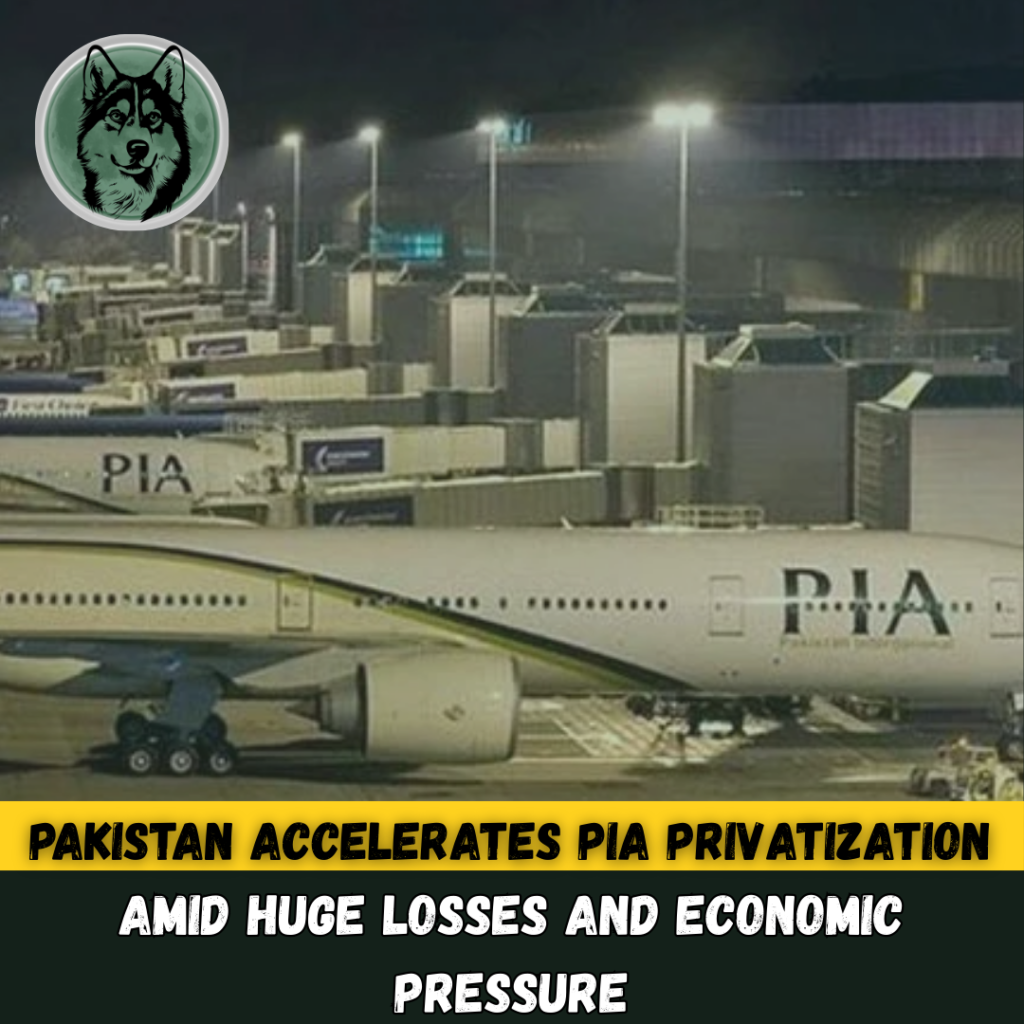
Pakistan accelerates PIA privatization amid huge losses and economic pressure
After decades of financial distress and repeated bailout cycles, the Government of Pakistan is moving decisively toward privatizing Pakistan International Airlines (PIA).The renewed push comes amid severe fiscal pressures, international financing conditions, and the urgent need to restore credibility in the national aviation sector.
Deep losses and mounting liabilities
PIA’s financial troubles rank among the most severe in Pakistan’s state-owned enterprise history.By the end of 2023, accumulated losses had surged to approximately Rs724 billion, driven by years of inefficiency, mismanagement, and high operating costs.Earlier government estimates placed total debt and liabilities near Rs743 billion, more than five times the airline’s asset base, underscoring the scale of deterioration.
Before restructuring began, PIA was recording massive annual losses.In 2022 alone, losses exceeded Rs38 billion within a single three-month period, placing immense pressure on public finances and forcing repeated state intervention.
When the decline began
PIA’s downward trajectory accelerated in the early 2010s as it slipped from profitability into continuous losses.By 2016–2018, total debt crossed $3 billion, creating an unsustainable financial structure.The airline has not posted consistent profits since 2003, making prolonged losses a defining feature of its modern history.
Recent turnaround and renewed momentum
In 2024–2025, government-led restructuring efforts began to show results.Key reforms included workforce rationalization, route optimization, and the transfer of a large portion of legacy debt to government accounts.
These measures led to a historic turnaround.Fiscal year 2024 closed with an operating profit of Rs9.3 billion and a net profit of Rs26.2 billion—the airline’s first annual profit in over 21 years.In the first half of 2025, PIA posted a pre-tax profit of Rs11.5 billion, the first such half-year gain since 2004.
The improved financial performance significantly boosted investor confidence and strengthened the case for privatization.
Why privatization is happening now
Several factors are driving the government’s urgency.
Fiscal pressure remains paramount.PIA’s repeated bailouts drained public funds that could otherwise support development and social programs.Privatization is seen as a way to permanently end state subsidies.
International financial commitments also play a key role.Pakistan’s economic support arrangements, including IMF-linked programs, emphasize privatizing loss-making state enterprises as a condition for long-term stability.
Additionally, improved financial indicators have made PIA a more attractive target for strategic investors capable of injecting capital, expertise, and modern management practices.
National reputation and economic impact
PIA’s prolonged decline damaged Pakistan’s global image.Grounded aircraft over unpaid dues, operational disruptions, and international regulatory restrictions weakened confidence in the country’s aviation sector.
Economically, taxpayer-funded bailouts and debt servicing crowded out productive spending.Persistent losses discouraged both local and foreign investment, while regional competitors steadily captured market share on key routes once dominated by PIA.
Privatization is viewed as a pathway to restoring reliability, improving safety standards, and strengthening Pakistan’s international connectivity.
What privatization could mean
A successful privatization could reduce fiscal pressure, improve service quality, enhance operational efficiency, and rebuild Pakistan’s aviation reputation.However, the process remains sensitive, requiring careful handling of employee concerns, service continuity, and compliance with international aviation norms.
Final thoughts
PIA’s privatization marks a pivotal moment in Pakistan’s economic reform journey.After decades of losses and mounting debt, a well-executed sale could transform the airline from a symbol of financial strain into a commercially viable carrier aligned with global standards.