


Crash occurs a day after Turkey extends troop deployment in Libya
Senior Military Delegation Lost in Tragic Incident
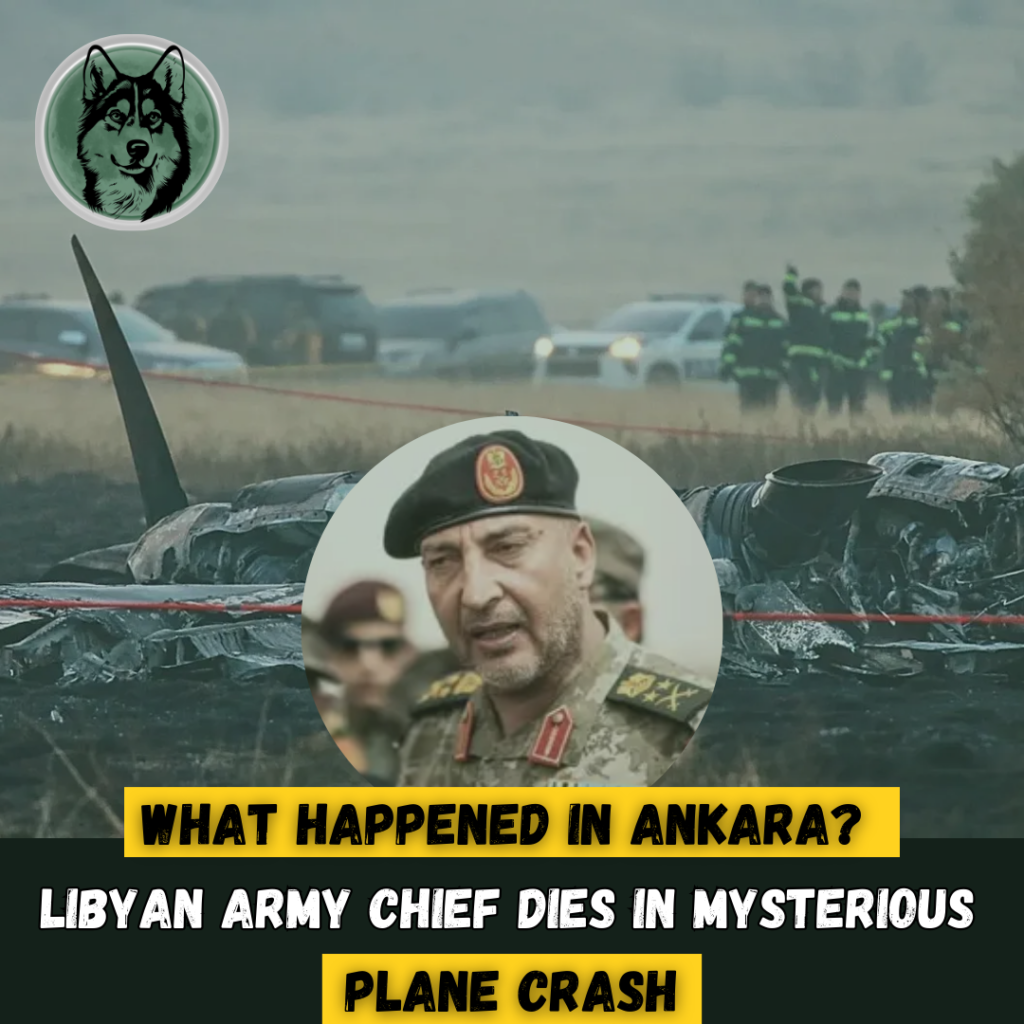
Libya’s Chief of Staff of the Armed Forces, General Mohammed Ali Ahmed Al-Haddad, has died in a plane crash shortly after departing from Turkey’s capital, Ankara, according to Libya’s internationally recognised government.
The crash occurred as the aircraft was en route to Tripoli following an official visit to Turkey, where General Al-Haddad held meetings with senior Turkish defence and military officials.
Libyan Prime Minister Abdulhamid Dbeibah described the incident as a “tragic and painful loss,” saying it was a major blow to Libya’s military institution and the nation as a whole.
What Happened: Timeline of the Crash
According to Turkish authorities, the Dassault Falcon 50 aircraft took off from Ankara’s Esenboga Airport and lost radio contact less than an hour into the flight.
The jet reportedly requested an emergency landing while flying over Ankara’s Haymana district, but communication could not be re-established. Wreckage was later found near Kesikkavak village.
Alongside General Al-Haddad, four others were on board:
- The commander of Libya’s ground forces
- The head of Libya’s military manufacturing authority
- An adviser to the chief of staff
- A photographer from the chief of staff’s office
The cause of the crash has not yet been determined.
Why the Timing Raises Questions
The crash occurred just one day after Turkey’s parliament voted to extend the deployment of Turkish troops in Libya by two more years, a decision that reinforces Ankara’s long-term military and political involvement in the conflict-torn country.
Turkey has been a key backer of Libya’s Tripoli-based government since 2020, providing military training, advisory support, and strategic cooperation agreements moves strongly opposed by regional rivals such as Egypt and Greece.
While no official link has been drawn between the crash and political developments, the timing has inevitably fueled speculation.
Turkey–Libya Ties: Strategic Context
In recent years, Ankara and Tripoli have deepened ties through:
- Military cooperation and training missions
- A disputed maritime boundary agreement
- Energy exploration accords in the eastern Mediterranean
General Al-Haddad’s visit was part of ongoing coordination between the two governments, making his sudden death a significant setback for Libya’s defence leadership.
Critical Analysis: Accident or Strategic Shock?
At present, there is no evidence suggesting foul play, and authorities have urged caution against speculation. However, the loss of multiple senior military figures in a single incident raises serious concerns for Libya’s already fragile security structure.
From a strategic perspective, the death of Libya’s top military commander could:
- Disrupt command continuity within Libya’s armed forces
- Slow or complicate military coordination with Turkey
- Create power vacuums in an already divided security environment
The incident underscores how deeply Libya’s internal stability is intertwined with regional geopolitics and how sudden events can reshape strategic equations overnight.
What Happens Next?
Investigations by Turkish authorities are underway to determine the cause of the crash. Libya is expected to announce interim military leadership arrangements in the coming days as it seeks to maintain stability within its armed forces.
For now, the tragedy leaves Libya mourning a senior commander while the region watches closely for its political and security implications.