



Political interference blamed for chronic mismanagement
Public Hospitals Crippled by Official Neglect
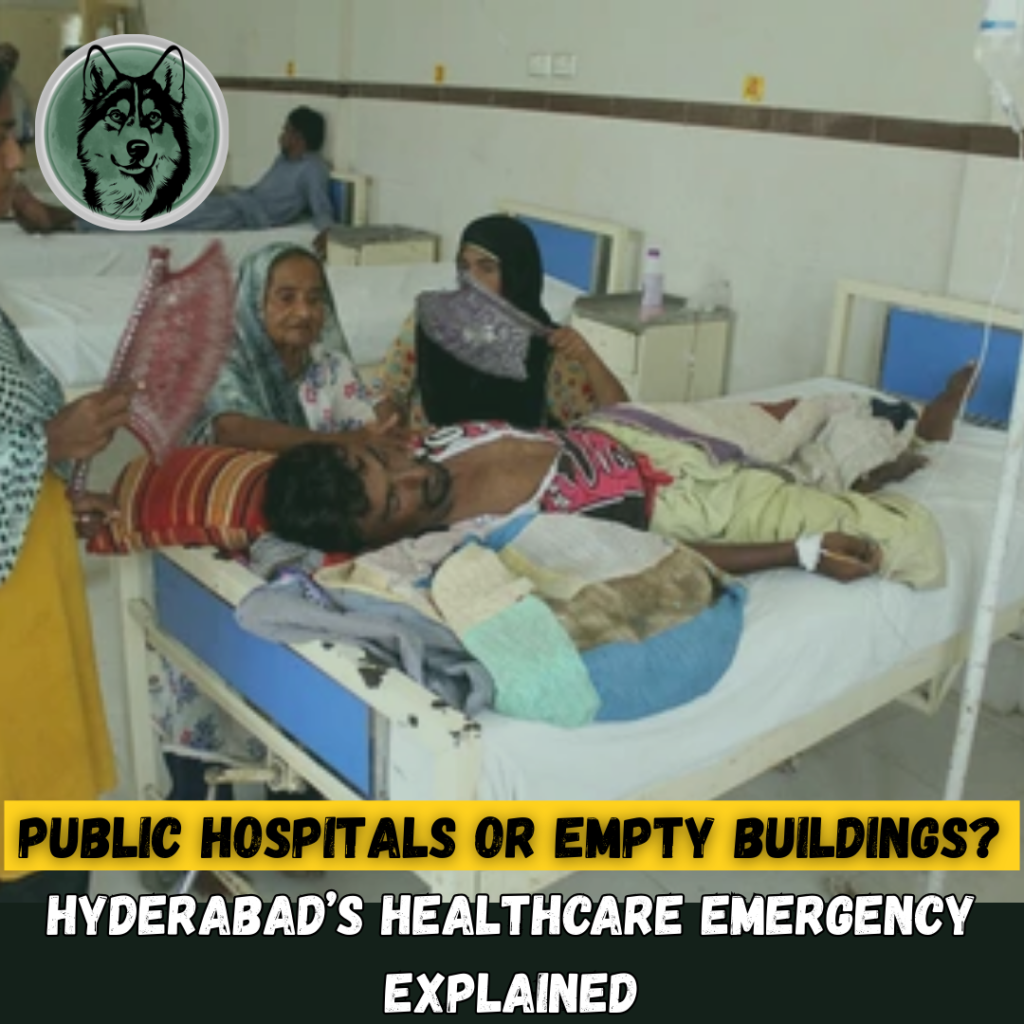
Government-run hospitals across Hyderabad are struggling to provide even basic medical services amid acute shortages of medicines, diagnostic facilities, and functional medical equipment, exposing what many describe as prolonged official neglect by the Sindh Health Department.
According to reports, essential medicines have virtually vanished from Civil Hospital Hyderabad as well as all taluka hospitals in the city, leaving patients with no option but to seek costly treatment at private facilities.
What Patients Are Facing on the Ground
At taluka-level hospitals, even routine laboratory tests cannot be conducted due to the absence or prolonged malfunctioning of basic diagnostic machinery. As a result, patients are routinely referred to private laboratories, where they are charged thousands of rupees for preliminary tests.
This financial burden has pushed many low-income families deeper into distress, turning what should be accessible public healthcare into an unaffordable luxury.
Non-Functional Facilities and Empty Wards
The crisis has worsened to the extent that the trauma centre on Hala Naka Road remains non-functional, while several large government hospital buildings present a deserted look at night.
This has shifted overwhelming pressure onto Civil Hospital Hyderabad, the only major public healthcare facility serving not just the city but large parts of interior Sindh. Despite this, the hospital itself is plagued by broken machinery and limited treatment options.
Diagnostic Bottlenecks at Civil Hospital
Hospital sources reveal that Civil Hospital currently has:
- Only one MRI machine operational
- Only one CT scan machine functional
Patients requiring MRI scans are often advised to wait one to two months, delaying critical diagnoses. In emergency cases, only basic first aid is provided, after which patients are referred to Karachi due to the lack of advanced facilities.
The burns ward faces similar challenges, lacking modern treatment options despite having a designated unit.
ICU Without Immediate Testing
Even the Intensive Care Unit (ICU) lacks immediate testing facilities, forcing critically ill patients to rely on private laboratories for urgent diagnostics.
Hundreds of patients visit the hospital’s OPDs daily, but due to the unavailability of government-supplied medicines, doctors frequently prescribe medicines to be purchased externally.
Taluka Hospitals in Worse Shape
Conditions at taluka hospitals are reportedly even more alarming.
Facilities including:
- Sindh Government Bhittai Hospital Latifabad
- Government Hospital Qasimabad
- Kohsar Hospital Latifabad
- Government Hospital Pretabad
- Government Hospital Hali Road
along with several basic health units, lack not only diagnostic facilities but also essential medicines. Patients with serious conditions are often referred to Civil Hospital without proper examination, while OPD patients are sent directly to private medical stores and laboratories.
Critical Analysis: Systemic Failure, Not a Shortage of Buildings
The healthcare collapse in Hyderabad appears less about a lack of infrastructure and more about mismanagement, weak oversight, and political interference.
Hospital insiders point to:
- Appointments based on influence rather than merit
- Chronic administrative inefficiency
- Poor accountability within the health department
Past unrest by patient attendants and disturbing complaints, including allegations related to newborn transfers, underline the depth of the governance crisis.
Despite billions allocated annually to the health sector, the absence of basic medicines and functioning machines raises serious questions about spending priorities and monitoring mechanisms.
The Bigger Question
Hyderabad’s healthcare emergency highlights a wider provincial challenge: can public hospitals survive without structural reform, transparency, and accountability? For thousands of patients, the cost of official neglect is not political, it is personal, financial, and sometimes fatal.