




Three-year quota offers alternative to dangerous migration routes
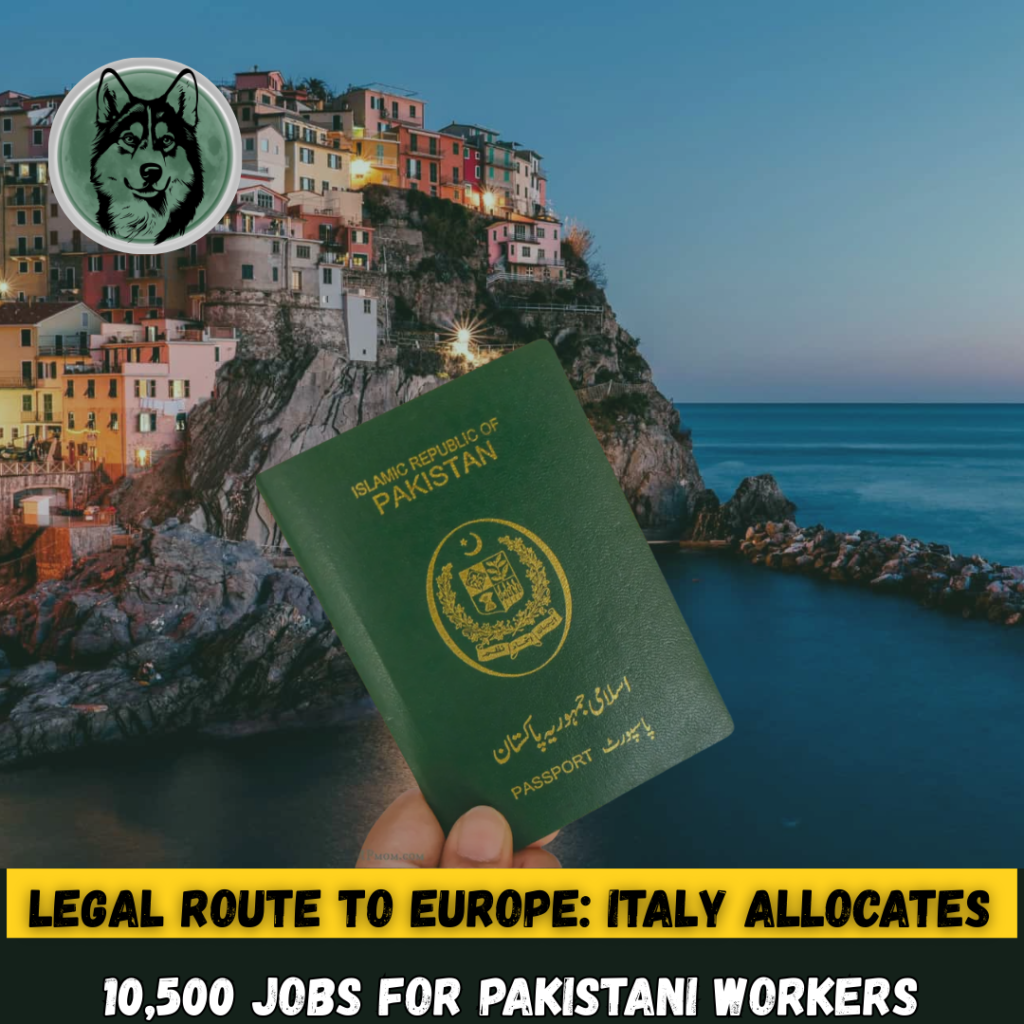
Italy has opened a rare and significant legal pathway for Pakistani workers to Europe by allocating a quota of 10,500 jobs over the next three years a move officials believe could help reduce illegal migration and dangerous journeys across the Mediterranean.
Under the agreement, 3,500 Pakistani workers will be allowed to travel to Italy each year under both seasonal and non-seasonal employment schemes, according to the Ministry of Overseas Pakistanis and Human Resource Development.
How the Quota Will Work
Of the annual quota, 1,500 workers will be hired under seasonal arrangements, while 2,000 will be placed in non-seasonal jobs.
The initiative makes Italy the first European country to formally open its labour market to Pakistan through a quota-based mechanism, a development officials say could pave the way for similar agreements with other European nations.
Migration Pressures Continue to Rise
The move comes at a time when outward migration from Pakistan is accelerating sharply.
Nearly 2.9 million Pakistanis left the country over the past three years, driven by low wages, rising inflation, unemployment, and increasing education costs. According to the Economic Survey 2024–25, more than one million Pakistanis went abroad for work in a single fiscal year.
With overseas employment playing an increasingly vital role in household incomes and national remittances, officials say structured migration channels are becoming an economic necessity.
A Legal Alternative to Risky Routes
Authorities say the Italian quota offers a regulated, state-backed alternative to irregular migration, which has surged in recent years.
Illegal migration to Europe jumped by 280% in 2022, with thousands of Pakistanis attempting perilous journeys through Libya, Egypt, and other transit routes. Many fall prey to human smugglers, facing detention, deportation, or even death while crossing the Mediterranean.
By providing a lawful route to Europe, the Italy deal aims to reduce desperation-driven migration and redirect workers into safer, transparent systems.
Sectors Open to Pakistani Workers
Italy has allocated positions for Pakistani workers across several sectors facing labour shortages, including:
- Shipbreaking
- Hospitality and tourism
- Healthcare
- Agriculture
Jobs include welders, technicians, chefs, waiters, housekeeping staff, nurses, medical technicians, farm workers, and agricultural labourers.
Officials say the scheme targets skilled and semi-skilled workers, matching Pakistan’s labour supply with Italy’s workforce needs.
Provinces Likely to Benefit Most
Punjab, Pakistan’s largest source of overseas labour, is expected to benefit the most. Official data shows the province has sent over 7.2 million emigrants abroad since 1981.
It is followed by Khyber Pakhtunkhwa, Sindh, and Azad Jammu and Kashmir.
“A Major Milestone”
Federal Minister for Overseas Pakistanis Chaudhry Salik Hussain described the agreement as a “major milestone,” saying it was secured after sustained diplomatic engagement, including a special request to Italian authorities.
He said the deal opened new doors for Pakistani workers in the European labour market and reaffirmed that overseas Pakistanis remain “the backbone of the national economy.”
What Comes Next
Officials say momentum is expected to continue. The second meeting of the Pakistan–Italy Joint Working Group is scheduled for February 2026 in Islamabad, where discussions will focus on implementation and the possibility of expanding the quota.
For a country that has seen more than 13.8 million people emigrate since 1981, Italy’s decision signals a potential shift from illegal, risky journeys toward legal, skills-based mobility supported by the state.