



Thailand–Cambodia Agree to Ceasefire After Weeks of Deadly Border Fighting
Thailand and Cambodia have agreed to halt weeks of intense border clashes, marking the worst fighting between the two Southeast Asian neighbors in years. The conflict had escalated to include fighter jet operations, rocket exchanges, and sustained artillery fire along disputed frontier areas.
Ceasefire Terms and Military Commitments
According to a joint statement issued by both defense ministries, the ceasefire took effect at noon (0500 GMT) on Saturday. Both sides agreed to maintain their current troop deployments without any further movement, warning that reinforcements could escalate tensions and undermine long-term peace efforts.
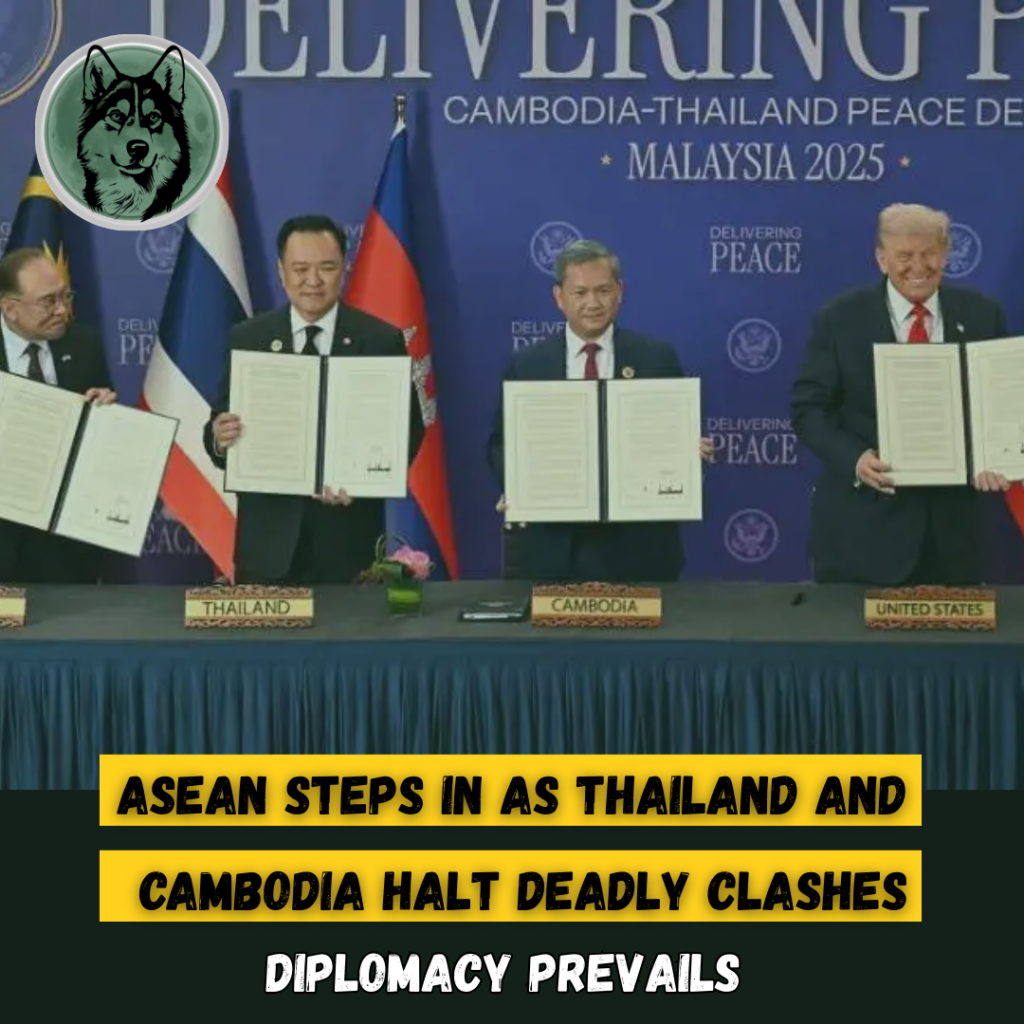
The agreement was signed by Thai Defense Minister Natthaphon Nakrphanit and Cambodian Defense Minister Tea Seiha.
Human Cost of the Conflict
The 20-day conflict resulted in at least 101 fatalities and forced over half a million people to flee their homes on both sides of the border. The renewed violence followed the collapse of an earlier truce that had been brokered with the involvement of U.S. President Donald Trump and Malaysian Prime Minister Anwar Ibrahim.
A Century-Old Border Dispute
Thailand and Cambodia have disputed sovereignty over several un-demarcated areas along their 817-kilometre (508-mile) land border for more than a century. These unresolved claims have periodically erupted into armed clashes.
ASEAN to Monitor Ceasefire
The latest ceasefire will be monitored by an observer team from the Association of Southeast Asian Nations (ASEAN), alongside direct military and diplomatic coordination between the two countries.
“At the policy level, there will be direct communication between the defence ministers and the chiefs of armed forces of both sides,” Natthaphon told reporters.
Background to Renewed Fighting
Tensions intensified earlier this year in July, when five days of clashes killed at least 48 people and displaced around 300,000, before external mediation led to a temporary truce. That ceasefire collapsed in early December, with both sides accusing each other of provocations.
Despite renewed diplomatic efforts, including ASEAN-led initiatives, fighting spread from forested border regions near Laos to coastal provinces along the Gulf of Thailand.
Diplomatic Breakthrough and Humanitarian Measures
The renewed ceasefire followed a special meeting of Southeast Asian foreign ministers in Kuala Lumpur and three days of negotiations at a border checkpoint, culminating in Saturday’s agreement.
Both sides pledged to allow displaced civilians to return safely and committed to avoiding the use of force against non-combatants.
Under the agreement, Thailand will return 18 Cambodian soldiers captured during the July clashes, provided the ceasefire holds for at least 72 hours.