

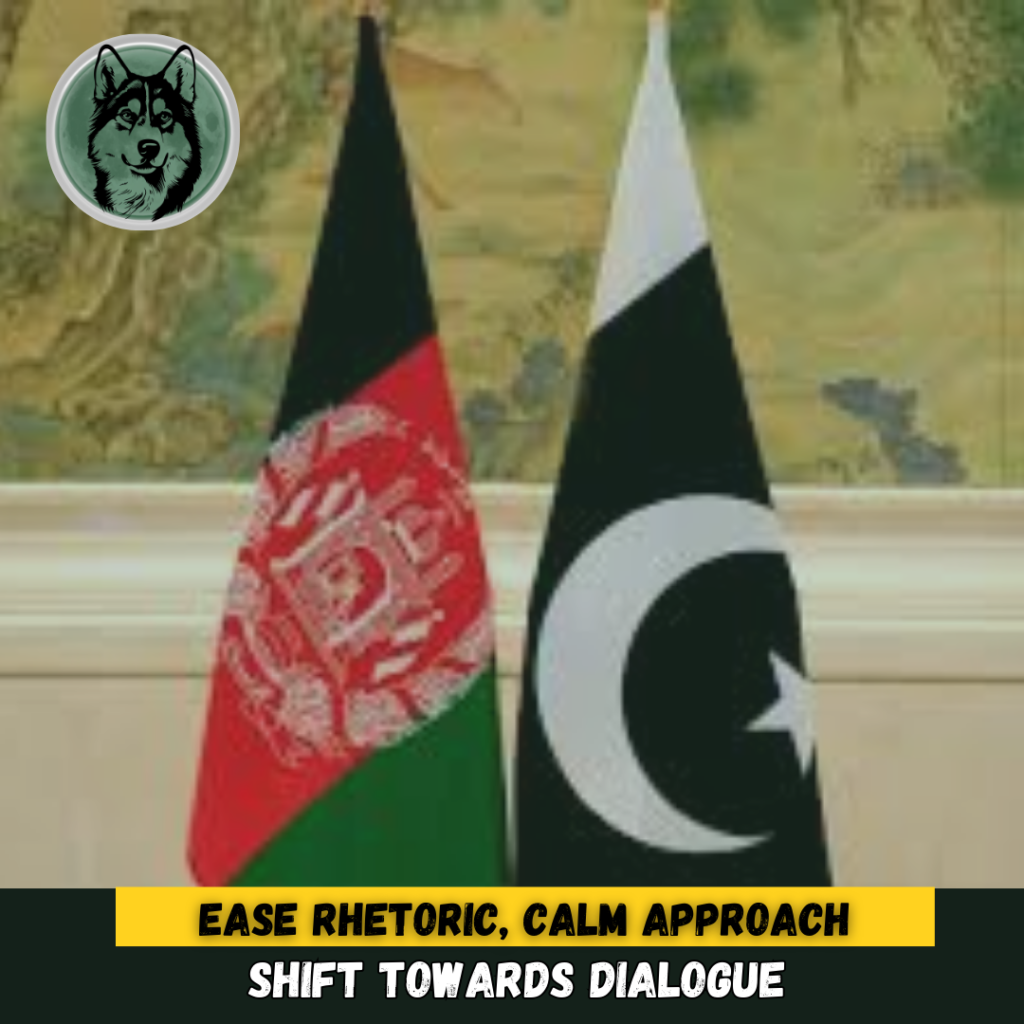
Calm Approach, Ease Rhetoric, Seek Reset in Ties
Pakistan and Afghanistan Move Towards Cautious Diplomacy
Pakistan and Afghanistan are showing signs of a renewed, albeit cautious, effort to address their long-standing differences over the banned Tehreek-e-Taliban Pakistan (TTP). Recent developments indicate a deliberate attempt by both sides to tone down public rhetoric, even though a broader breakthrough remains uncertain.
While a stalemate persists on core security concerns, especially Islamabad’s insistence that Afghan territory should not be used for cross-border attacks, behind-the-scenes diplomacy appears to be producing some tangible outcomes. Key among them is a shift toward dialogue and away from confrontation.
Religious Intervention Supports De-escalation
Mediators reportedly encouraged both countries to lower public rhetoric to create a positive environment for talks. As a result, the Taliban regime in Kabul has taken steps such as issuing a fatwa and making clear statements to address Pakistan’s security concerns.
Afghan Ulema recently issued a fatwa prohibiting attacks outside Afghan borders. Islamabad welcomed this move as a confidence-building measure, though it is not seen as a definitive solution.
Following the fatwa, Afghanistan’s Interior Minister Sirajuddin Haqqani reassured Pakistan that Afghan soil would not be used against any country. Pakistani officials interpreted these remarks as part of a broader effort to rebuild trust and de-escalate tensions.
Diplomatic Exchange of Statements
Deputy Prime Minister and Foreign Minister Ishaq Dar praised Haqqani’s statement, emphasizing negotiation over confrontation. In response, Haqqani welcomed Dar’s remarks and a statement from Pakistani religious scholars urging dialogue between both governments. Afghanistan’s Foreign Minister Amir Khan Muttaqi highlighted the constructive role religious leaders have historically played in easing tensions.
This growing involvement of religious voices aims to create political and moral space for de-escalation, at a time when formal diplomatic channels have struggled to deliver concrete results.
Progress Limited, Talks Continue
Despite multiple rounds of talks in Saudi Arabia, Turkiye, and Qatar, progress has been limited. Islamabad has repeatedly stressed that improved ties depend on verifiable action against the TTP, which it claims operates from Afghan territory. Kabul maintains that it does not permit its soil to be used for attacks, framing the issue largely as an internal Pakistani challenge.
Dar emphasized that Pakistan is seeking concrete counterterrorism measures, not just rhetorical assurances. He welcomed the fatwa and Haqqani’s statement as positive signals but stressed the need for visible action within the next two to four weeks to influence Islamabad’s stance.
Narrow Opening for Engagement
Currently, both sides are calibrating their approach—avoiding public escalation, welcoming conciliatory language, and allowing religious actors to mediate. While it remains uncertain whether this softer tone will lead to concrete actions, the recent exchange marks a departure from the sharp rhetoric that has defined the past year, offering a small window for renewed engagement.