



Chenab River controversy: treaty violation, climate impact, and rising tensions
India’s Ministry of Environment is moving forward with approvals for several hydroelectric projects on the Chenab River, despite strong warnings from environmentalists about the potential damage to fragile Himalayan ecosystems. The approvals follow the Pahalgam incident earlier this year, which heightened tensions between India and Pakistan.
Dulhasti Stage-II Gets Clearance
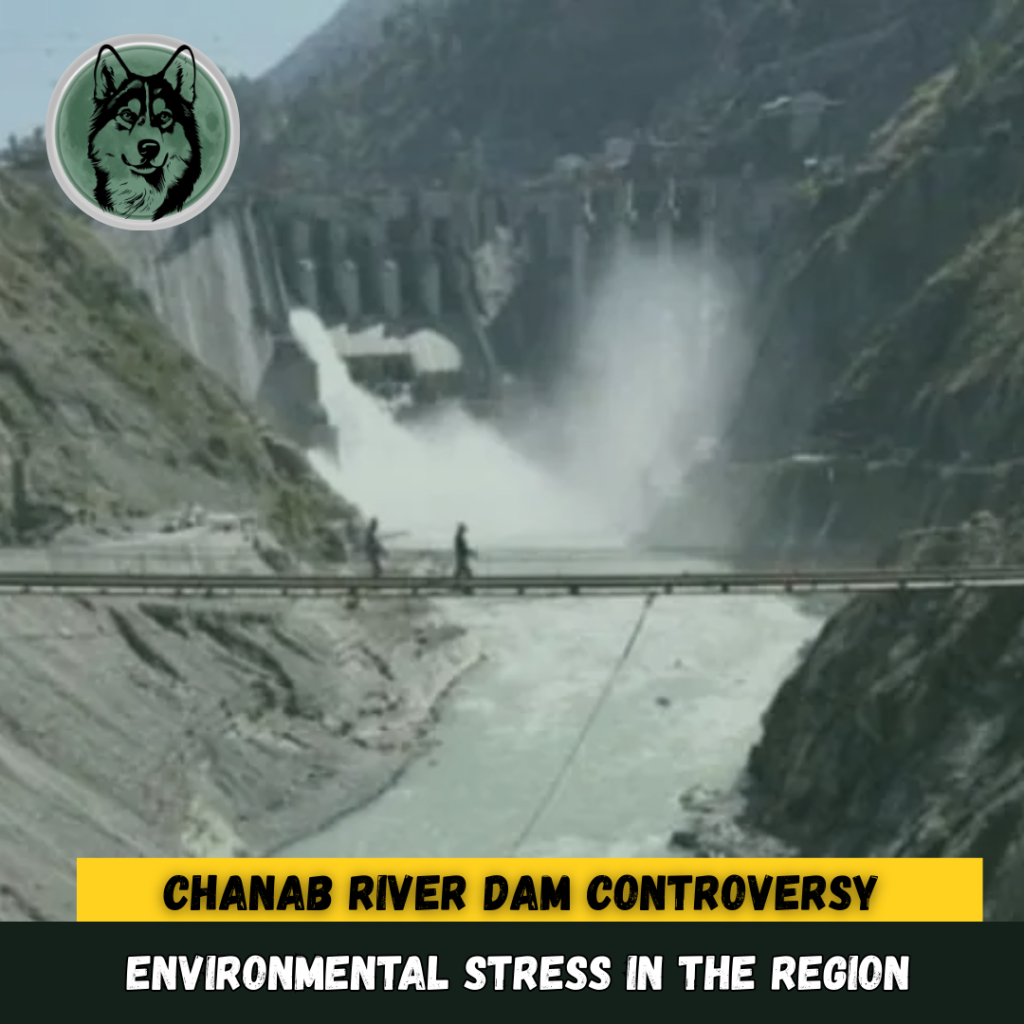
Last week, a panel under India’s Ministry of Environment approved the 260MW Dulhasti Stage-II hydropower project in Kishtwar district of Indian-administered Jammu and Kashmir, according to The Hindu.
This smaller run-of-the-river project aims to use water discharged from the existing 390MW Dulhasti Power Station more efficiently. The total cost is estimated at $35 million, with 60.3 hectares of land required, including 8.27 hectares of private land from the villages of Benzwar and Palmar.
Earlier in October, India also revived environmental clearances for the 1,856MW Sawalkote hydropower project, a long-delayed scheme on the same river.
Context: Treaty Tensions and Water Diplomacy
India’s approvals come amid heightened tensions over the Indus Waters Treaty (IWT). Following the Pahalgam incident, India unilaterally suspended the 1960 treaty, accusing Pakistan—an allegation Islamabad denied, calling the suspension “an act of war.”
Pakistan’s Foreign Office warned of New Delhi’s “weaponisation of water” after sudden changes in the flow of the Chenab and Jhelum rivers disrupted agriculture in Punjab.
Foreign Minister Ishaq Dar highlighted that the Permanent Court of Arbitration (PCA) reaffirmed the treaty’s continued validity and dispute-resolution mechanisms. UN rapporteurs also expressed concern over India’s actions.
The Projects in Focus
Sawalkote Project
- Capacity: 1,856MW
- Status: Pre-construction stage
- History: Delays due to forest clearances and treaty compliance
- Significance: Part of India’s broader hydroelectric push in the Indus Basin
Dulhasti Stage-II
- Capacity: 258MW
- Type: Run-of-the-river
- Purpose: Optimize water usage from the existing Dulhasti station
- Cost: $35 million
Other projects being fast-tracked include Ratle, Bursar, Pakal Dul, Kwar, Kiru, Kirthai I & II.
Environmental Concerns
Environmentalists have raised critical alarms over the ecological impact and the effects of climate change:
- Glacial depletion: Studies show a 33.3% reduction in Chenab basin glaciers from 1960 to 2004-05.
- Water security: Glacial melt contributes 50% of the Chenab’s flow at Akhnoor; it is vital for irrigation across the Indus basin.
- Risk to Himalayan ecology: The river’s health is crucial for millions in both India and Pakistan.
“Glaciers, the water stored in them, and their slow release are key to water security in the Himalayan region. Sixty percent of irrigation in the Indus basin depends on this melt,” warns the South Asia Network on Dams, Rivers, and People (SANDRP).
Pakistan’s Response
While Pakistan’s Foreign Office has not issued an immediate statement, former climate change minister Senator Sherry Rehman strongly criticized India’s actions as “neither sane nor acceptable.”
On social media, she stated:
“India has approved the Dulhasti Stage-II project in IIOJ&K in blatant violation of the IWT. Pakistan retains control over the Indus, Jhelum, and Chenab rivers, while India controls the Ravi, Beas, and Sutlej. Fast-tracking these projects is a direct threat to regional water security and climate resilience.”
She warned that such moves would escalate tensions in an already volatile bilateral relationship and exacerbate environmental stress in the region.