





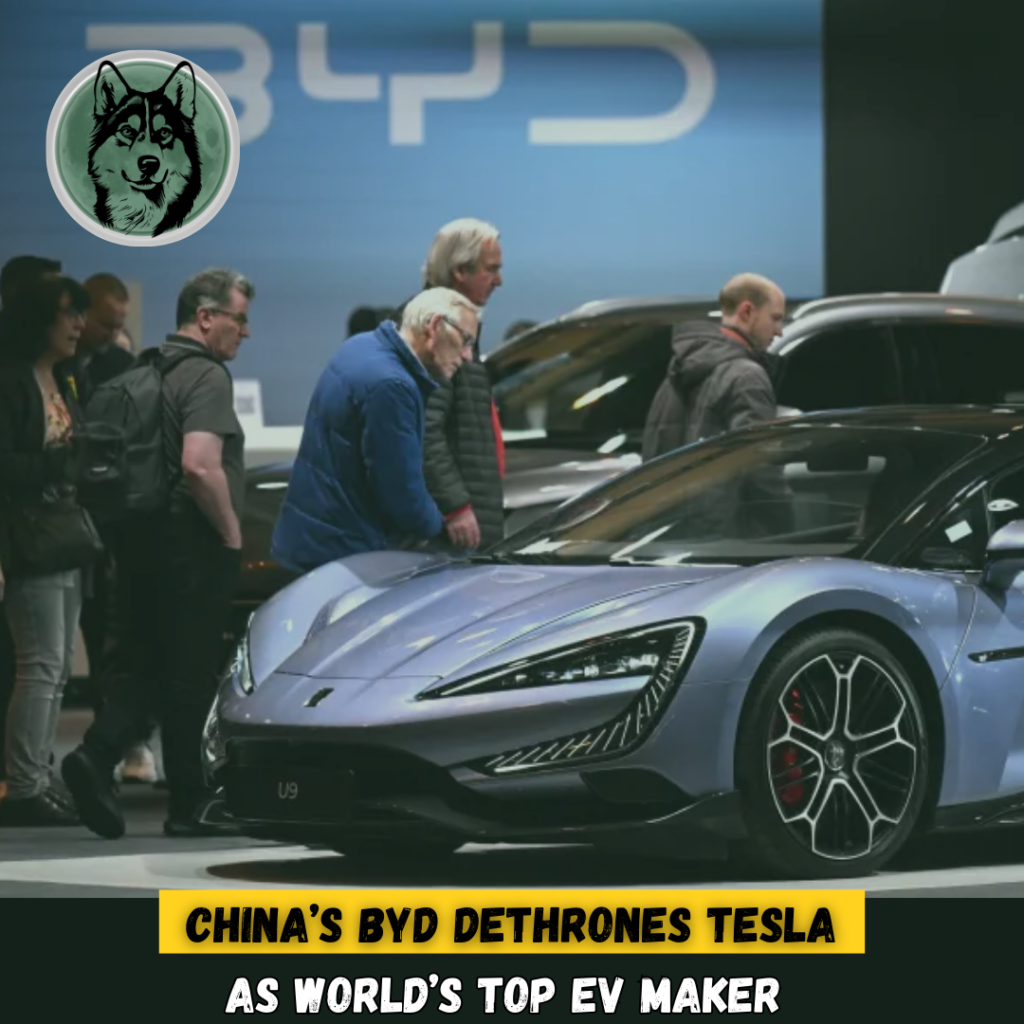
Tesla sales fall for second straight year as BYD crosses 2.2 million units
Tesla has relinquished its long-held position as the world’s largest electric vehicle manufacturer to China’s BYD, after posting a second consecutive year of declining sales amid intensifying global competition.
According to company reports, Tesla sold 1.64 million vehicles in 2025, marking a 9 percent year-on-year decline, while BYD delivered 2.26 million units, firmly taking the global lead. The shift reflects changing dynamics in the EV market, particularly in Europe and Asia, where more affordable Chinese models continue to gain traction.
Weak Quarter Caps Difficult Year for Tesla
Tesla’s challenges were underscored by a softer-than-expected fourth quarter. The company delivered 418,227 vehicles, missing even the recently lowered analyst forecast of 440,000 units, signaling persistent demand pressures.
Analysts note that Tesla’s pricing power has weakened as competition intensifies, especially from Chinese automakers offering lower-cost EVs with improving technology and range.
Factors Behind Tesla’s Sales Decline
Several factors contributed to Tesla’s downturn. The phase-out of the $7,500 US EV tax credit in September 2025 dampened domestic demand, while rising competition eroded Tesla’s dominance in key overseas markets, particularly Europe.
CEO Elon Musk’s political involvement also drew controversy. His role on a federal “government efficiency” panel (DOGE) and public support for former President Donald Trump sparked protests at Tesla facilities, leading to a temporary sales slowdown. Musk stepped down from the panel in May in an effort to reassure investors.
BYD’s Global Expansion Accelerates
BYD’s growth has been fueled by strong demand in Asia and Europe, where competitively priced models have resonated with cost-conscious consumers. Global EV sales rose 28 percent in 2025, highlighting BYD’s rapid expansion as Tesla struggled to maintain momentum.
Market analysts say BYD’s vertically integrated manufacturing and battery expertise have helped it scale faster while keeping costs down.
Tesla Looks Beyond Traditional EVs
Despite losing the sales crown, Tesla investors remain focused on the company’s long-term strategy, which increasingly extends beyond conventional electric vehicles.
Tesla has rolled out more affordable versions of the Model Y and Model 3 to counter Chinese rivals, while also investing heavily in driverless robotaxi services, artificial intelligence, and humanoid robots designed for home and industrial use.
The company’s shares ended 2025 up around 11 percent, reflecting continued confidence in Musk’s broader vision. Musk also secured a $55 billion pay award following a Delaware Supreme Court ruling, and the anticipated public offering of SpaceX later this year could further boost his net worth.
Strategic Shift Raises Questions
While Tesla’s pivot toward robotics and AI could redefine its future growth, analysts caution that the shift raises questions about near-term automotive performance, especially as rivals rapidly expand their EV portfolios.
As BYD cements its position at the top of the EV market, the race now appears less about dominance in electric cars alone and more about which company can shape the future of mobility.