



What the Article Is, Where It Came From, Why It Went Viral, and Why It Sparked Strong Reactions
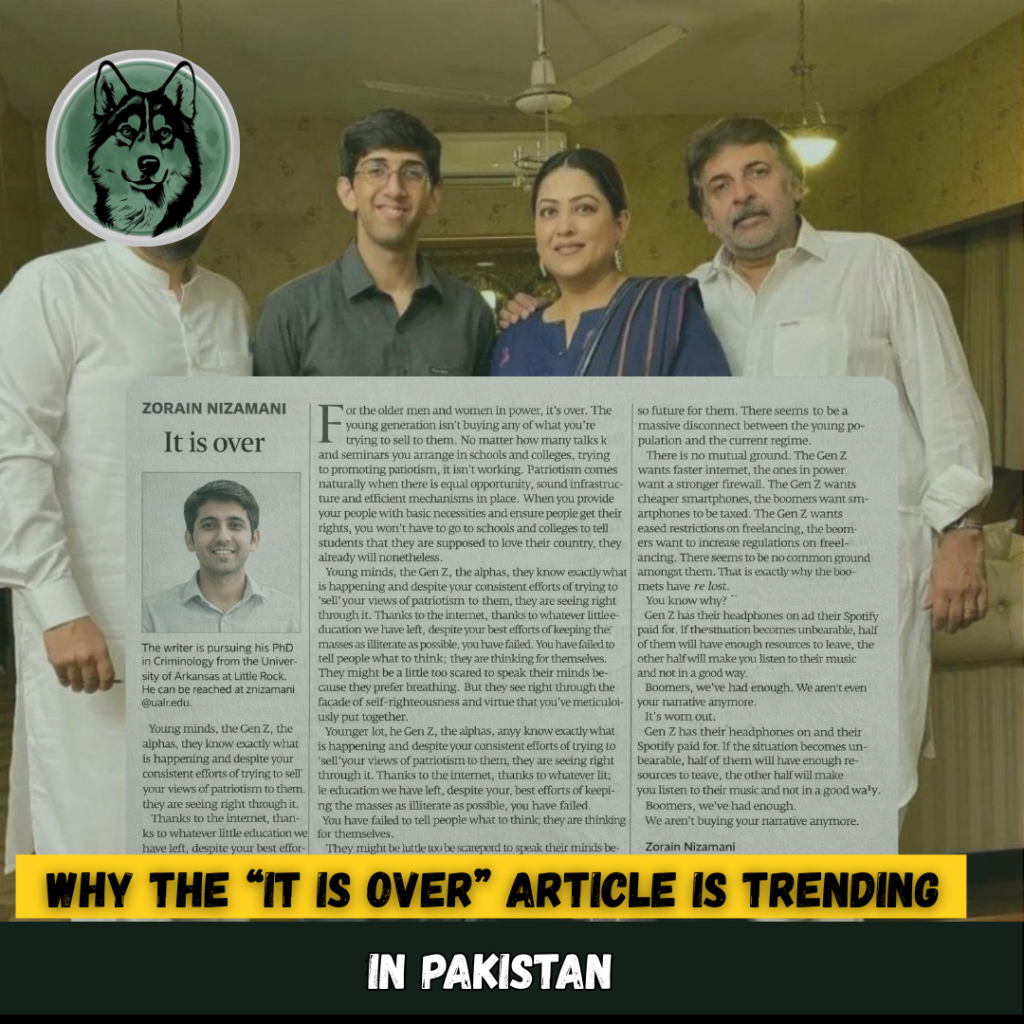
A young Pakistani author’s opinion article titled “It Is Over,” published on 1 January 2026, has suddenly become one of the most discussed pieces across social media, news feeds, and online communities in Pakistan. What began as an opinion column quickly spiked in popularity, trended nationally, and then triggered widespread conversation about youth sentiment, generational divide, freedom of expression, and political narratives — all without any official political alignment from the author himself.
What Is the “It Is Over” Article?
The article was written by Zorain Nizamani, a young Pakistani scholar and PhD student, and published on a mainstream English daily’s website on 1 January 2026. It was later reported that the article was taken down from the newspaper’s website, which significantly increased its visibility as screenshots and excerpts spread across platforms like Twitter, WhatsApp, and Reddit.
In the piece, the author argued that the older generation in positions of power has lost resonance with emerging youth, and that traditional narratives of patriotism and political messaging no longer persuade a younger population that has access to information, education, and global perspectives.
The writer later issued a public clarification stating that the article was not aligned with any political party or agenda, and that his intention was to share his perspective on generational attitudes rather than promote a political narrative.
Why This Article Became Famous in Pakistan
The “It Is Over” article gained attention for several reasons:
- Youth Expression and Identity
The article struck a chord with many young Pakistanis who feel disconnected from political messaging and traditional leadership structures. Its language resonated with segments of the online population. - Social Media Amplification
The reported removal of the article shortly after publication led to widespread sharing of screenshots and reposts, accelerating its viral spread. - National Trend Rankings
“It Is Over” became one of the top trending topics across social media platforms in Pakistan, reflecting large-scale digital engagement. - Emotional and Generational Themes
By addressing issues such as opportunity, migration, identity, and generational expectations, the article connected with broader societal conversations beyond politics.
Why the Article Sparked Strong Reactions
Strong reactions emerged for several reasons:
- Challenge to Traditional Narratives
The article’s tone highlighted a gap between youth expectations and traditional leadership frameworks, which some found unsettling. - Removal and Censorship Debate
The reported removal of the article sparked debate over freedom of expression, censorship, and editorial control. - Political Interpretations by Different Groups
Despite the author distancing himself from political agendas, various political supporters and commentators shared the article to reinforce their own narratives, intensifying polarization. - Emotional Connection
Many readers saw their own frustrations reflected in the article, particularly regarding governance, opportunity, and relevance.
Why Some People Feel Uneasy or “Fear”
Unease around the article stems from several factors:
Perceived Threat to Established Narratives
Strong expressions of dissatisfaction can feel like a challenge to the status quo in a politically sensitive environment.
Concerns Over Social Cohesion
Themes of disillusionment and generational divide raise concerns for some about unity, stability, and the future direction of society.
Broad Interpretations
Because the article circulated widely through screenshots without full context, interpretations varied, amplifying emotional responses.
In essence, much of the strong reaction reflects broader societal debates rather than any explicit political demand.
Neutral Takeaways for Readers
Published date: 1 January 2026
Author: Zorain Nizamani (academic, no political affiliation)
Content focus: Generational attitudes, societal expectations, youth sentiment
Trend impact: Widespread sharing following removal from the original publication site
Social reaction: Mixed responses including support, debate over expression, political interpretation, and generational reflection
Conclusion
The “It Is Over” article is trending in Pakistan not because of a single political position, but because it captured a wider conversation about youth disillusionment, generational divide, and social change. Its reported removal amplified public interest, turning an opinion piece into a national talking point that crossed political, social, and cultural boundaries.