

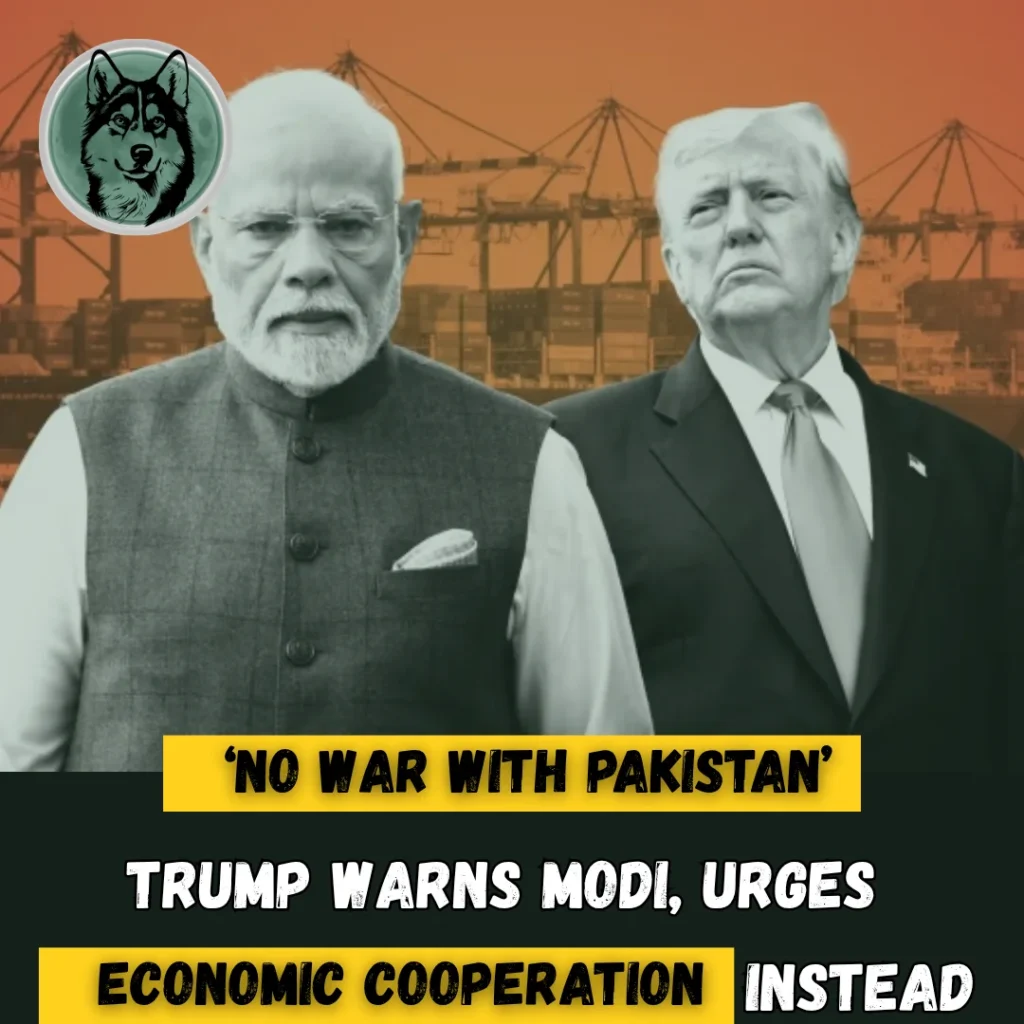
During Diwali event, Trump claims phone call with Modi focused on trade, energy, and peace
White House: President Claims Call with Modi Covered Trade, Energy, and Regional Peace
US President Donald Trump has said he personally urged Indian Prime Minister Narendra Modi to avoid war with Pakistan, emphasizing that diplomacy and trade should replace regional confrontation. Speaking during a Diwali celebration at the White House, Trump told reporters that his administration’s strategy of economic leverage and negotiation had prevented several potential global conflicts.
“I had a great conversation with Prime Minister Modi earlier today,” Trump said in the Oval Office. “We talked about trade… and I told him, let’s have no wars with Pakistan.”
According to Trump, his approach has averted at least eight wars worldwide, including the recent tensions between India and Pakistan.
“No Wars with Pakistan” — Trump Claims Economic Pressure Prevented Escalation
Trump claimed that during the height of the India-Pakistan conflict earlier this year, he personally intervened by warning both countries that the United States would suspend trade if fighting continued.
“During that conflict, seven planes were shot down,” Trump recalled. “I told both nations that if they went to war, the United States would stop trading with them. Within 24 hours, they called back and said they didn’t want to fight.”
The former president described the episode as a “very, very good thing,” adding that the outcome demonstrated the power of economic diplomacy over military confrontation.
Background: From Tensions in Kashmir to US Mediation
The remarks appear to reference the deadly May confrontation between India and Pakistan — the most serious escalation between the two nuclear-armed rivals in decades.
The violence began after an attack on tourists in Indian Illegally Occupied Jammu and Kashmir (IIOJK) left 26 people dead. India accused Pakistan of backing the assault, a claim Islamabad firmly rejected.
In response, India launched air and ground attacks across the border for three consecutive days. Pakistan retaliated with Operation Bunyan-um-Marsoos, shooting down six Indian Air Force fighter jets — including three Rafales — and dozens of drones.
The confrontation came to a halt on May 10 after Washington facilitated ceasefire talks between both sides.
Trump Warns Modi on Russian Oil Purchases
During the same White House appearance, President Trump said Prime Minister Modi had reassured him that India would limit purchases of Russian oil — an issue that remains a sticking point between Washington and New Delhi amid the ongoing war in Ukraine.
“He’s not going to buy much oil from Russia,” Trump told reporters. “He wants to see that war end as much as I do.”
The US has repeatedly expressed concern over India’s continued import of discounted Russian crude, arguing that such purchases help fund Moscow’s military operations. Trump warned that nations continuing to buy Russian oil could face “massive tariffs.”
“If they want to deny that, they’ll just continue to pay massive tariffs,” he said aboard Air Force One.
India Denies Any Recent Call Between Modi and Trump
However, the Indian Ministry of External Affairs has denied knowledge of any recent phone conversation between the two leaders.
Officials in New Delhi said discussions with the United States remain cordial but stressed that no official call has taken place recently.
Trade ministry sources told Reuters that while Washington claims India has reduced Russian oil imports by half, refinery data suggests otherwise. According to the analytics firm Kpler, India’s Russian oil imports are expected to rise by nearly 20 percent this month — reaching 1.9 million barrels per day as Moscow increases exports following recent Ukrainian drone strikes on its refineries.
Diplomatic Crossroads: Trade, Energy, and Regional Stability
The contradictory claims underscore the complex balancing act between Washington, New Delhi, and Islamabad — where energy security, trade relations, and geopolitical rivalry intersect.
Analysts say Trump’s renewed push for diplomacy could signal an attempt to strengthen US-India ties while discouraging closer cooperation between New Delhi and Moscow.
For now, India’s public position remains cautious, focusing on “strategic autonomy” in its foreign policy — while the United States continues to use economic leverage as a diplomatic tool to shape outcomes in South Asia.