



Deadly Journey Highlights Ongoing Dangers of Irregular Migration Routes
At Least 18 Dead After Migrant Boat Capsizes Near Surman
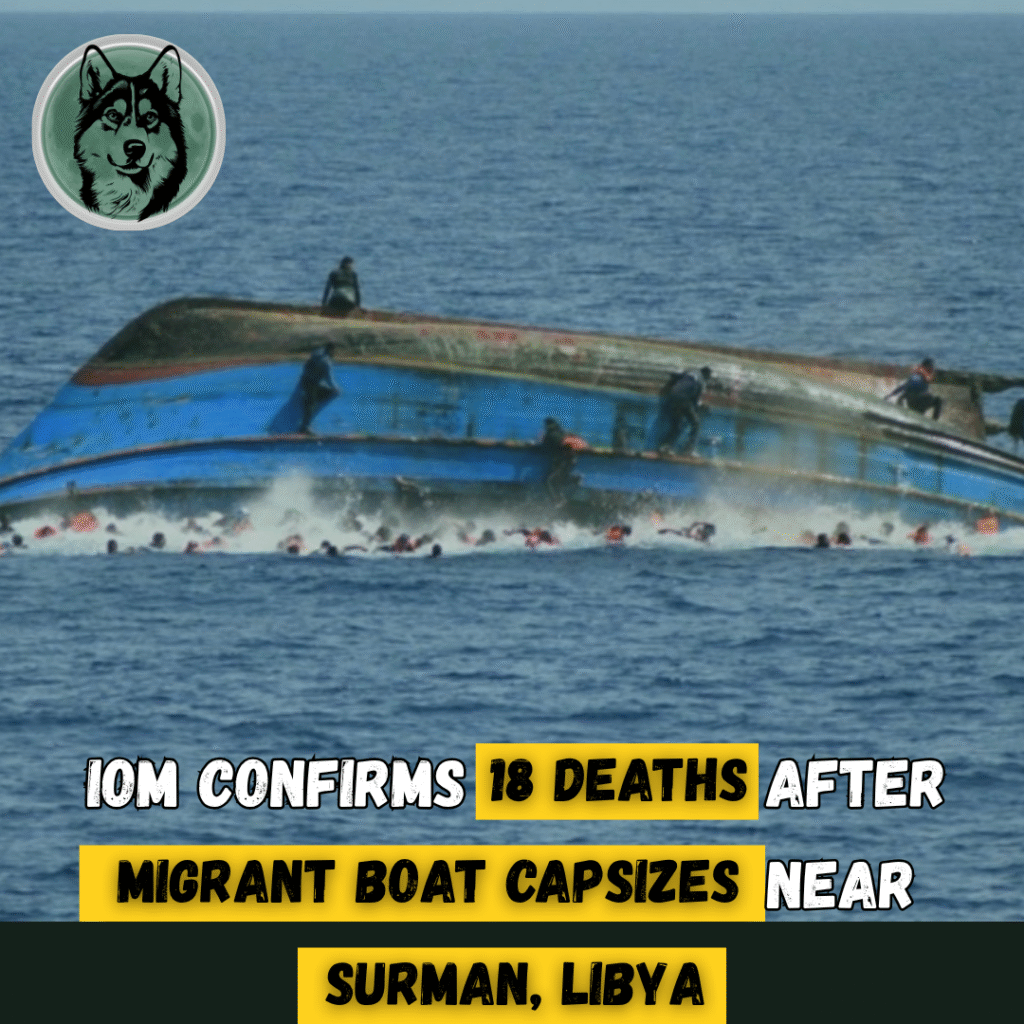
At least 18 people lost their lives after a wooden migrant boat sank off the coast of Libya on Tuesday, the United Nations migration agency confirmed.
According to the International Organization for Migration (IOM), the vessel capsized just hours into its journey due to strong waves. The incident occurred near the coastal city of Surman, one of the most active departure points for migrants attempting to cross the Mediterranean Sea toward Europe.
Rescue Teams Save 64 Passengers
Rescue authorities managed to save 64 people from the wreckage after the boat overturned in rough waters.
The IOM confirmed that the survivors included:
- 29 Sudanese men
- 1 Sudanese woman
- 1 Sudanese child
- 18 Bangladeshi men
- 12 Pakistani men
- 3 Somali men
The nationalities of the deceased have not yet been confirmed, and efforts are underway to recover additional bodies believed to be missing at sea.
Pakistanis Among Survivors
The 12 Pakistani nationals who survived the tragedy are reported to be in stable condition following medical assistance provided by local rescue teams and humanitarian organizations.
Pakistan’s embassy in Tripoli is working with Libyan authorities and the IOM to obtain details of the survivors and identify any missing citizens.
A Grim Reminder of Migrant Perils
The IOM described the incident as “another grim reminder” of the dangers faced by migrants attempting perilous sea crossings. Thousands of migrants from Africa and South Asia continue to risk their lives each year in unsafe vessels operated by human traffickers, seeking safety and employment opportunities in Europe.
According to the IOM’s Missing Migrants Project, more than 2,000 migrants have died or gone missing in the Central Mediterranean this year alone making it one of the world’s deadliest migration routes.
Background: Migration Routes Through Libya
Libya remains a major transit hub for migrants fleeing poverty, conflict, and political instability across Africa and Asia. Despite international efforts, the smuggling networks continue to thrive amid lawlessness and economic desperation in the region.
Human rights groups have repeatedly called for safer legal migration pathways and stronger international cooperation to prevent further loss of life at sea.