



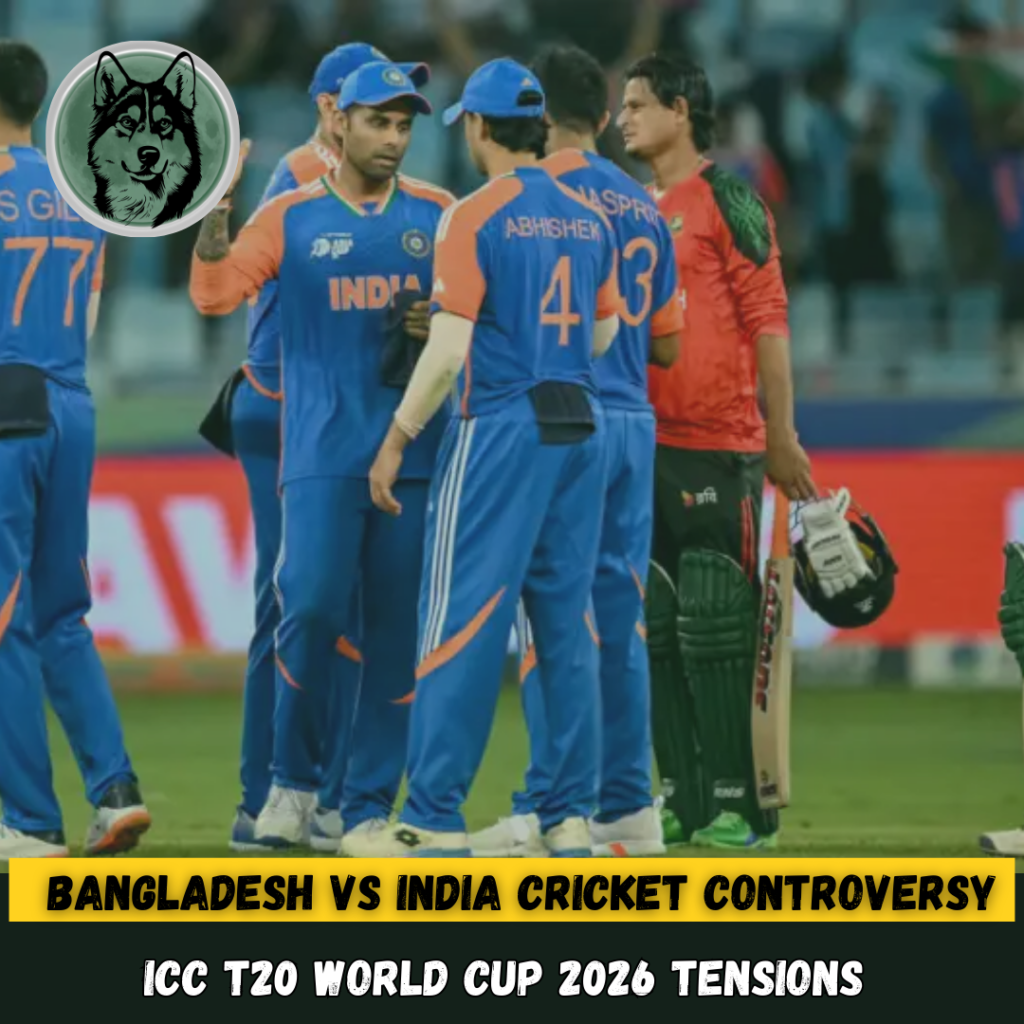
Cricket fans around the world are watching a serious dispute between the Bangladesh Cricket Board (BCB) and the Board of Control for Cricket in India (BCCI) just weeks before the ICC Men’s T20 World Cup 2026.
The tournament runs from February 7 to March 8, 2026, co-hosted by India and Sri Lanka.
What Happened?
On January 4–5, 2026, the BCB announced that Bangladesh will not travel to India for its scheduled World Cup matches.
Their four group stage games — against West Indies (Feb 7), Italy (Feb 9), England (Feb 14) in Kolkata and Nepal (Feb 17) in Mumbai — were supposed to be played on Indian soil.
The BCB formally requested the ICC to relocate these games to Sri Lanka, the other co-host.
Why Bangladesh Took This Step
The main reason given was concerns over player safety and well-being in India.
This concern intensified after a controversy involving Bangladesh fast bowler Mustafizur Rahman, who was released from his Indian Premier League (IPL) team (Kolkata Knight Riders) following pressure from groups in India.
Bangladesh officials and government advisers said that if one Bangladeshi player could not feel safe in India, the entire team might also face risk.
Security concerns were reinforced by political tensions between the two countries, which spread into the sports arena.
Why This Matters for Cricket
⚠️ Impact on the ICC World Cup
If Bangladesh does not travel to India:
- The schedule and venue planning may need revision.
- Other teams may be affected.
- Broadcast and logistical arrangements could be disrupted.
Such changes are difficult with only a few weeks remaining.
Why Fans Are Concerned
Many cricket followers feel this issue goes beyond sport.
They worry that:
- Politics and safety fears are overwhelming cricket decisions.
- Power imbalances between boards influence fair scheduling.
- Smaller boards like Bangladesh’s may feel pressured.
Some say stronger boards can make choices that seem one-sided, while others argue every board should feel secure to play anywhere.
What This Says About Governance
The situation highlights challenges in international cricket governance.
The ICC is responsible for fairness and equal treatment.
But when powerful boards like India’s are involved, controversies become harder to resolve.
Fans and experts are asking:
- Should the ICC have clear rules for safety disputes?
- Should cricket schedules be protected from political influence?
How This Could Affect Cricket’s Future
If unresolved, this conflict may:
- Weaken trust between cricket boards.
- Encourage more venue or participation disputes in future tournaments.
- Make smaller boards feel sidelined.
- Encourage calls for neutral venues for marquee events.
Many fear that if cricket becomes too entwined with politics, the spirit of the game may suffer.
Possible Solutions
Experts suggest:
- Neutral Venue Option
If safety concerns remain, the ICC could move matches to a neutral site like Sri Lanka. - Stronger ICC Protocols
Clear rules for managing safety disputes and protecting all teams. - Better Communication
Open dialogue between cricket boards to prevent misunderstandings. - Depoliticizing Cricket Decisions
Aim to keep politics separate from sporting engagements.
Conclusion
The Bangladesh vs India dispute ahead of the ICC Men’s T20 World Cup 2026 is more than just a cricket story. It reflects deeper concerns about player safety, board governance, political influence, and the integrity of international tournaments.
How the ICC and cricket boards resolve this issue could set the tone for the future of the sport, ensuring that cricket remains fair, safe, and enjoyable for players and fans alike.