


Talks in Istanbul Collapse as Taliban Reject Pakistan’s Key Demands
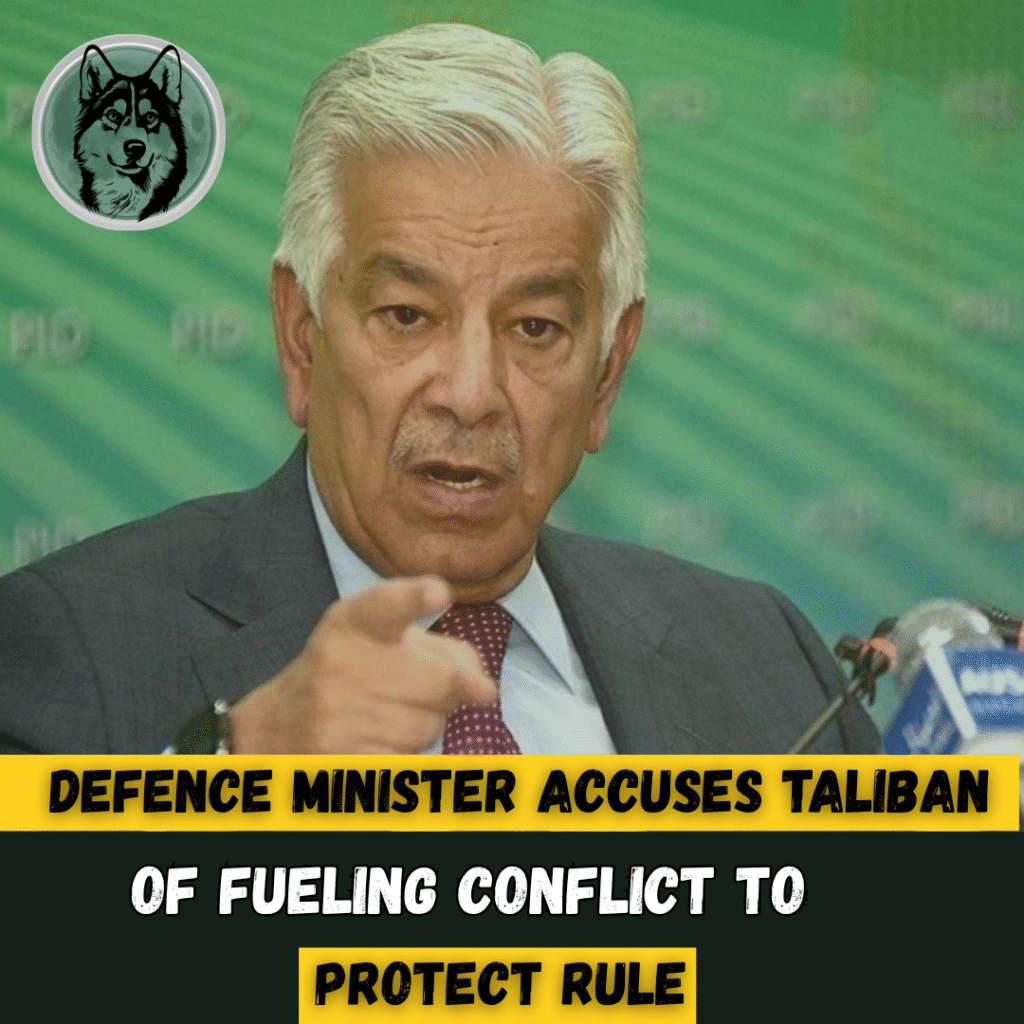
Defence Minister Khawaja Asif has warned that Pakistan could defeat the Taliban regime, if necessary, and “set an example for the world.”
Speaking after the failed Pakistan-Afghanistan peace talks in Istanbul, Asif accused the Afghan Taliban leadership of “dragging Afghanistan into another conflict to preserve their rule and wartime economy.”
He revealed that Pakistan had accepted peace talks through “brotherly countries” at the Taliban’s request but said “poisonous statements” from Kabul reflected deep divisions within the Taliban leadership.
“We do not need to use our full force to dismantle them. If required, we could defeat them in places like Tora Bora and set an example for the world,” Asif declared.
Taliban Accused of Fueling New Conflict
Asif alleged that the Taliban were deliberately pushing Afghanistan into turmoil to protect their grip on power.
“Afghanistan, because of the Taliban, has become a graveyard for its own people,” he said, referring to the country’s long history as a stage for great-power rivalry.
He added that militants seeking to exploit instability “have misjudged Pakistan’s resolve.”
“If the Taliban regime attempts to fight, the world will see their threats were mere bluster. Pakistan will not tolerate any terrorist or suicide attack on its soil,” he warned.
Istanbul Talks Collapse Over Pakistan’s Key Demands
The second round of peace talks between Pakistan and Afghanistan, held in Istanbul on October 25, ended without any breakthrough.
Information Minister Ataullah Tarar confirmed on X (formerly Twitter) that the dialogue failed to produce “any workable solution.”
Pakistan’s delegation had demanded a clear and verifiable plan from Kabul to dismantle terrorist sanctuaries operating on Afghan soil — a condition the Taliban refused to meet.
Mediators from Qatar and Turkiye were reportedly surprised by the Afghan delegation’s provocative and dismissive tone, which further strained the atmosphere.
Border Tensions Escalate After Unprovoked Firing
Tensions between the two neighbours have been at their highest since early October, when Afghan forces opened unprovoked fire on multiple locations in Khyber Pakhtunkhwa and Balochistan.
Pakistan’s military responded with “immediate and decisive” precision strikes on Taliban and terrorist hideouts in Kandahar and Kabul, destroying multiple Afghan posts.
Security sources confirmed dozens of Afghan soldiers and militants were killed during the retaliation.
A 48-hour ceasefire was later agreed upon at the Taliban’s request, following mediation efforts by regional partners.
Pakistan’s Position: Peace but Preparedness
Pakistan maintains that it seeks peaceful relations with Afghanistan but will act decisively to defend its territory.
Khawaja Asif stressed that Islamabad does not see itself as an “empire” but as a nation unwilling to tolerate terrorism.
“If the Taliban test our determination, the cost will be theirs to bear,” Asif said firmly.
The minister urged Afghan leaders to “be mindful of their fate” and warned that Pakistan’s patience should not be mistaken for weakness.