




Urdu Poetry and the Birth of Pakistan
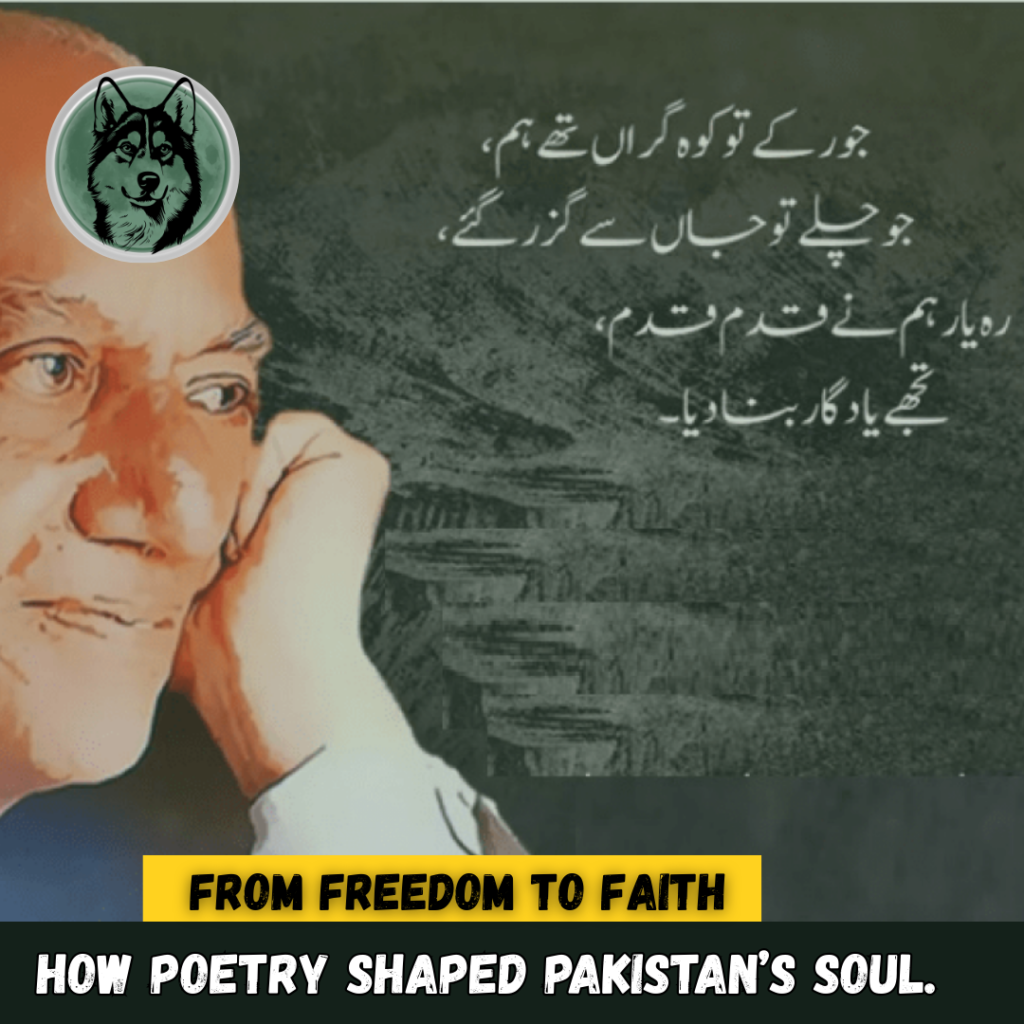
Nations rise with armies. But they live through words. Urdu poetry did not just describe Pakistan. It helped define it.
A nation was born. Poetry became its first voice.
After the creation of Pakistan, people felt pride, relief, and hope. Urdu poets reflected this emotion in their verses. Their words carried national passion. They stressed cultural roots and religious identity. It felt natural. A new homeland demanded a poetic expression of belonging.
Early Literary Movements and National Spirit
Two major literary movements emerged in the early years. The Islamic Literature Movement and the Pakistani Literature Movement shaped the tone of the time. Writers used poetry to celebrate a separate homeland. They viewed independence as a victory achieved through cultural and religious identity. Their work echoed gratitude and achievement.
Dissenting Voices from the Left
Not all writers shared this optimism. Poets influenced by Marxist thought raised doubts. They questioned the political motives behind independence. Faiz Ahmed Faiz wrote Subh-e-Azaadi in August 1947. He called independence a “stained and night-bitten morning.”
Dr Tahira Nighat Nayyar, in her book Urdu Shaeri Mein Pakistani Qaumiyat Ka Izhaar, cited poets such as Zaheer Kashmiri, Ahmed Riaz, and Manzoor Husain Shor Alig. They described independence with bitterness. They blamed politicians’ hunger for power.
Trauma of Migration and Violence
Massacres during migration deepened this pessimism. Millions crossed the India-Pakistan border amid bloodshed. Violence scarred both memory and literature. Left-leaning poets struggled to celebrate freedom in the shadow of tragedy.
Progressive Voices Who Still Believed
Some progressive poets chose empathy over rejection. Asrar-ul-Haq Majaaz wrote Pakistan’s anthem before independence. He never migrated, yet his words supported the idea of the nation. Poets like Ahmed Nadeem Qasmi, Shor Alig, Ahmed Riaz, and Zaheer Kashmiri first showed disappointment. Later, they expressed goodwill for Pakistan. Their later poetry carried hope for the country’s future.
Poetry of Struggle After Independence
Post-independence poetry addressed harsh realities. Poets wrote about migration, riots, political instability, and economic hardship. They also focused on Kashmir. When Indian forces entered Srinagar in October 1947, Pakistani poets responded with solidarity. Even today, many poets defend Kashmir’s right to self-determination.
Migrant Poets and Broken Dreams
Nasir Kazmi and Himayat Ali Shaer lamented the chaos they witnessed after migration. Many migrants arrived with dreams. Fear and uncertainty soon replaced those hopes. Yet some poets chose optimism. Rais Amrohvi, M. D. Taseer, Yousuf Zafar, Kaif Banarsi, Nazar Hyderabadi, Asar Sehbai, and Mahir-ul-Qadri wrote of faith in Pakistan and belief in its destiny.
From Euphoria to Disillusionment
The early celebration did not last. Poets like Hafeez Jallundhri and Rais Amrohvi criticized bureaucracy. Rais wrote that only the rulers had changed, not the system. “The gora sahib became the kala sahib,” he observed. Even government officials such as Jameeluddin Aali condemned inefficiency and neglect. Later, during the 1965 and 1971 wars, both Rais and Aali wrote powerful national songs. Their work reflected genuine patriotism.
Patriotism Beyond Slogans
Patriotism means more than shouting “Pakistan Zindabad.” Dr Tahir Nighat argued that love for the nation requires respect for local culture and geography. Many poets embraced this idea. They brought regional colors into Urdu poetry. They celebrated landscapes, traditions, and identities often ignored in classical verse.
Celebrating Diversity Through Poetry
Sher Afzal Jafri, Abdul Majeed Bhatti, Shafi Ajeel, Farigh Bukhari, Raza Hamdani, Rafiq Khawar, Afzal Pervez, Majeed Amjad, Altaf Parvaaz, A. D. Azhar, and Khatir Ghaznavi portrayed different regions of Pakistan with affection. They even wrote about former East Pakistan. Their poetry strengthened unity through diversity.
National History in Poetic Form
A full review of nationalist Urdu poetry would span volumes. Yet one truth stands clear. Poets recorded every major national event. They wrote about martial law, the 1965 war, the 1971 tragedy, Pak-China friendship, and the Soviet invasion of Afghanistan. Urdu poetry became a historical mirror of the nation.
Voices That Shaped National Consciousness
Many poets shaped nationalist thought. These include Sufi Tabassum, Sehba Akhtar, Syed Zameer Jafri, Qayyum Nazar, Hafeez Taib, Jareer Tahir, Qateel Shifai, and Saqi Javed. Their verses linked emotion with identity. They gave Pakistan a poetic conscience.
Critical Analysis
This poetic tradition reveals both strength and limitation. Urdu poetry helped construct a shared national identity. It united diverse regions under common symbols of faith, culture, and sacrifice. In times of war and crisis, poetry mobilized emotion and reinforced collective resolve. Yet nationalism in poetry also carried risks. Some early verses idealized the state while ignoring structural failures. Others reduced complex political realities to emotional slogans. Progressive critics rightly questioned whether poetic celebration masked injustice, bureaucracy, and unequal power. Moreover, the dominance of Urdu sometimes overshadowed regional languages and voices. While many poets later embraced diversity, early nationalist literature often privileged a singular cultural narrative. This tension between unity and plurality continues to shape Pakistan’s literary discourse. In essence, Urdu poetry did not merely describe the nation. It participated in building it, challenging it, and redefining it. Its greatest strength lies in its ability to hold pride and protest within the same tradition.