



Gilgit-Baltistan enters a new political phase as 12 caretaker ministers take oath, promising free and fair elections amid hopes for stability and development
Caretaker ministers sworn in, prioritizing public service delivery, and regional development during the transitional period
Caretaker Ministers Sworn In
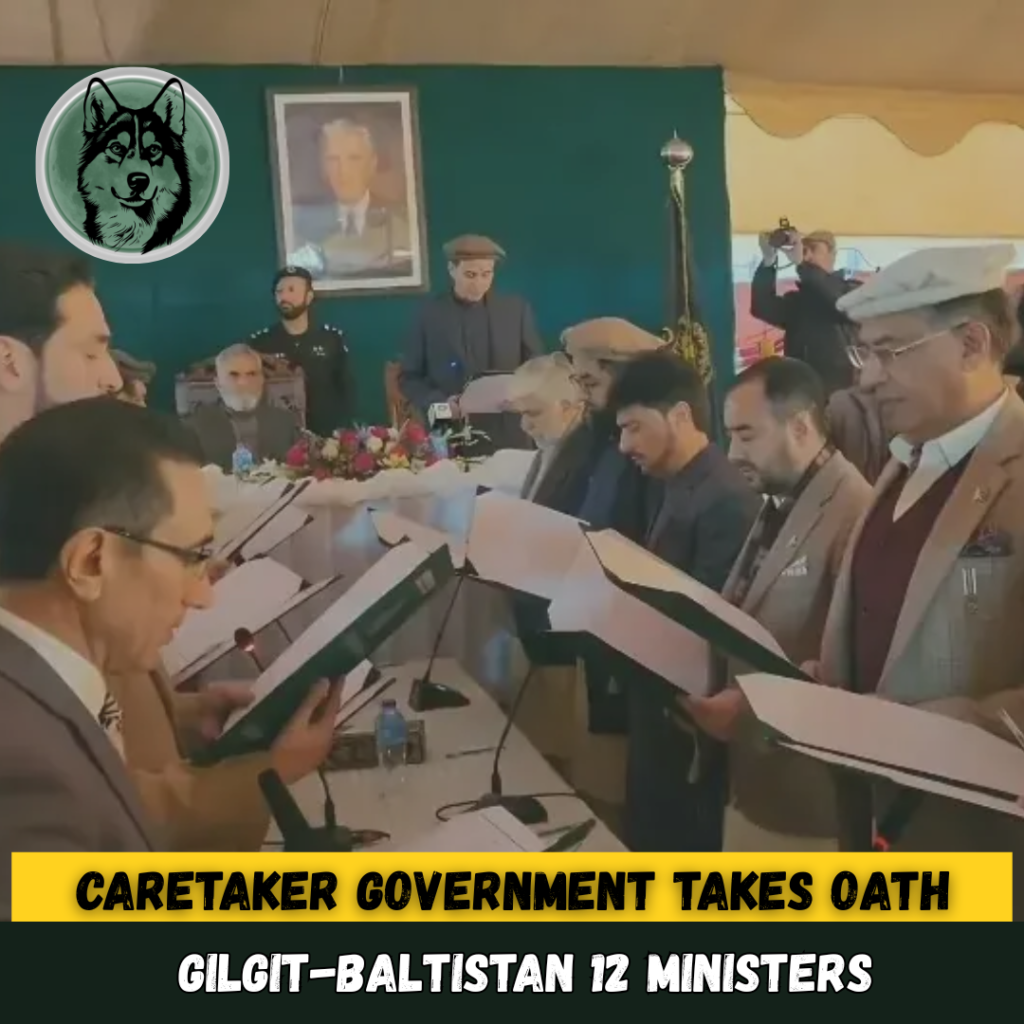
Twelve ministers of the Gilgit-Baltistan caretaker government took oath at Governor House on Tuesday, five days after notification. Acting Governor and GB Assembly Speaker Nazir Ahmed administered the oaths.
Key Appointments
Caretaker ministers and their portfolios include:
- Sajid Ali Baig – Home and Prison
- Eng. Altaf Hussain – Local Government and Rural Development
- Ghulam Abbas – Information, Broadcasting, IT
- Retired Col Abrar Ismail – Finance, Planning, Development
- Meher Dad – Food
- Sharafat Din – Forest, Wildlife, Environment
- Maulana Sarwar Shah – Minerals, Industries, Labour, Commerce
- Raja Shehbaz Khan – Tourism, Excise, Taxation, Communication, Works
- Mumtaz Hussain – Water and Power
- Dr. Niaz Ali – Health
- Syed Adil Shah – Sports, Culture, Youth Affairs
- Bahadur Ali – Education, Law, Prosecution
Advisers include Syeda Fatima (Social Welfare, Population, Women Development) and Abdul Hakeem (Agriculture, Livestock, Fisheries, Water Management).
Ceremony and Leadership
The ceremony was attended by GB Chief Secretary Abrar Ahmed Mirza, former CM Haji Gulbar Khan, officials, and politicians. The 14-member caretaker cabinet was notified by the GB Council under PM Shehbaz Sharif’s authority.
The GB Assembly’s five-year tenure ended on Nov 24. Caretaker Chief Minister Yar Muhammad was sworn in on Nov 26.
Priorities of Caretaker Government
Information Minister Ghulam Abbas said the government will prioritize free, fair, and transparent elections. The caretaker cabinet pledged full support to the GB Election Commission.
Critical Analysis
Social Impact:
- Boosts public confidence in transparent elections.
- Provides stability in local governance during transitional period.
Political Impact:
- Ensures smooth transition from elected assembly to caretaker administration.
- Reduces chances of political unrest during election preparations.
Economic Impact:
- Interim ministers can maintain essential public services, trade, and infrastructure projects.
- Political stability may attract development funding and investor confidence in GB.
Conclusion
The caretaker government in GB sets the stage for transparent elections, political stability, and continued development, offering hope for the region’s social and economic progress.