




Scaffolding is a temporary structure used in construction to support workers, tools, and materials at height. It remains one of the most widely used access systems on construction sites worldwide. However, it is also among the leading causes of serious injuries and fatalities when not properly designed, erected, used, or inspected.
According to guidance from the Occupational Safety and Health Administration (OSHA), Health and Safety Executive (HSE UK), and the International Labour Organization (ILO), the majority of scaffold-related accidents are preventable. Effective planning, competent supervision, correct erection, and routine inspections play a critical role in preventing falls, collapses, and fatal incidents.
Types of Scaffolds Commonly Used on Construction Sites
a. Supported Scaffold
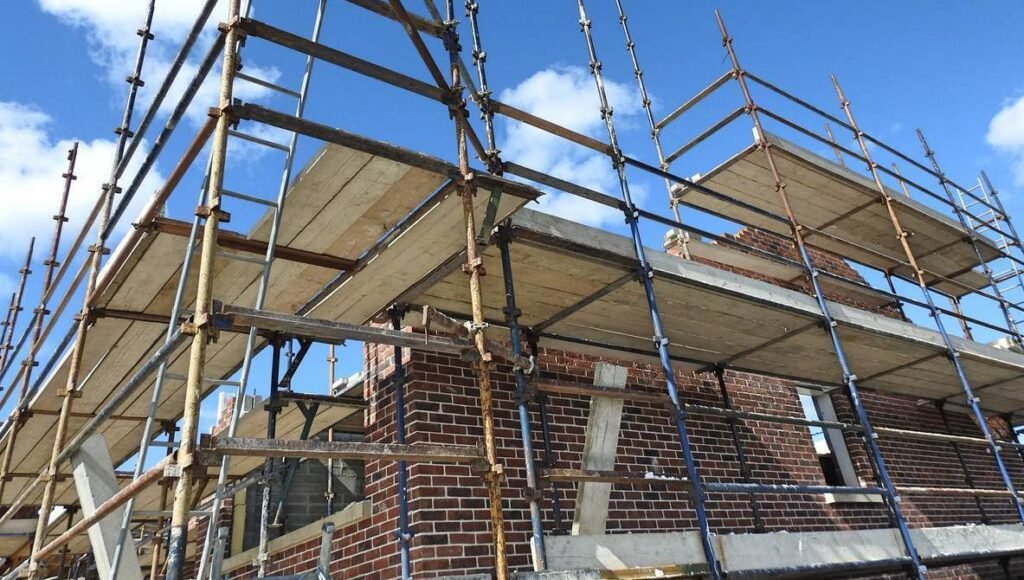
Supported scaffolds are the most commonly used scaffolding systems in construction.
- Supported by frames, poles, or legs resting on the ground
- Widely used for masonry, plastering, and general construction activities
- Require firm foundations and proper bracing for stability
b. Suspended Scaffold

Suspended scaffolds are platforms hung by ropes or steel cables from an overhead structure.
- Commonly used for façade work, painting, and high-rise maintenance
- Require strict fall protection systems
- Anchorage points must be capable of supporting imposed loads
c. Mobile (Rolling) Scaffold
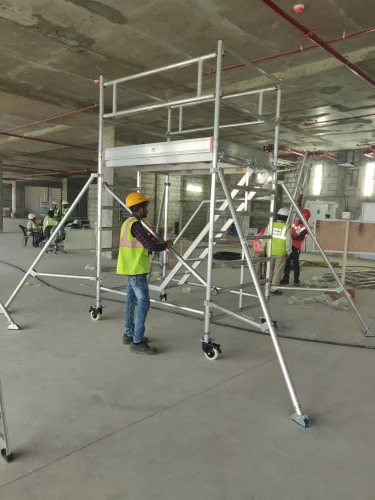
Mobile scaffolds are supported scaffolds mounted on wheels or casters.
- Used for indoor works and short-duration tasks
- Wheels must be locked during use
- Scaffold must only be moved when unoccupied
d. Cantilever / Needle Beam Scaffold
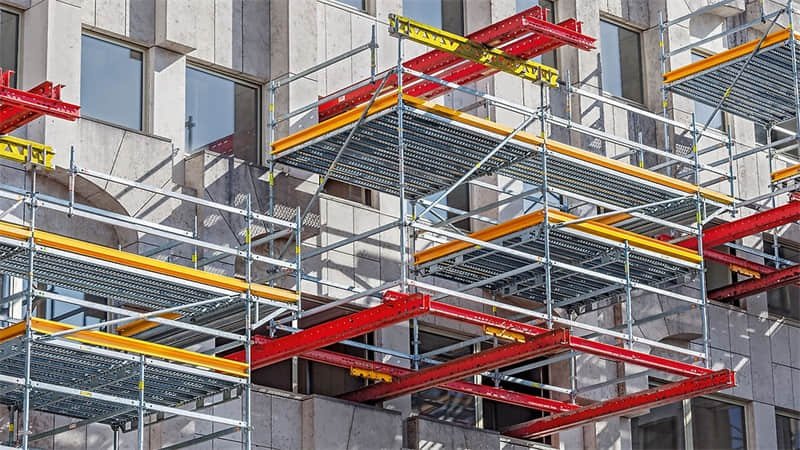
Cantilever scaffolds are supported by needles or beams projecting from the structure.
- Used where ground access is not possible, such as over roads or entrances
- Require structural calculations and competent design approval
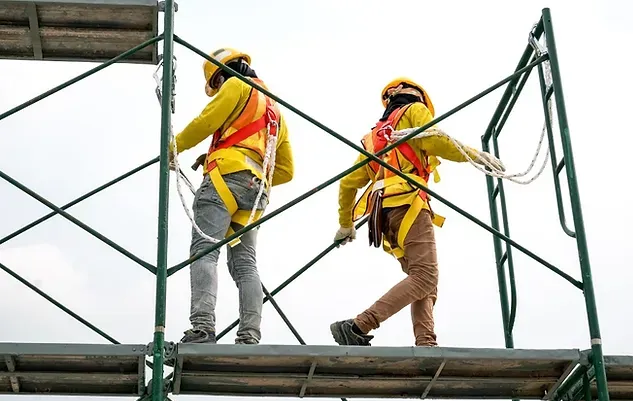
Main Components of a Scaffold
A safe scaffold system consists of the following essential components:
- Base Plates and Sole Boards – Distribute loads safely to the ground
- Standards (Uprights) – Vertical members transferring load
- Ledgers – Horizontal members connecting standards
- Transoms – Support working platforms
- Bracing – Provides lateral and longitudinal stability
- Working Platforms / Planks – Surface where workers stand
- Guardrails and Midrails – Prevent falls from height
- Toeboards – Prevent falling tools and materials
- Access Ladders or Stair Towers – Provide safe access and egress
All components must be compatible, undamaged, and correctly installed.
How to Inspect a Scaffold: Step-by-Step
Scaffold inspections must be conducted by a competent person, as required by OSHA, HSE UK, and ILO standards.
Step 1: Foundation Check
- Ensure ground is firm and level
- Verify base plates and sole boards are correctly installed
Step 2: Structural Integrity
- Inspect standards, ledgers, transoms, and braces for damage or corrosion
- Confirm correct spacing and secure connections
Step 3: Platform Safety
- Platforms must be fully planked
- Planks must be free from cracks, splits, or excessive deflection
Step 4: Fall Protection
- Guardrails, midrails, and toeboards installed where required
- Fall arrest systems provided for suspended scaffolds
Step 5: Access and Housekeeping
- Safe access via ladders or stair towers
- No loose materials, debris, or slippery substances
Step 6: Environmental Conditions
- Assess wind, rain, heat, and night-time visibility
- Suspend work if conditions become unsafe
Inspection frequency:
- Before first use
- Daily before work starts
- After modification
- After adverse weather
Scaffold Tagging System
Scaffold tagging systems provide a clear visual indication of scaffold safety status:
- Green Tag: Scaffold inspected and safe for use
- Yellow Tag: Caution – limited use or under modification
- Red Tag: Unsafe scaffold – DO NOT USE
Tagging systems are strongly recommended by HSE UK and recognized globally as best practice.
Common Scaffold Hazards
Scaffold operations expose workers to several hazards, including:
- Falls from height due to missing guardrails or unsafe access
- Scaffold collapse from overloading or weak foundations
- Falling objects striking workers below
- Electrocution near overhead power lines
- Slips and trips due to poor housekeeping
- Weather-related risks such as strong winds, rain, or extreme heat
Previous Scaffold-Related Incidents and Losses
Historical and regulatory data highlight the consequences of poor scaffold safety:
- Willow Island Scaffold Collapse (USA): One of the deadliest scaffold disasters, resulting in 51 fatalities due to structural failure and unsafe construction sequencing
- OSHA-recorded incidents: Multiple fatalities caused by unguarded platforms and scaffold collapses from overloading
- HSE UK reports: Frequent injuries linked to unsafe access and lack of inspection
- ILO global data: Scaffold accidents remain a major contributor to construction fatalities, particularly in developing countries
These incidents result in loss of life, project delays, legal penalties, and severe reputational damage.
Standards and Regulatory References
This article aligns with internationally recognized safety standards, including:
- OSHA: 29 CFR 1926 Subpart L – Scaffolds
- HSE UK: Work at Height Regulations and scaffold inspection guidance
- ILO: Safety and Health in Construction Convention (C167)
Conclusion
Scaffolding is essential to construction, but it must be treated as a high-risk activity. Most scaffold accidents are preventable through correct design, competent erection, routine inspection, effective supervision, and strict compliance with safety standards.
Strong scaffold safety management protects workers, projects, and organizations—preventing injuries, fatalities, and major losses.