




East-to-west winds bring polluted air from Indian Punjab into Pakistan
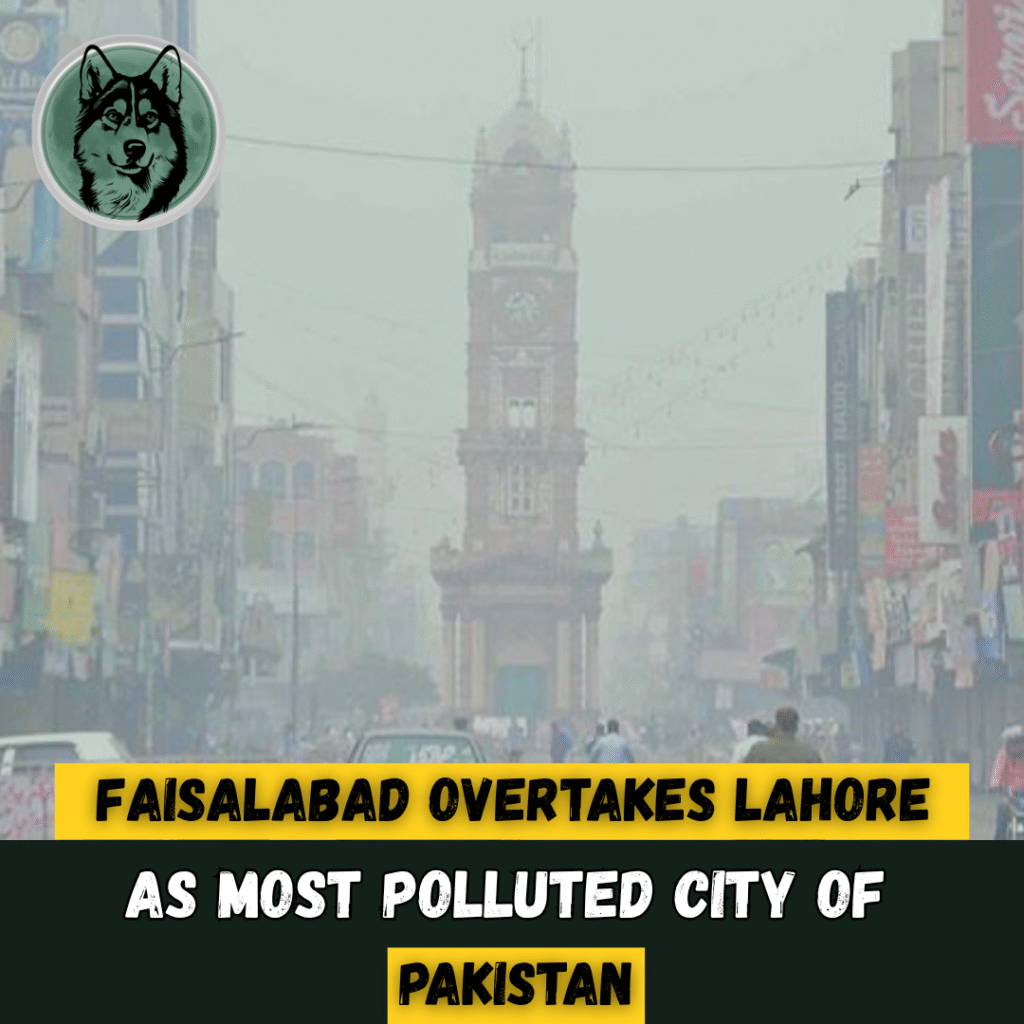
Air pollution across Punjab has hit alarming levels, with Faisalabad now ranked as the most polluted city in Pakistan, recording an Air Quality Index (AQI) of 554, according to IQAir.
Gujranwala and Multan followed with AQIs of 546 and 478, while Lahore, previously the world’s most polluted city, recorded an AQI of 471 on Tuesday morning.
Toxic Air Engulfs Lahore
In Lahore, several monitoring stations reported “extremely hazardous” air quality levels
- Ravi Road: 980
- G3 Engineering Council: 790
- DHA Phase 8: 759
The Punjab Air Quality Index showed similar readings 500 at Burki Road, 447 at Egerton Road, and 394 at Wagah Border. Officials warned that the situation remains critical in the morning and late-night hours.
Polluted Winds from Across the Border
According to the Smog Monitoring and Forecasting System, winds blowing from east to west are carrying polluted air from Indian regions including Haryana, Ludhiana, Patiala, and Jalandhar — into Punjab, worsening smog conditions in Lahore, Faisalabad, Kasur, and Gujranwala.
Experts cautioned that fine particulate matter (PM2.5) continues to accumulate, with AQI levels expected to stay between 330 and 370 throughout the day.
Government Intensifies Anti-Smog Drive
Punjab’s Senior Minister Marriyum Aurangzeb said that, on the instructions of Chief Minister Maryam Nawaz, anti-smog measures have been accelerated under a joint action plan involving 12 provincial departments.
- Over 10,000 notices issued
- 190+ factories and kilns sealed or fined
- 1,200 monitoring teams inspecting construction sites
She emphasized that only zigzag technology brick kilns are permitted to operate, while dust control SOPs are being strictly enforced.
Aurangzeb reaffirmed the provincial government’s resolve to restore clean air, protect public health, and eliminate the causes of smog.
Public Health Advisory
Authorities advised residents especially children, the elderly, and patients to avoid outdoor exposure, particularly during early morning and late-night hours, when pollution levels are at their peak.