

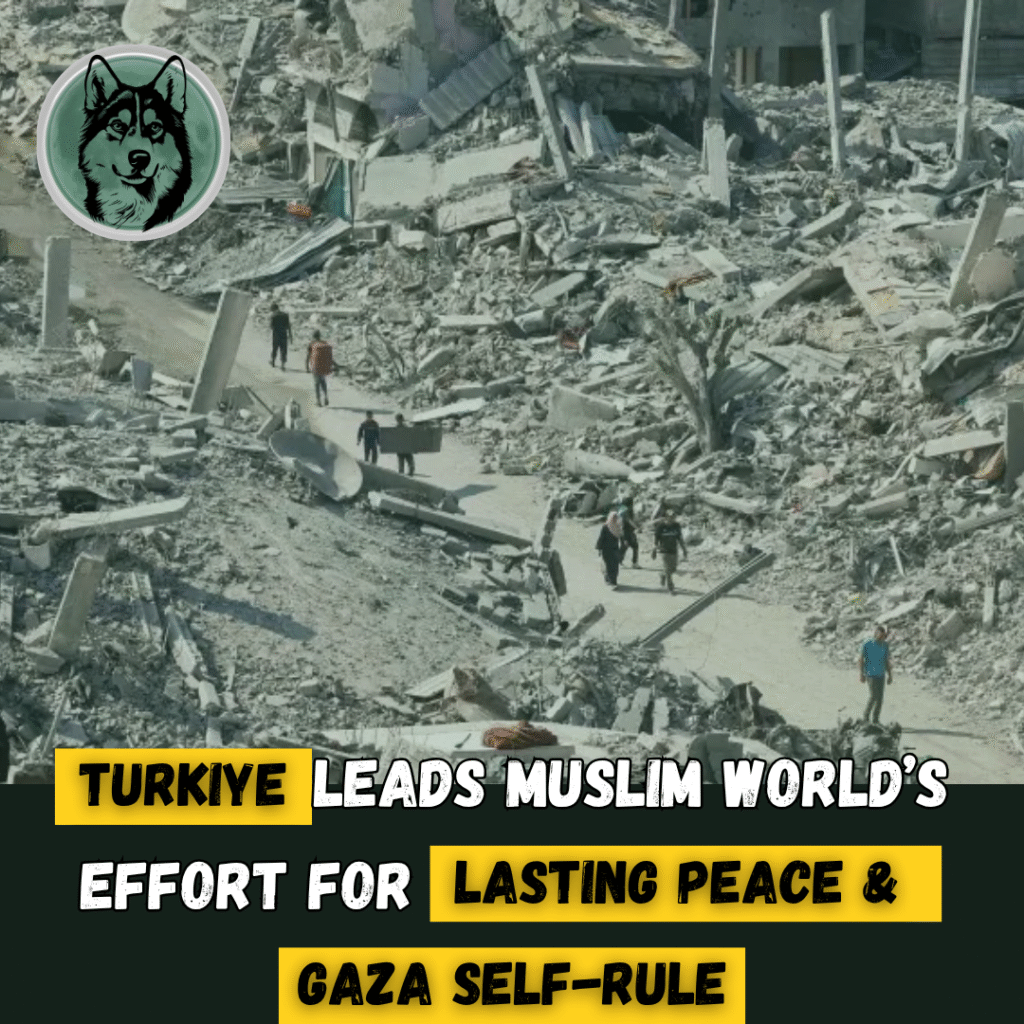
Pakistan calls for full Israeli withdrawal and restoration of Palestinian sovereignty.
ISLAMABAD: A high-stakes summit of foreign ministers from eight Muslim nations opens today in Istanbul, with Turkiye expected to push for ensuring Palestinian security and self-administration in Gaza.
The meeting comes as global mediators seek to solidify a fragile ceasefire deal brokered by US President Donald Trump, which has been repeatedly tested by ongoing Israeli bombardment.
Focus on Ceasefire and Palestinian Self-Rule
The Coordination Meeting of Arab-Islamic Foreign Ministers will include representatives from Turkiye, Pakistan, Saudi Arabia, the UAE, Indonesia, Jordan, Egypt, and Qatar — the same nations that met with President Trump in New York on September 23, on the sidelines of the UN General Assembly.
According to Turkish diplomatic sources, Foreign Minister Hakan Fidan will emphasize the importance of united Muslim action to transform the ceasefire into a lasting and enforceable peace.
He is also expected to warn that Israel is attempting to sabotage the truce, urging the international community to take a firm stance against Israeli provocations.
Sources cited by TRT World said Fidan would call for the swift implementation of arrangements enabling Palestinians to take charge of Gaza’s administration and security, while upholding their legitimate rights under the two-state solution framework.
He will also highlight the urgent need for increased humanitarian aid, noting that Israel has failed to meet its obligations regarding relief supplies entering Gaza.
Turkiye’s Role and International Stabilisation Force Proposal
Relations between Ankara and Tel Aviv have deteriorated sharply since the Gaza war began, with President Recep Tayyip Erdogan among the most vocal critics of Israeli military actions.
Turkiye played a key diplomatic role in persuading Hamas to accept the peace plan, and has now offered to contribute to an International Stabilisation Force (ISF) proposed to oversee ceasefire enforcement in Gaza.
However, Israel has rejected the idea of allowing Turkish troops in Gaza, citing “security concerns.” Other potential contributors to the ISF include Jordan, Egypt, Indonesia, and Pakistan.
Pakistan’s Position: Ceasefire Implementation and Reconstruction
According to a Foreign Office statement, Pakistan’s delegation, led by Foreign Minister Ishaq Dar, will underscore the need for the complete implementation of the ceasefire agreement, total Israeli withdrawal from occupied Palestinian territories, and the reconstruction of Gaza.
Islamabad will also advocate for unrestricted humanitarian aid to reach the Palestinian population.
“Pakistan has remained actively engaged with peace efforts that culminated in the signing of the Gaza Peace Agreement in Sharm El-Sheikh,” the statement read.
The FO reaffirmed Pakistan’s commitment to a viable, independent, and contiguous State of Palestine, with Al-Quds Al-Sharif (Jerusalem) as its capital, based on pre-1967 borders and in line with UN resolutions and the Arab Peace Initiative.
UN Role and Peacekeeping Consensus
Several countries, including Pakistan, Jordan, and Germany, have expressed preference for the deployment of any international mission under a United Nations mandate.
Foreign ministers from Jordan and Germany jointly called for the ISF to operate with a clear legal basis in international law to ensure legitimacy and neutrality.
Behind the scenes, Islamabad is holding consultations over the possibility of sending Pakistani troops for the proposed mission, with insiders indicating that an official announcement could follow soon.
Regional and Global Expectations
The Istanbul summit is expected to deliver a unified Muslim response to the evolving Gaza situation, with hopes that coordination among Islamic nations can steer the ceasefire toward sustainable peace and Palestinian self-governance.
Observers believe that the discussions will also influence the international community’s stance on the reconstruction of Gaza, humanitarian access, and political reconciliation among Palestinian factions.