





Federal workers to return to jobs after 43 days; economists warn of lasting data gaps
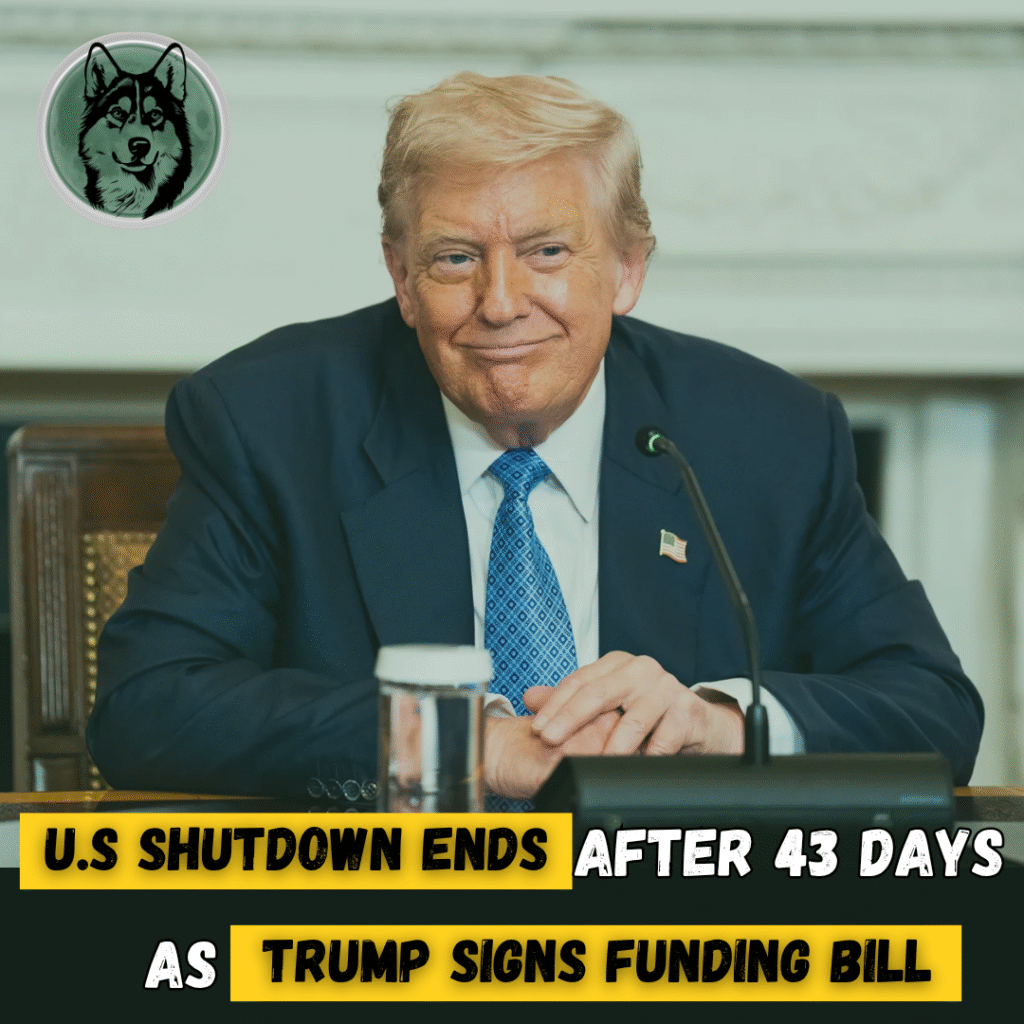
WASHINGTON: U.S. President Donald Trump on Wednesday signed a bipartisan funding bill to end the longest government shutdown in American history, bringing relief to hundreds of thousands of federal workers and restarting key government services that had been halted for over six weeks.
The move came just hours after the Republican-controlled House of Representatives approved the funding package by a narrow 222–209 vote, overcoming weeks of partisan gridlock that had crippled essential services, disrupted air travel, and left millions of Americans without food assistance.
Federal Operations to Resume
Trump’s signature on the legislation which cleared the Senate earlier this week will allow furloughed federal employees to return to work as early as Thursday. However, full restoration of government operations may take several days.
“This is no way to run a country,” Trump said during a late-night Oval Office signing ceremony. “We can never let this happen again.”
The deal extends government funding through January 30, providing a temporary reprieve but not resolving the deeper budget disputes that sparked the 43-day shutdown. The agreement adds roughly $1.8 trillion per year to the federal government’s $38 trillion debt, according to administration estimates.
Economic and Social Impact
The shutdown’s impact on the economy has been significant. Economists estimate it shaved more than 0.1 percentage point from GDP growth each week, though much of that lost output is expected to be recovered.
Air-traffic control systems, food aid programs, and data reporting agencies were among the hardest hit. The lack of federal data releases left investors and policymakers in the dark about inflation, employment, and consumer spending trends.
Some reports including those for October’s employment and CPI data may never be released, the White House confirmed.
The reopening of agencies means a restoration of crucial services just in time for the Thanksgiving travel rush and the Christmas shopping season, providing a modest boost to consumer confidence and spending.
Political Reactions
While the White House framed the deal as a victory for pragmatism, many in Congress expressed frustration over the political dysfunction that caused the impasse.
Republican Representative David Schweikert of Arizona remarked wryly,
“I feel like I just lived a Seinfeld episode. We just spent 40 days and I still don’t know what the plotline was.”
He added, “I really thought this would be like 48 hours: people will have their temper tantrum, and we’d get back to work. What’s happened now when rage is policy?”
Democrats, meanwhile, criticised the package for failing to include healthcare subsidy extensions, a key priority for the party.
Outgoing Representative Mikie Sherrill of New Jersey, recently elected governor, gave an impassioned final speech before resigning, saying,
“Do not let this body become a ceremonial red stamp from an administration that takes food away from children and rips away healthcare.”
“To the country: Stand strong. As we say in the Navy don’t give up the ship.”
No Clear Political Winner
Despite claims of victory on both sides, a Reuters/Ipsos poll released Wednesday showed that 50% of Americans blamed Republicans for the shutdown, while 47% blamed Democrats, underscoring the widespread frustration across party lines.
The deal’s passage also coincided with renewed controversy over the potential release of unclassified records related to Jeffrey Epstein, reigniting tensions in Congress. Speaker Mike Johnson has faced pressure to move the issue forward after Democrat Adelita Grijalva provided the final signature needed to force a vote.
Additionally, the funding package includes provisions allowing Republican senators to sue the Justice Department for alleged privacy violations tied to the January 6 Capitol riot investigation, with potential damages of $500,000 per case.
Outlook
As Washington begins the process of restarting essential services, political observers note that the truce may be short-lived. With funding expiring at the end of January, another potential shutdown looms unless a longer-term budget deal can be reached. For now, federal employees are returning to work, airports are regaining staff, and data agencies are resuming operations but the scars of the longest shutdown in U.S. history may linger long after the lights in Washington flicker back on.