



Anwarul Haq becomes fourth AJK premier removed in current term; oath ceremony set for Tuesday.
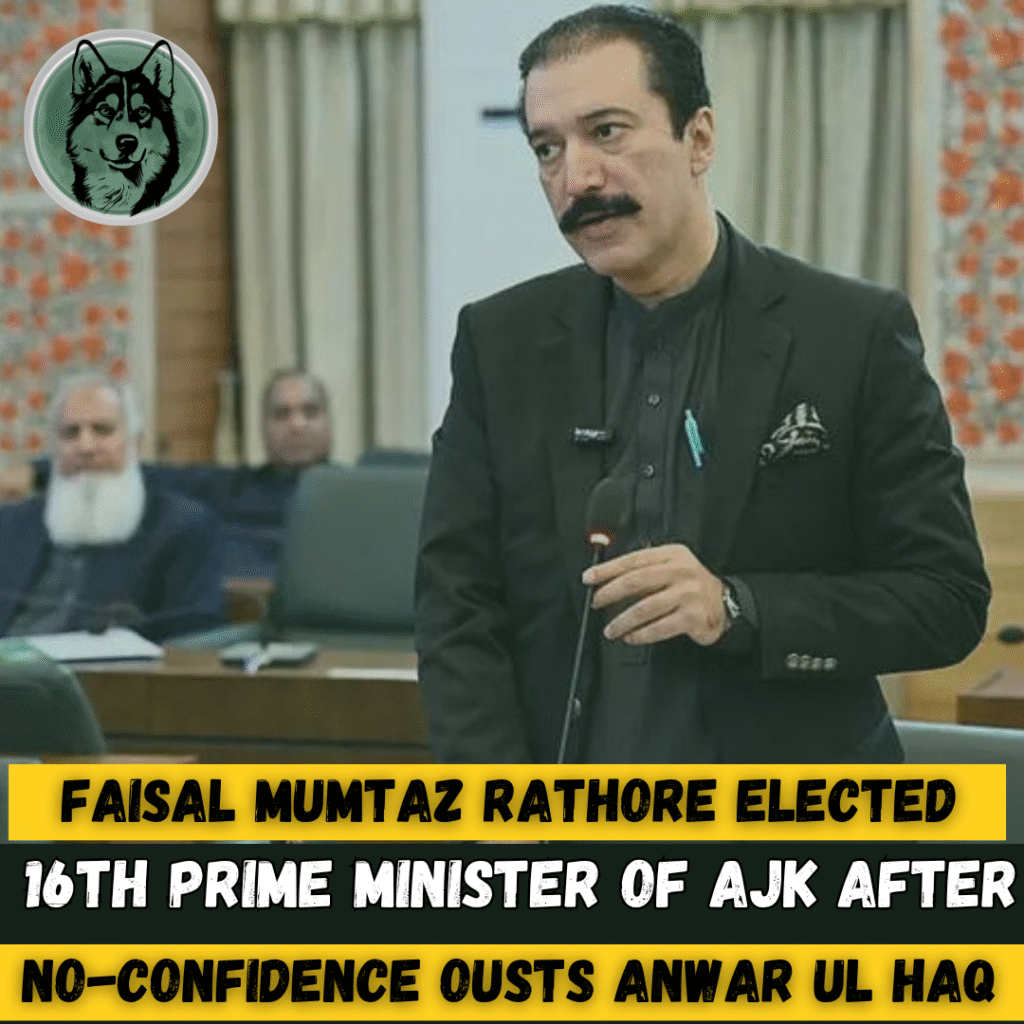
Raja Faisal Mumtaz Rathore of the Pakistan Peoples Party has been elected the 16th Prime Minister of Azad Jammu and Kashmir after a no-confidence motion removed former premier Chaudhry Anwarul Haq during a tense assembly session on Monday.
Rathore secured 36 votes, while the outgoing prime minister received only two. The minimum requirement was 27, making the win clear and decisive.
Why the No-Confidence Happened
The no-confidence motion was driven by months of political mistrust, unstable alliances and complaints about Anwarul Haq’s style of governance. Many lawmakers, including members of his own coalition, said he failed to build unity and instead created divisions. The PTI Forward Bloc also accused him of ignoring commitments and failing to deliver on administrative reforms.
Another reason was the shifting political landscape. PPP and its allies had been quietly building strength, especially after several Forward Bloc members signaled that they no longer trusted Anwarul Haq’s leadership. The final break came when more bloc members signed the motion hours before the vote.
What Could Have Been Done to Prevent This
The political crisis could have been avoided if Anwarul Haq had engaged more effectively with his coalition partners, listened to concerns and maintained stable communication. A more inclusive decision-making style, respect for allies and a clear reform plan might have stopped the Forward Bloc from switching sides.
His refusal to resign, despite being advised to do so earlier, also created a confrontation that ended in a complete collapse of support.
How the Vote Unfolded
The motion was submitted by Sardar Javed Ayub, Chaudhry Qasim Majeed and others. Speaker Chaudhry Latif Akbar presided over the session. Security across Muzaffarabad was tightened.
PPP entered the session confident, backed by PML-N and a strong PTI Forward Bloc. Two more Forward Bloc members signed the motion on Monday morning, strengthening the PPP position even further.
Anwarul Haq had come into power in April 2023 with 48 votes but struggled to hold the alliance together. This is the fourth time a prime minister has been removed during this assembly’s term.
High Security and Swearing-In
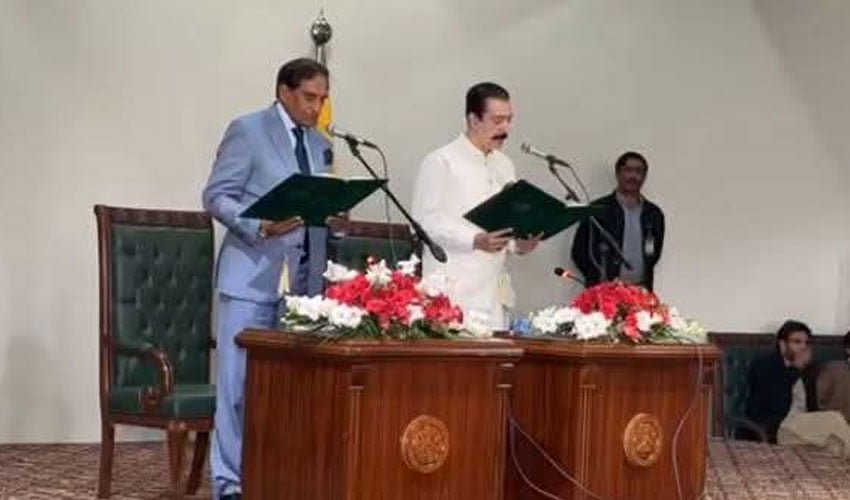
Authorities placed heavy security around the assembly and important buildings. Rathore is expected to take oath on Tuesday. Senior PPP leaders are likely to attend the ceremony.
Build-Up to the Motion
The no-confidence motion was first submitted on November 14 by PPP and members of the Forward Bloc. President Asif Ali Zardari had approved the political strategy last month.
A major turning point came on October 26 when PPP hosted a strategic dinner at Sindh House in Islamabad, attended by 27 lawmakers. That same day, 10 ministers from the PTI Forward Bloc openly aligned with PPP after meeting Faryal Talpur. After that meeting, the collapse of Anwarul Haq’s government became almost certain.
Profile: Who Is Faisal Mumtaz Rathore?
Faisal Mumtaz Rathore comes from one of Azad Kashmir’s most influential political families. His father, Mumtaz Hussain Rathore, served as prime minister in 1990 and held several key positions. His mother, Begum Farhat Rathore, served in the AJK Assembly and led the PPP Women’s Wing.
Rathore has served as Minister for Education and Minister for Electricity in 2011, and is currently the Secretary General of PPP AJK. He was re-elected to the Assembly in 2021 and joined Anwarul Haq’s coalition in 2023 as Minister for Local Government and Rural Development. He led important negotiations with the Awami Action Committee and is known for his strategic political skills.
He now becomes the fourth prime minister to take office during the current assembly’s tenure.
PML-N once again played its classic double-faced political game. Instead of standing firmly on any principle or policy, the party chose to support the PPP’s no-confidence move only to later announce it would sit in opposition. This confused and contradictory behaviour shows the party lacks direction, courage and seriousness.
PML-N’s politics in AJK has repeatedly been driven by personal interests rather than public service. Their lawmakers try to stay relevant by jumping into every power shift without offering any real governance plan. They did nothing to stabilise the political situation and instead acted like spectators waiting to benefit from whichever side won.
Their decision to support the vote but refuse to join the government underlines their weak political spine. It is a party that wants influence without responsibility and attention without accountability. Instead of strengthening democratic stability, PML-N once again proved that it adds confusion, not clarity, to AJK politics.