


Navy’s continued vigilance disrupts multi-million-dollar narcotics route in Arabian Sea
Pakistan Navy Makes Landmark Methamphetamine Seizure at Sea
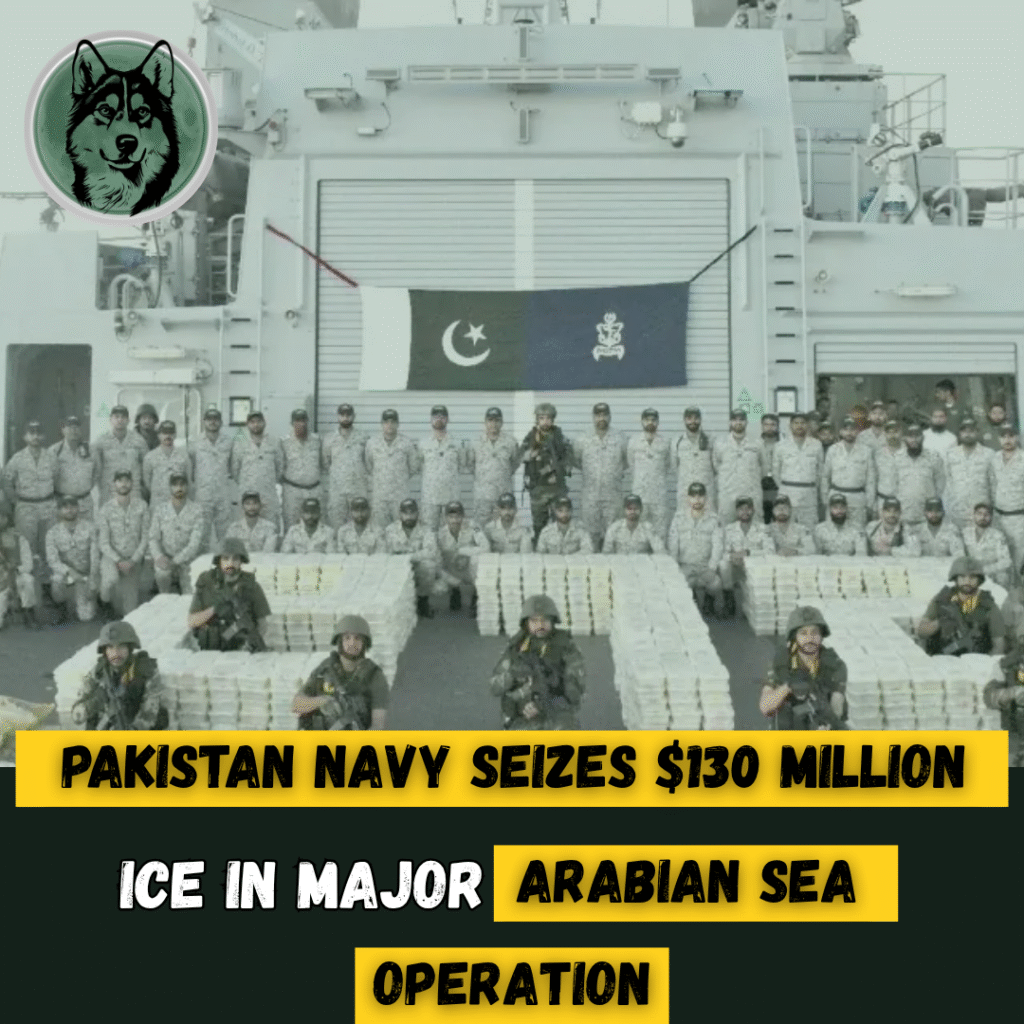
The Pakistan Navy has successfully carried out one of its largest counter-narcotics operations in recent months, seizing more than 2,000 kilograms of methamphetamine (ICE) from a stateless dhow in the Arabian Sea. According to the statement issued by the Director General of Public Relations (Navy), the seized drugs carry an estimated regional wholesale value of $130 million, marking a major blow to regional narcotics trafficking networks.
This milestone operation was conducted by PNS TABUK, deployed on a Regional Maritime Security Patrol (RMSP), in coordination with the Saudi-led Combined Task Force 150 (CTF-150) under the Combined Maritime Forces (CMF). The dhow was intercepted after exhibiting suspicious movement, leading to a thorough search and subsequent recovery of the massive illegal drug consignment.
Navy’s Swift & Coordinated Action
The Pakistan Navy confirmed that this operation represents their third consecutive successful drug interdiction in the last two months, demonstrating consistent vigilance and operational readiness at sea.
In its statement, the Navy said:
“These successful operations demonstrate the Pakistan Navy’s enduring resolve and unwavering commitment against illicit trafficking at sea. The flawless execution underscores not only the Navy’s professionalism but also the effectiveness of multinational coordination under CMF.”
The Navy further affirmed its commitment to protecting Pakistan’s maritime interests, complying with the United Nations Convention on the Law of the Sea (UNCLOS), and contributing actively to regional maritime stability.
Why This Happened – The Rising Drug Routes Through the Arabian Sea
Experts point out that the Arabian Sea has become a major trafficking corridor for narcotics originating from Afghanistan and parts of the Middle East. Stateless dhows are often used because:
- They have no registered identity
- They are harder to trace
- Traffickers frequently change routes
- They blend easily with fishing vessels
With drug networks facing increasing land-route restrictions, maritime smuggling has surged, making naval vigilance more critical than ever.
How This Affects Pakistan and the Region
1. Strengthened International Reputation
This seizure boosts Pakistan’s image as a responsible maritime security partner, especially within CMF operations.
2. Reduced Flow of Drugs into the Region
By intercepting $130M worth of meth, Pakistan disrupts drug circulation in South Asia, the Middle East, and Africa, where such narcotics fuel addiction and crime.
3. Increased Pressure on Smuggling Networks
Consistent seizures mean traffickers incur heavy financial losses, weakening their operational strength.
4. Enhanced Maritime Security
The operation reinforces the message that Pakistan controls its waters effectively, preventing their misuse by criminal elements.
5. Potential Economic Impact
A safer maritime environment boosts foreign confidence in trade, shipping routes, and investment connected to Pakistan’s coastline and ports.
What Pakistan Needs Going Forward
- Strengthening technological surveillance systems
- Increasing joint patrols with allied navies
- Enhancing intelligence-sharing with regional partners
- Expanding drone-based sea monitoring
- Tightening anti-trafficking laws and prosecution frameworks