



UN chief warns world is watching as fire disrupts already tense COP30 negotiations in Brazil.
Fire Disrupts Critical COP30 Climate Negotiations in Brazil
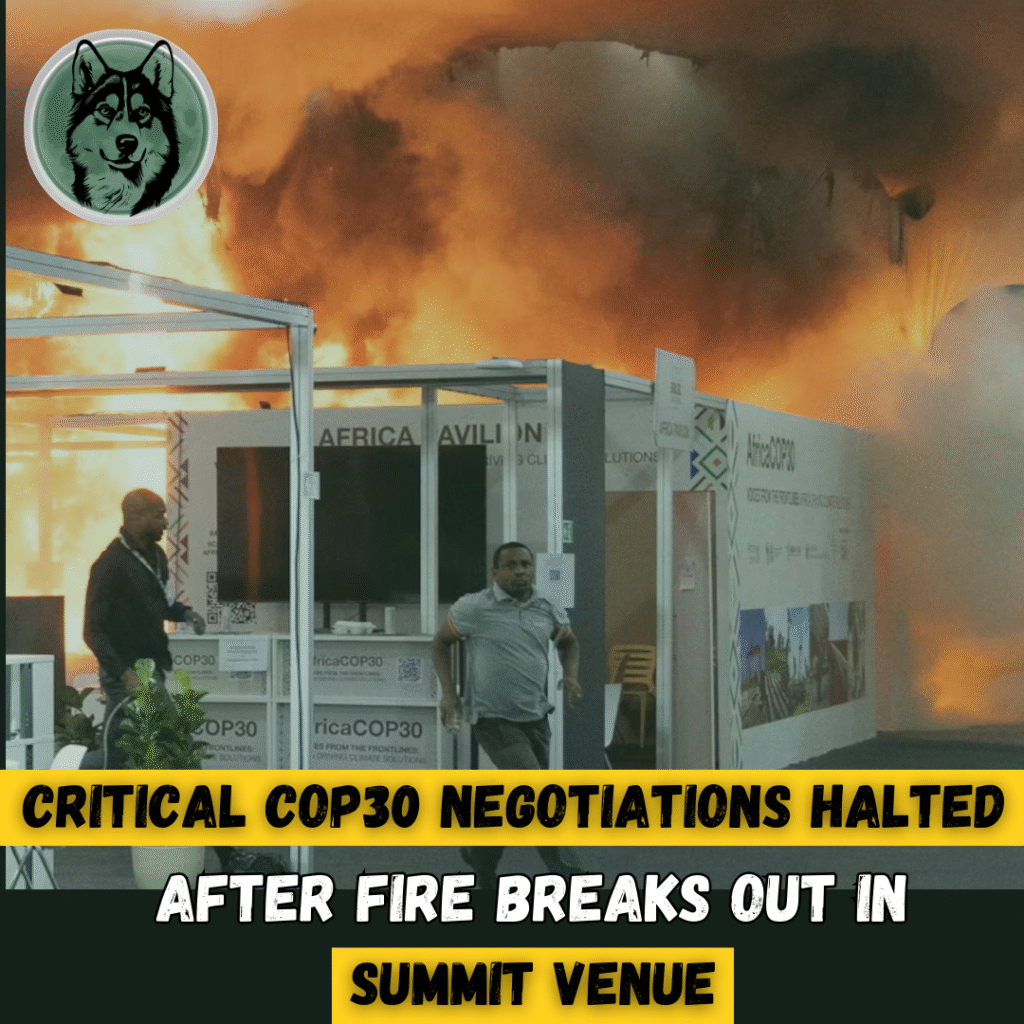
High-stakes climate negotiations at the COP30 summit in Belém, Brazil, were abruptly halted on Thursday when a fire broke out in one of the country exhibition pavilions, forcing the evacuation of thousands of delegates.
The incident occurred at a crucial moment, just as negotiators were entering the final phase of discussions aimed at reaching a global deal to accelerate action against climate change.
According to officials, the blaze was quickly brought under control and no injuries were reported. However, the disruption caused significant delays, adding pressure to an already strained negotiation timeline.
UN Chief Guterres: “The World Is Watching Belem”
Earlier in the day, United Nations Secretary-General Antonio Guterres urged nations to secure a meaningful deal.
He welcomed calls for clarity on the divisive issue of phasing out fossil fuels, stressing that the world is running out of time.
“One thing is clear we are down to the wire, and the world is watching Belem,” Guterres said.
Guterres reiterated that emissions from burning fossil fuels remain the largest contributor to global warming, complicating efforts to limit temperature rise under the Paris Agreement.
Delegates Evacuated; Timelines Uncertain
Brazil’s tourism minister Celso Sabino stated that there was no immediate clarity on when delegates could return to the venue.
Members from multiple negotiating blocs, including representatives of small island states, were seen waiting outside for further instructions.
The summit had already missed its self-imposed Wednesday deadline, making the fire-related delay even more consequential.
Two Major Fault Lines: Fossil Fuels & Climate Finance
As negotiations resume, two unresolved issues continue to divide global participants:
1. Fossil Fuel Phase-Out Roadmap
- Dozens of nations, following Brazil’s lead, support a clear global roadmap to move away from fossil fuels.
- Fossil fuel–producing countries strongly resist any language that would limit future extraction or consumption.
- The COP28 agreement in 2023 acknowledged the need for transition, but no timeline or mechanism was ever finalized leaving COP30 with the task of turning vague commitments into actionable plans.
2. Climate Finance for Vulnerable Nations
Another major flashpoint is funding support for developing countries suffering from the worsening impacts of climate change.
Sources say wealthy nations remain reluctant to commit to firm adaptation financing targets.
Developing countries, already skeptical due to the unmet $300 billion climate finance pledge from COP29, argue that their people are paying the price.
Pacific minister Steven Victor of Palau voiced frustration:
“Right now, our people are losing their lives and livelihoods… If we leave Belém without a transformative outcome, it will be a failure.”
European officials insist adaptation financing is vital but claim they are not authorized to approve new targets.
Why This Happened: A Critical Analysis
- Overcrowded and complex venue structures may have contributed to the fire risk.
- The pressure-cooker environment of negotiations causes added strain on organizers, leading to lapses.
- Divisions among nations between developed, developing, and fossil-fuel states have pushed talks into overtime, increasing operational load at the venue.
- The fire incident highlights vulnerabilities in hosting mega climate events, especially in environmentally sensitive locations like the Amazon.
How This Could Affect International Climate Efforts
- The evacuation may delay or derail the fragile progress toward a fossil fuel transition roadmap.
- Vulnerable nations fear the lack of momentum could mean more years of climate inaction, costing lives.
- Countries skeptical of climate finance may become even harder to negotiate with under time pressure.
- Failure to reach consensus could weaken global trust in future COP summits and stall climate ambition worldwide.
- Brazil, aiming to demonstrate leadership, faces a high-stakes test to restore credibility and steer negotiations back on track.
With less than 48 hours remaining, the world is waiting to see whether COP30 ends in triumph or in another chapter of missed climate commitments.