





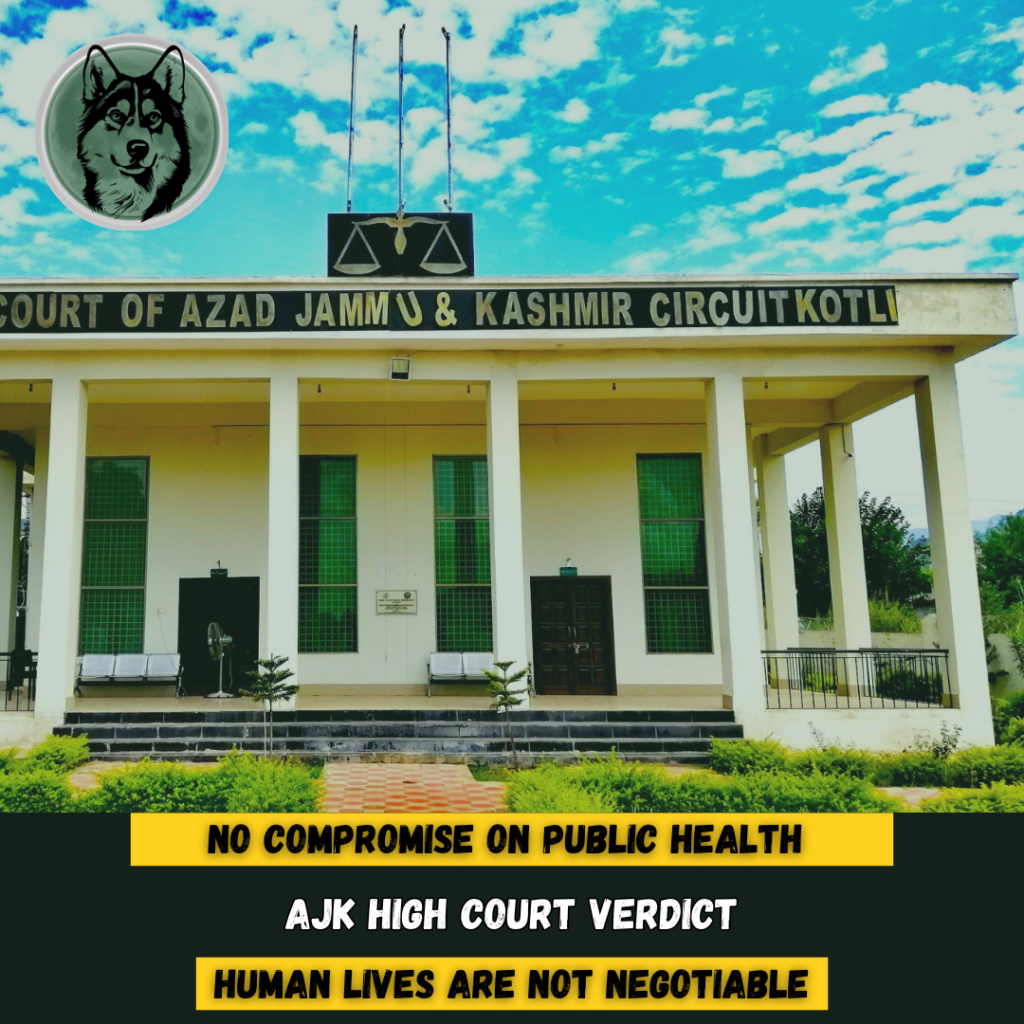
Court Directs Strict Regulation of Allied Health Institutes
The Azad Jammu and Kashmir (AJK) High Court has issued firm directions to the government and health authorities to strictly enforce the existing policy governing the registration, affiliation, and supervision of allied health sciences institutions across the region. The court made it clear that no institution would be permitted to operate unlawfully or endanger public health.
Petitions Challenging Illegal Operations of Institutes
The directives were issued by Justice Sardar Mohammad Ejaz while deciding two consolidated writ petitions. One petition challenged the functioning of private paramedical and allied health institutes in Muzaffarabad, while the other questioned the legality of actions taken against certain institutes.
The first petition was filed by four members of the Central Bar Association, Muzaffarabad, who sought judicial scrutiny of private institutes allegedly offering medical technician, pharmacy, and allied health courses without meeting mandatory legal and academic standards.
Allegations of Unauthorized Training and Illegal Certifications
Petitioners argued that several institutes had entered into memoranda of understanding (MoUs) with public and private hospitals for clinical training without lawful authorization. They further alleged that students were being enrolled and diplomas issued in violation of prescribed criteria, posing serious risks to public safety.
2019 Policy Provides a Complete Regulatory Framework
Justice Ejaz observed that the government had already introduced a comprehensive policy on March 28, 2019, which regulates registration, affiliation, and issuance of no-objection certificates (NOCs) for allied health sciences institutions in AJK.
Under this policy, institutions are required to:
- Follow approved curricula and examination systems of recognized bodies such as Punjab Medical Faculty, Khyber Pakhtunkhwa Medical Faculty, or HEC-recognized universities
- Submit annual teaching plans
- Ensure proper and lawful clinical training arrangements
Rejecting the claim that no regulatory mechanism existed, the court ruled that the policy sufficiently addressed all concerns and empowered the health department to act against non-compliant institutions.
Health Authorities Admit Regulatory Gaps
During the proceedings, the Director General Health appeared before the court and admitted that although around 25 allied health institutions were operating in AJK, he could not confirm whether all were complying with prescribed standards.
He assured the court that strict legal action would be taken against violators and stated that no one would be allowed to “play with human lives.”
However, Justice Ejaz remarked that the authorities had failed to effectively discharge their regulatory responsibilities.
AHPC’s Role Highlighted as a Matter of Serious Concern
The court also took note of communications from the Allied Health Professionals Council (AHPC), Islamabad, which asserted that it is the sole statutory body responsible for approval and registration of allied health institutions under the AHPC Act, 2022.
Justice Ejaz described the issue of mandatory institutional registration as a matter of “deep concern.”
Judicial Restraint in Policy Matters
Emphasizing judicial restraint, the court held that it could not interfere with government policy unless it was proven to be arbitrary, mala fide, or in violation of fundamental rights. The judgement cited established precedents of the Supreme Court.
Court Orders Statewide Inspections and Legal Action
The court partly accepted the petition filed by the lawyers and directed authorities to:
- Implement the 2019 policy in letter and spirit
- Inspect all public and private allied health institutions across AJK
- Assess compliance with required standards
- Initiate legal action on a priority basis against unlawful operators
Authorities were instructed to submit a compliance report within three months to the registrar.
Second Petition Dismissed
The second petition, filed by owners and managers of five private institutes seeking quashment of inquiry proceedings and restoration of clinical training arrangements, was dismissed.
Justice Ejaz ruled that lawful proceedings initiated by authorities could not be restrained, particularly when similar challenges had already been rejected in earlier cases.
Judgement to Be Implemented Immediately
The court ordered that the judgement be circulated to all concerned departments for immediate implementation, reinforcing accountability and regulatory oversight.