



Introduction: When Companies Go to the Dogs
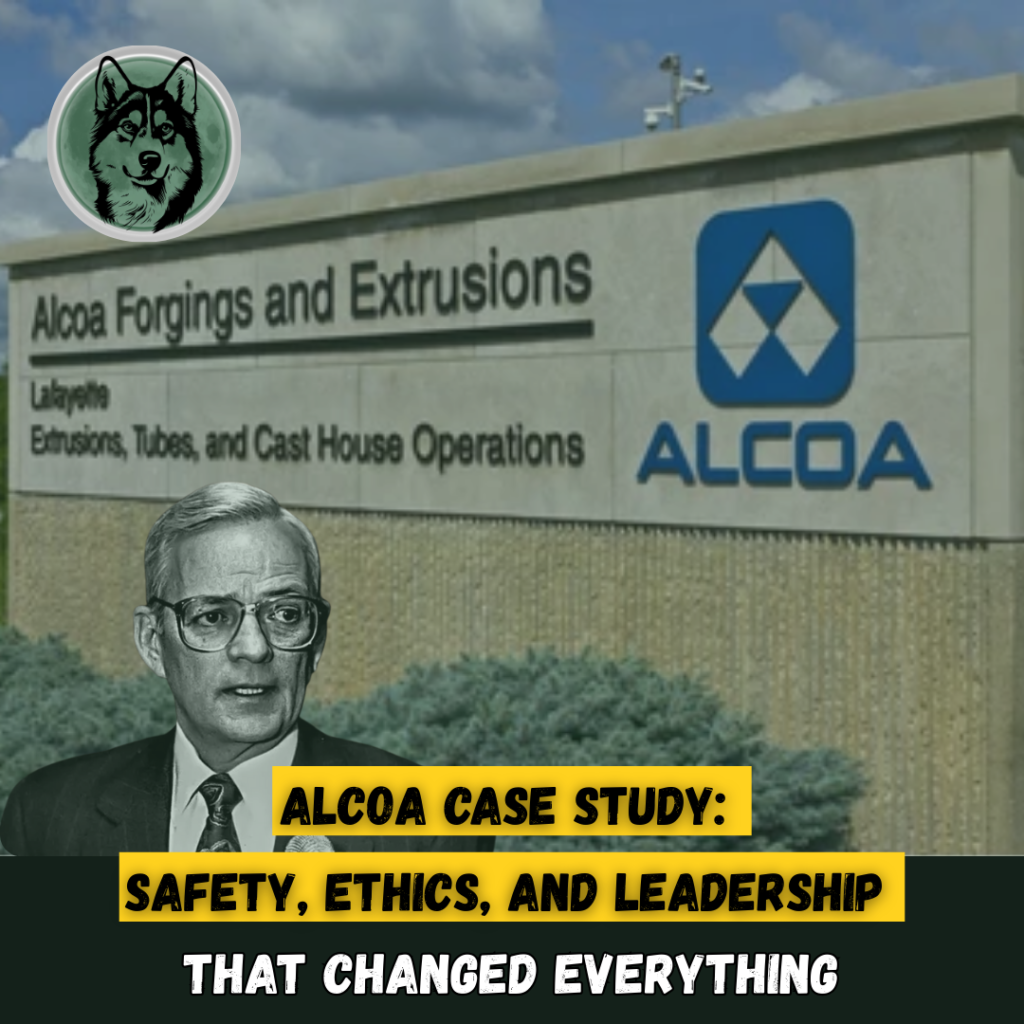
There are moments in corporate history when organizations lose their way. Loss after loss, declining morale, broken systems, injured workers, and leadership obsessed only with quarterly numbers. Alcoa, once a strong industrial giant, reached such a crossroads in the late 1980s. Many believed the company was “going to the dogs”, financially stressed, operationally inefficient, and culturally fragmented.
Then came a leader who did something radical.
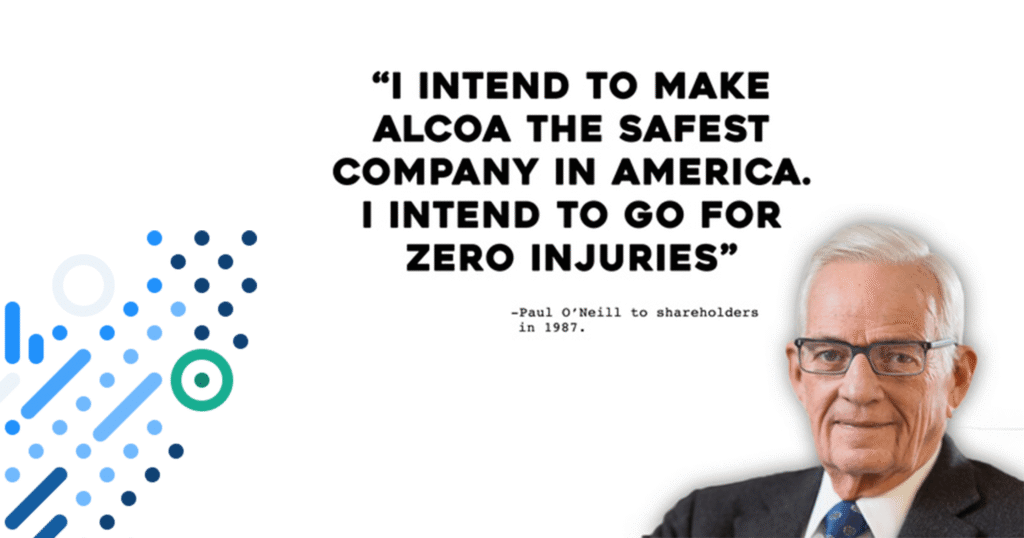
Instead of promising profits, market share, or expansion, Paul O’Neill stood before investors and promised one thing only: worker safety.
That single decision rewrote business history.
Alcoa: The Aluminum Giant
Alcoa (Aluminum Company of America) is one of the world’s largest aluminum producers, operating complex, high-risk industrial processes such as smelting, rolling, and fabrication. These operations carry inherent dangers—molten metal, heavy machinery, high temperatures, and hazardous chemicals.
By the mid-1980s, Alcoa faced:
• Rising workplace injuries
• Poor inter-department communication
• Inefficient processes
• Declining investor confidence
• A reactive, blame-driven management culture
Safety was treated as a cost, not a value.
Paul O’Neill: The Unconventional Leader
When Paul O’Neill became CEO in 1987, Wall Street expected the usual language of growth and profitability. Instead, O’Neill shocked analysts by declaring:
“If you want to understand how Alcoa is doing, you need to look at our workplace safety.”
He announced a bold, uncompromising goal:
Zero injuries.
Not fewer injuries.
Not acceptable injury rates.
Zero.
This was not a slogan, it was a moral commitment.
Safety Leadership: From Policy to Purpose
O’Neill understood a fundamental truth that many executives ignore:
A company can never be built on broken people.
Organizations that exhaust, injure, or silence their workers may survive temporarily, but they never achieve sustainable excellence. Human failure is always a reflection of leadership failure.
What Changed?
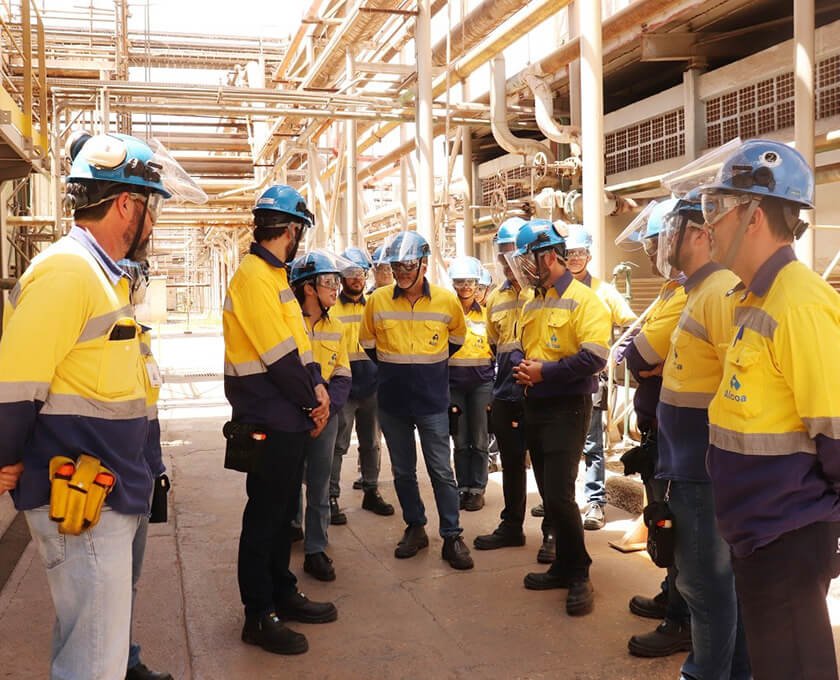
• Safety incidents had to be reported to the CEO within 24 hours
• Root cause analysis became mandatory
• Managers were held accountable—not workers blamed
• Systems were fixed instead of hiding failures
• Workers were empowered to stop unsafe work
Safety became a leadership behavior, not a department.
This aligns directly with modern NEBOSH and IOSH safety leadership principles: visible leadership, accountability, worker engagement, and continuous improvement.
Safety and Ethics: Human Value Before Share Value
Paul O’Neill’s philosophy was deeply ethical.
He believed:
• Every injury is a moral failure
• Human life is not a trade-off for productivity
• Ethics are not separate from performance—they drive it
This ethical stance transformed trust across the organization. Workers began reporting near-misses, design flaws, and process gaps without fear. Management listened. Systems improved.
When people feel valued, they perform.
How Safety Fixed Management Systems
Here is the most powerful lesson of Alcoa:
Safety exposed everything that was broken in management.
To prevent injuries, Alcoa had to:
• Improve communication
• Standardize procedures
• Maintain equipment properly
• Train people effectively
• Fix supply chain delays
• Eliminate shortcuts and silos
By fixing safety, Alcoa unintentionally fixed quality, efficiency, and productivity.
Safety became the operational excellence engine.
From Losses to Legendary Profits: The Numbers That Changed Minds
The results silenced critics not with slogans, but with financial facts.
Alcoa Before Paul O’Neill (1987)
When Paul O’Neill joined Alcoa in 1987, the company was struggling with:
• Weak investor confidence
• Operational inefficiencies
• Rising injury-related costs
• A conservative and fragmented management system
At that time:
• Approximate market value: around USD 3 billion
• Safety incidents were frequent and considered an operational reality
• Profit growth was inconsistent and fragile
Alcoa was surviving but not inspiring.
Alcoa After Paul O’Neill’s Leadership (By 2000)
When Paul O’Neill stepped down in 2000, Alcoa was recognized globally as a benchmark organization for safety, ethics, and operational excellence.
By the end of his tenure:
• Market value increased to approximately USD 25–30 billion
• Shareholder value multiplied nearly 8–10 times
• Workplace injury rates dropped by more than 60–70%
• Productivity and quality indicators improved consistently
• Alcoa became a case study at Harvard Business School and other leading institutions
All this growth occurred without making profit the primary slogan.
When a leader focuses on human value, profits generate naturally.
This is not theory.
This is Alcoa.
Lessons for HSE Professionals and Leaders
What Alcoa Proved in Practice:
Alcoa demonstrated that safety is not a lagging statistic but a leading indicator of leadership quality. By placing ethics and human value at the center of decision-making, fear-based systems were replaced with trust-driven performance. Zero Harm was treated not as a numeric target but as a direction that disciplined management behavior. As hidden inefficiencies were exposed and corrected, profitability emerged naturally—proving that safety professionals are not cost centers, but true culture builders.
Why This Case Study Still Matters Today
In a world still debating whether safety slows business, Alcoa stands as a permanent answer.
• Safety is not soft
• Ethics are not optional
• Human life is not negotiable
When leadership chooses people over numbers, numbers follow.