One raid shook the world. And exposed deep global fault lines
Global Outcry After US Seizes Venezuela’s President
Washington’s Move Sparks Worldwide Alarm
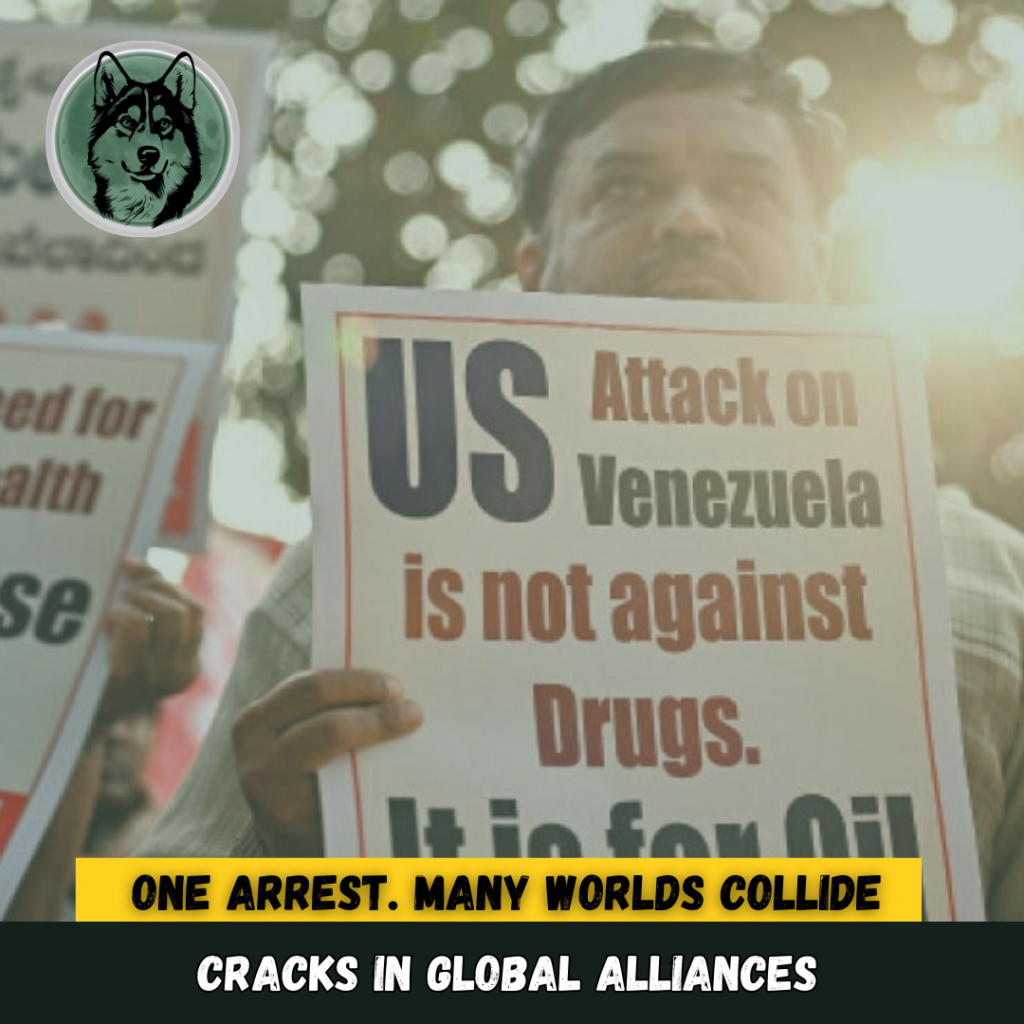
WASHINGTON: The United States seized Venezuelan President Nicolás Maduro, triggering global shock and swift condemnation. China and Russia led the backlash, while European allies responded with caution and division. US President Donald Trump defended the operation as a decisive strike against narco-terrorism. Critics, however, accused Washington of waging a reckless campaign driven by oil interests and regime change ambitions.
Beijing and Moscow Lead the Chorus
China and Russia, long-standing allies of Caracas, reacted immediately. China’s foreign ministry voiced grave concern and called the operation a clear violation of international law. Beijing demanded Maduro’s immediate release and warned against breaching basic norms of international relations. Russia responded more forcefully. Foreign Minister Sergei Lavrov labelled the action armed aggression and described Maduro as the legitimately elected president. He also demanded his immediate release. Dmitry Medvedev, Russia’s security council deputy chairman, issued a stark warning. He said the incident proved that nuclear weapons remain the only real guarantee of sovereignty.
Iran and the United Nations Raise Red Flags
Iran condemned the raid as a textbook act of aggression. Tehran warned that such actions erode the UN Charter and threaten the global order. UN Secretary General António Guterres also expressed deep alarm. His office described the incident as a dangerous precedent and stressed the need to respect international law.
Latin America Pushes Back
South America reacted swiftly and angrily. Brazil, Chile, Colombia, Mexico, and Uruguay released a joint statement rejecting Washington’s unilateral military action. Brazilian President Luiz Inácio Lula da Silva said the bombing and abduction crossed an unacceptable line. He called it a grave violation of Venezuelan sovereignty and recalled the darkest history of regional interference.
Cuban President Miguel Díaz-Canel went further. He branded the raid state terrorism and accused Washington of targeting sovereignty, not drugs. Ecuador stood apart. President Daniel Noboa welcomed the move and claimed it would dismantle the narco-Chavista structure.
Europe Walks a Diplomatic Tightrope
European leaders struggled to balance principle and politics. The European Union urged respect for legal norms but questioned Maduro’s legitimacy. European Commission President Ursula von der Leyen said the bloc stood with the Venezuelan people and supported a peaceful, lawful transition. French President Emmanuel Macron welcomed the end of Maduro’s rule but insisted that no transition should be imposed from outside.
UK Prime Minister Keir Starmer said Britain would shed no tears for Maduro’s fall but stressed the importance of international law. German Chancellor Friedrich Merz described the legal assessment as complex and avoided strong language.
Italy broke ranks. Prime Minister Giorgia Meloni backed the raid and called it a defensive intervention against a criminal state. Spain rejected the action outright. Madrid said it would not recognise any intervention that violates international law.
Why This Matters
The operation did more than remove a leader. It exposed cracks in global alliances. It raised fears about sovereignty, power, and precedent. The world now watches closely. What comes next may reshape international norms.
One Response
lets see what happens