



China Positions Itself as a Global Stabilizer Amid Trade Tensions
The Chinese Foreign Minister Wang Yi on Tuesday portrayed China as a pillar of international stability, highlighting strengthened regional ties while condemning trade conflicts and pledging to respond firmly to U.S. arms sales to Taiwan.
“This year, economic globalization has suffered serious setbacks, and tariff wars have disrupted the international trade order,” Wang Yi stated during a speech in Beijing. “Amid global turmoil, China serves as an anchor of stability.”
Earlier this year, U.S. President Donald Trump imposed over 100% tariffs on Chinese goods, prompting retaliatory tariffs from Beijing. Tensions eased after Trump met Chinese President Xi Jinping in South Korea, agreeing to a one-year trade reprieve.
Cooperation Over ConfrontationSpeaking at an international relations symposium, Wang emphasized that “cooperation between China and the United States benefits both sides, while confrontation harms both.” He warned against foreign interference in China’s national interests, underscoring the strategic importance of U.S.-China relations.
Beijing’s Response to U.S. Arms Sales to Taiwan
Taipei announced this month that Washington approved an $11-billion arms package, angering Beijing and triggering large-scale military exercises around the island.
“In response to continuous provocations by pro-independence forces in Taiwan and large-scale U.S. arms sales, we must resolutely oppose and forcefully counter them,” Wang said. He added that any attempt to obstruct China’s unification with Taiwan “will inevitably end in failure.”
Military Drills Around Taiwan
China’s military conducted live-fire exercises off Taiwan, deploying missiles, fighter aircraft, and naval vessels to simulate a blockade and assaults on key maritime targets.
Journalists on Pingtan Island, the closest point to Taiwan’s main island, reported seeing multiple rockets streak into the sky, leaving trails of white smoke. At least 27 rockets were fired by Chinese forces during the drills, which the People’s Liberation Army described as achieving “desired effects.”
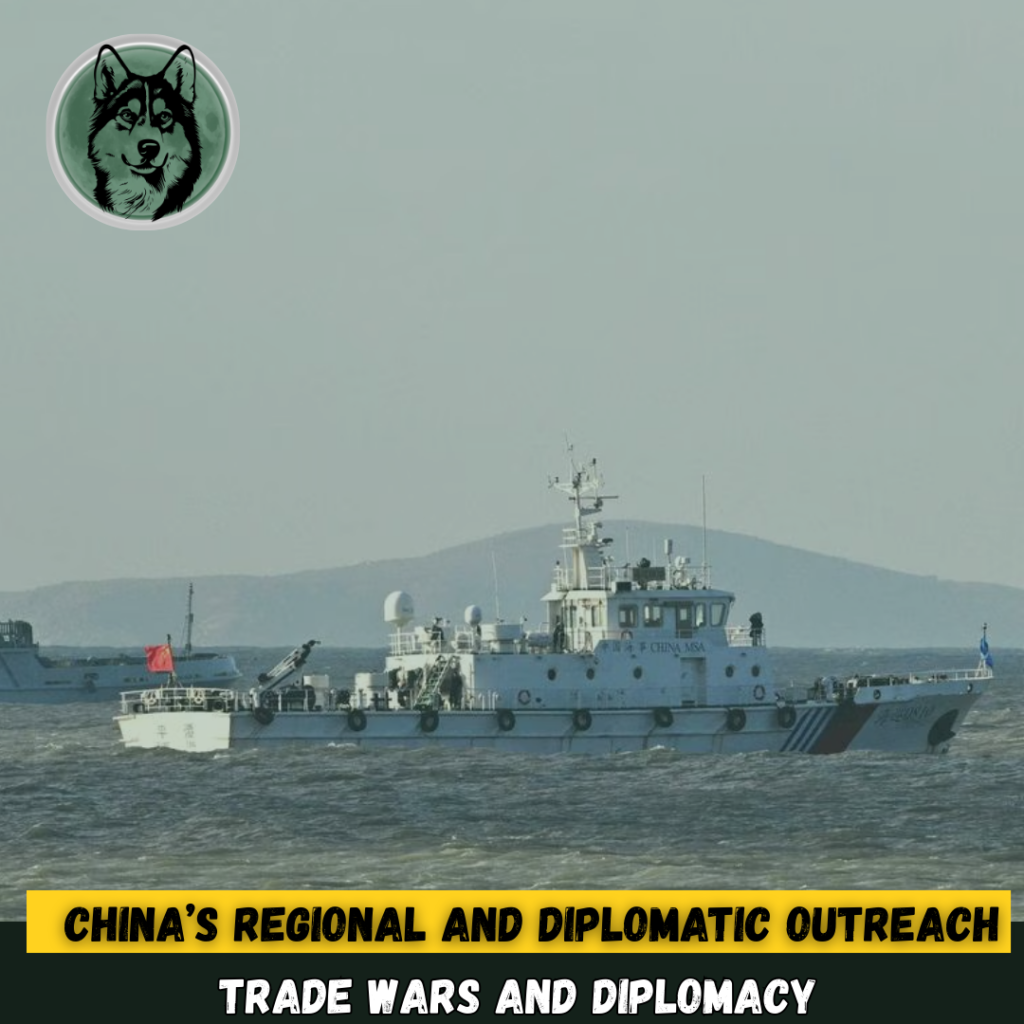
China’s Regional and Diplomatic outreach
Wang highlighted President Xi Jinping’s visits to Southeast Asia and Russia as evidence of China’s growing regional influence. He also praised China’s mediation efforts in northern Myanmar, the India-Pakistan conflict, Thailand-Cambodia relations, and nuclear diplomacy with Iran.