



Financial Times Highlights Pakistan’s Strategic Agility in a Post-US World
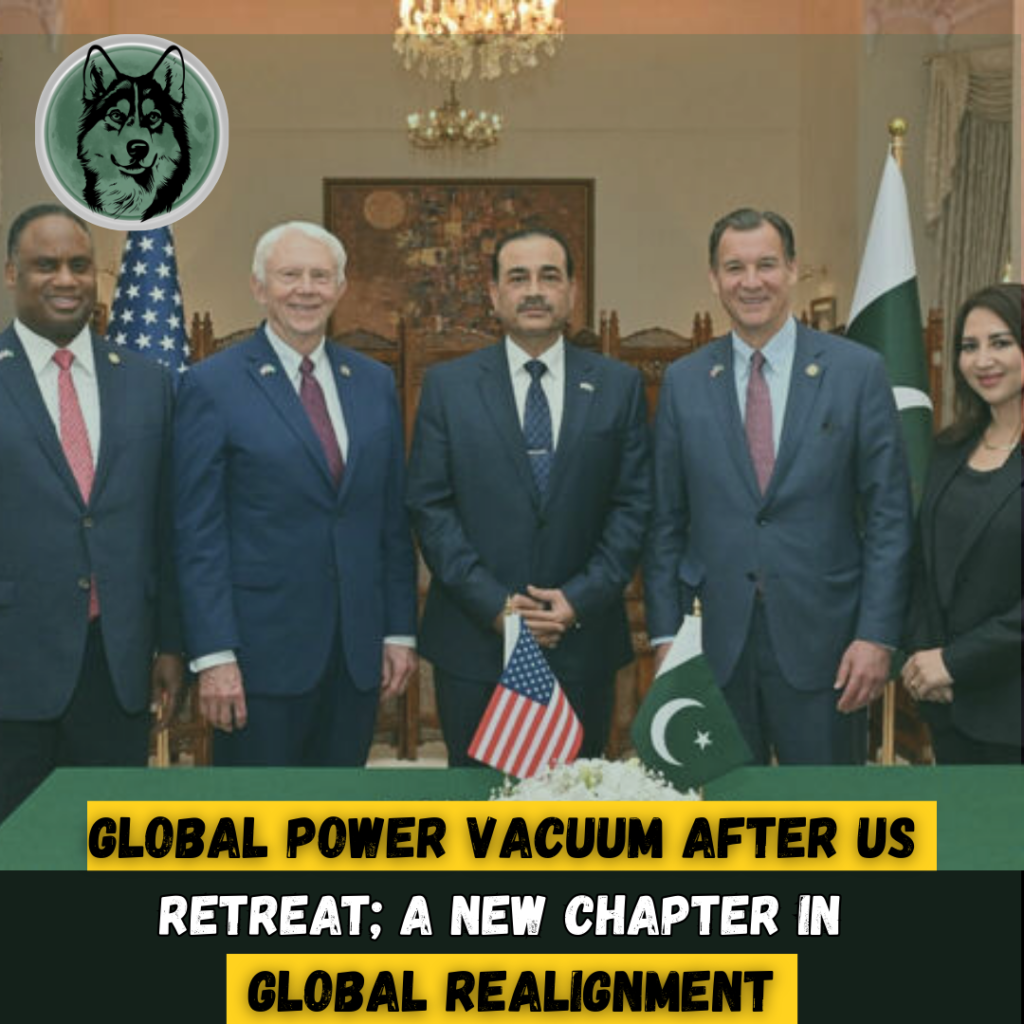
Global Power Vacuum After US Retreat
As the United States gradually withdraws from its long-standing role as the world’s strategic overseer, a power vacuum has emerged, prompting several “middle powers” to reassess their global positioning. According to an in-depth analysis by the Financial Times, this transition has created both uncertainty and opportunity across the international system.
Pakistan’s Adaptive Military Leadership
The FT notes that while many states have struggled to adjust to Washington’s rapid disengagement—particularly under President Donald Trump—Pakistan’s military leadership has responded with remarkable flexibility. Chief of Defense Forces and Chief of Army Staff, Field Marshal Asim Munir, is identified as one of the most effective leaders navigating this evolving global landscape.
“First Prize” Among Middle Powers
In its commentary, the Financial Times describes Field Marshal Asim Munir as the “first prize” winner among middle-power leaders recalibrating their foreign policies to align with what it terms Trump’s “casual approach to the world.” Pakistan’s approach, the paper argues, reflects strategic realism rather than ideological rigidity.
Mastering Multi-Alignment Diplomacy
Characterizing Asim Munir as “the very model of a middle power multi-aligner,” the FT highlights his ability to engage simultaneously with major global and regional players, including the United States, China, Saudi Arabia, and Iran. This balanced diplomacy has enabled Islamabad to expand its strategic space without being drawn into exclusive alliances.
Sustaining US Ties Without Political Pressure
The analysis further notes that Pakistan has managed to maintain constructive engagement with Washington, now largely free from the democracy-centric lecturing that previously shaped US-Pakistan relations. This shift has allowed for more pragmatic cooperation based on mutual interests.
Regional Implications and Rival Responses
The FT contrasts Pakistan’s adaptive strategy with India’s more rigid posture, suggesting that New Delhi has found it harder to navigate the complexities of middle-power balancing. India’s reluctance to accommodate Trump-era diplomacy, the paper argues, has limited its flexibility in the current environment.
A New Chapter in Global Realignment
Placing these developments in a historical context, the Financial Times compares the US retreat to moments when former empires lost influence following attempted reforms. With China also hesitant to fully step into the leadership vacuum, the space has opened for “entrepreneurial middle powers”—with Pakistan cited as the most effective example to date.