





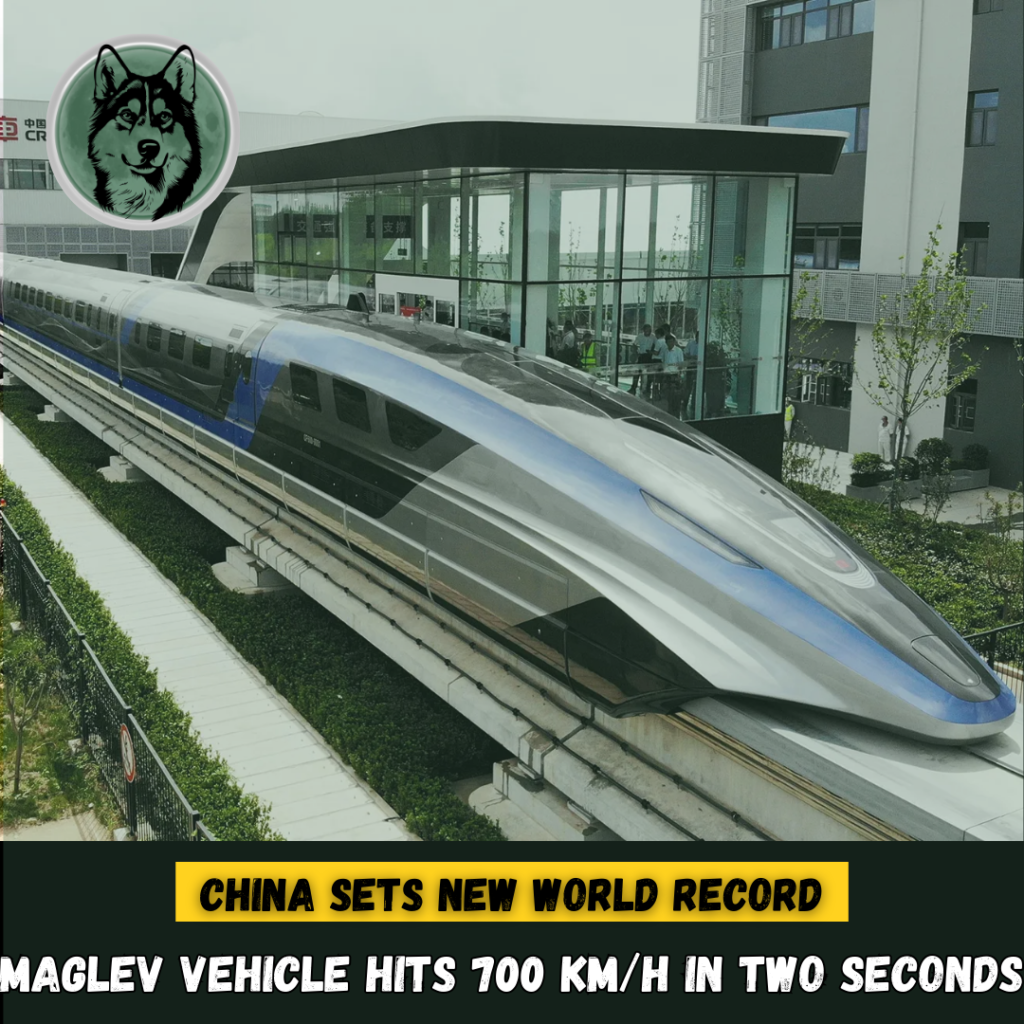
In a landmark achievement for ultra-high-speed rail research, China’s National University of Defense Technology (NUDT) has successfully tested a superconducting magnetic levitation (maglev) vehicle that reached 700 km/h (435 mph) in just two seconds. The milestone, achieved on a 400-metre experimental track, establishes a new world record for maglev acceleration and top-speed performance.
What the Experiment Involved
Researchers at NUDT designed a ton-scale maglev test vehicle weighing approximately one tonne. On December 25, 2025, the team conducted a carefully controlled trial on a dedicated 400-metre magnetic levitation track. Within two seconds, the vehicle accelerated from a standstill to 700 km/h and then safely decelerated to a complete stop.
Unlike conventional trains that rely on wheels and rails, maglev systems float above the track using powerful superconducting magnets. This design eliminates physical friction and enables unprecedented acceleration and speed.
Technical Breakthroughs Realised
Experts involved in the project highlighted several major engineering achievements behind the record-setting test.
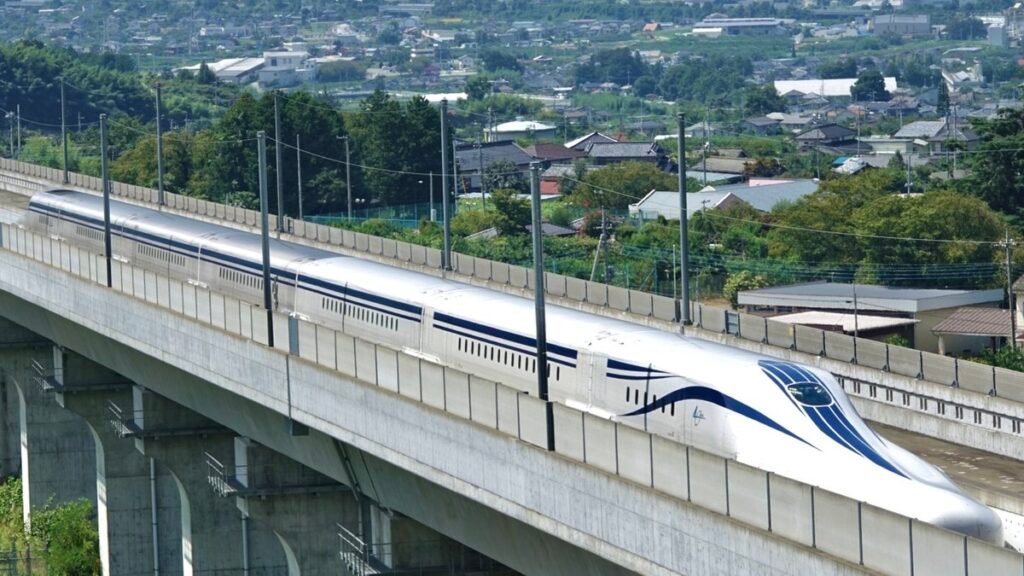
These include ultra-high-speed electromagnetic propulsion capable of extreme acceleration over short distances, electric suspension and guidance systems that maintain stability at very high speeds, advanced energy storage and inversion technologies that deliver intense power bursts, and high-field superconducting magnets that allow frictionless and energy-efficient movement.
These innovations represent a major step forward in next-generation maglev research and sustainable transport engineering.
Historical Context and Progress
China has invested in maglev technology for decades and remains a global leader in the field. The Shanghai maglev line, operational since 2004, runs at speeds of up to 430 km/h and remains one of the fastest commercial passenger rail services in the world.
Earlier in January 2025, researchers tested a similar maglev prototype that reached 648 km/h. The latest experiment builds directly on that progress and confirms continued advancements in ultra-fast ground transportation.
Implications for Future Transport
Although the December 2025 test did not involve a full-length commercial train or long-distance travel, it demonstrated a significant leap in acceleration control and speed management.
The technology could enable rapid intercity travel, reducing journeys that currently take hours to just minutes. It may also integrate with vacuum-tube transport systems similar to hyperloop concepts and support applications in aerospace and defence, including electromagnetic launch systems that reduce fuel use and increase efficiency.
Looking Ahead
The research team continues to refine maglev systems, with future testing expected to focus on longer tracks for sustained high-speed runs, improved energy efficiency, enhanced system reliability, and the development of passenger-ready platforms suitable for commercial operation.
As nations compete to develop ultra-fast and sustainable transport solutions, this achievement marks a critical milestone in the evolution of high-speed mobility.