



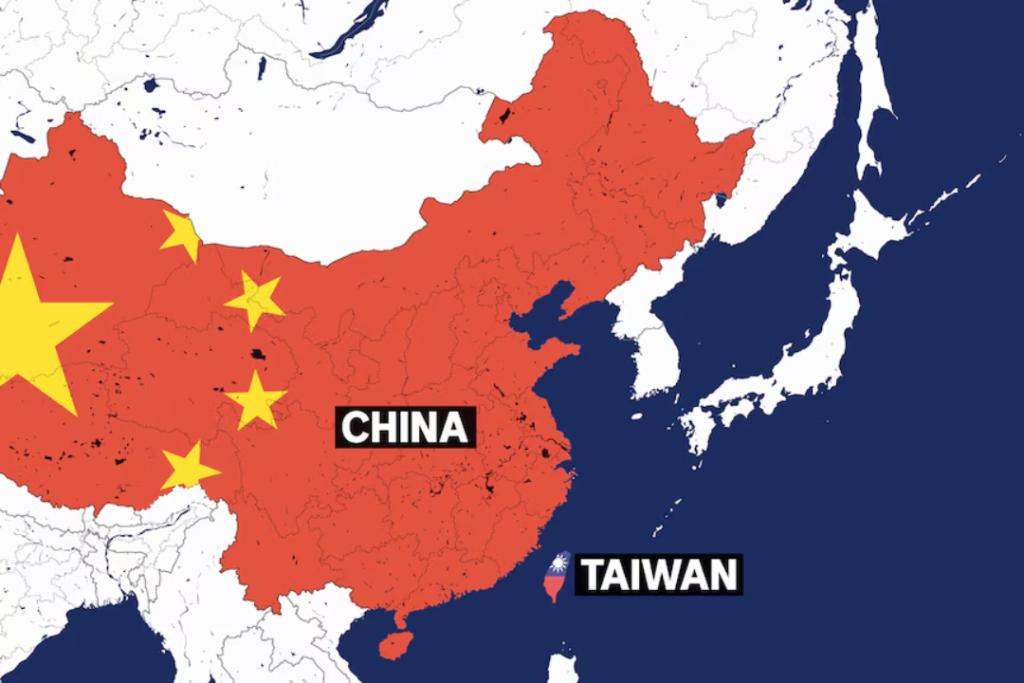
In late December 2025, tensions in the Taiwan Strait reached a new peak as China launched its largest live-fire military exercises near Taiwan, simulating blockades of key ports and deploying significant air and naval forces around the island. These developments follow a series of military, political, and diplomatic actions that have intensified cross-strait rivalry and drawn international attention.
1. Major Military Exercises: ‘Justice Mission 2025’
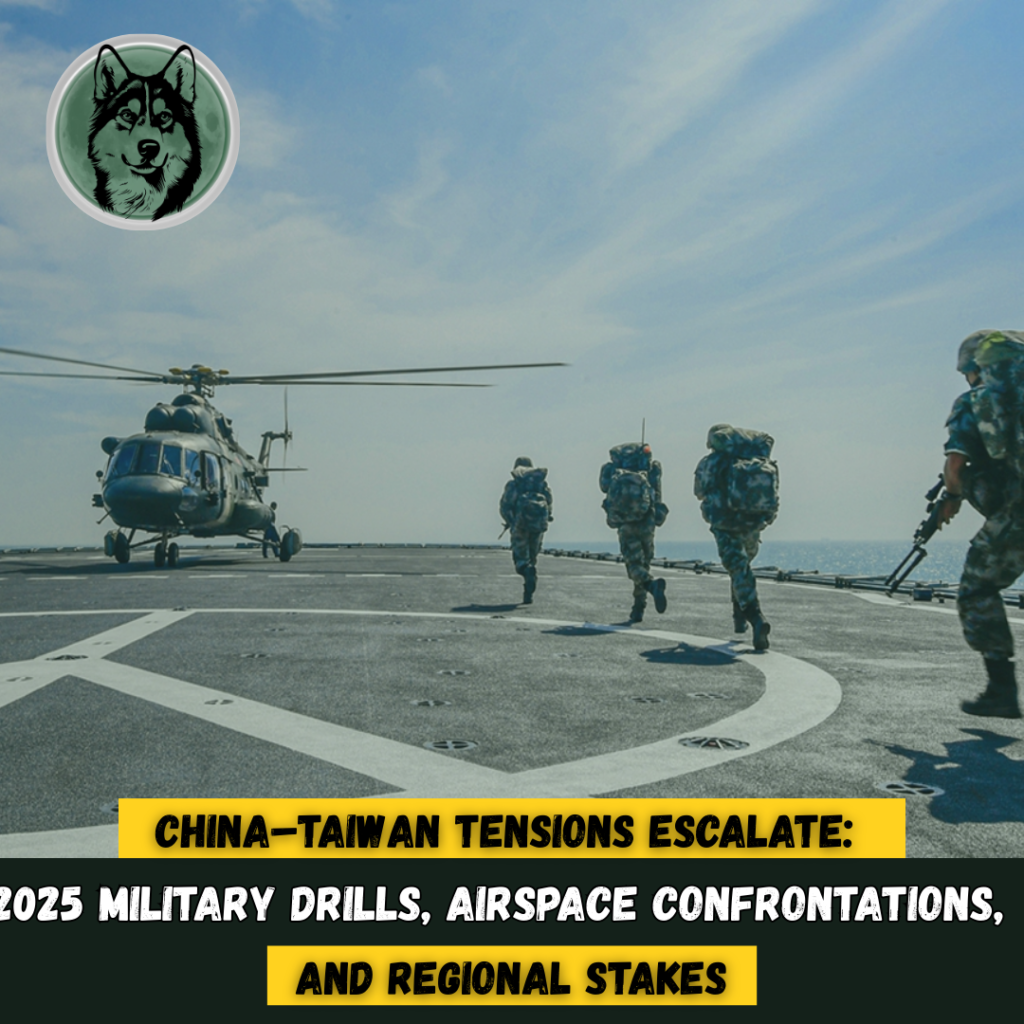
On December 29, 2025, the People’s Liberation Army (PLA) of China commenced extensive live-fire drills around Taiwan, code-named Justice Mission 2025. These exercises are the largest in scale to date and involve coordinated operations by the PLA’s navy, air force, rocket force, and coast guard.
Key elements of Justice Mission 2025 include:
Deployment of fighter jets, bombers, warships, drones, and missiles encircling Taiwan.
Simulated blockade operations targeting major ports such as Keelung and Kaohsiung to practice maritime and aerial containment tactics.
Live-fire strikes and multi-domain drills designed to test PLA coordination and strike capabilities.
These maneuvers represent a significant escalation beyond routine patrols, threatening commercial air routes and prompting extensive defense responses from Taiwan.
2. Taiwan’s Air Defence Responses
Taiwan has reported repeated incursions by Chinese military aircraft into or near its Air Defence Identification Zone (ADIZ) in recent months, leading it to scramble its own fighter jets in response. These actions are part of a long-running pattern of aerial pressure from Beijing.
In previous years, Taiwan’s air force routinely scrambled jets to warn off Chinese warplanes entering its ADIZ. These incidents highlight persistent friction between Taipei and Beijing as China expands its military presence around the island.
While recent drills under Justice Mission 2025 did not specify exact aircraft counts, the scale of air and naval deployments underscores the seriousness of the situation.
3. Why the Tension Has Spiked
The December 2025 escalation is driven by several strategic and political developments.
In mid-December 2025, the United States approved a record arms sales package to Taiwan aimed at strengthening its defensive capabilities. China condemned the move as interference in its internal affairs and a violation of the One China principle.
Chinese officials have also argued that support from external actors, particularly the United States and Japan, emboldens pro-independence elements in Taiwan and raises the risk of confrontation.
Analysts view the drills as part of Beijing’s broader effort to signal readiness for potential military action by 2027, a timeline referenced by Chinese leadership for enhanced military preparedness toward Taiwan.
Beijing maintains that Taiwan is a breakaway province that must eventually be reunified with the mainland, by force if necessary. Taipei insists its democratic system and sovereignty are non-negotiable and must be defended.
4. Taiwan’s Preparations and Defensive Posture
In response to rising military pressure, Taiwan has taken several defensive steps.
These include raising military alert levels, scrambling fighter jets to counter Chinese aircraft activity, and strengthening air and missile defenses using advanced fighter jets and missile systems.
Taiwan has also conducted emergency preparedness exercises for troops and critical infrastructure to ensure readiness in the event of conflict or blockade scenarios.
Alongside military measures, Taipei continues diplomatic efforts to secure international backing and warn against destabilizing actions in the region.
5. International Support and Alignments
The China–Taiwan situation has drawn in major global actors whose positions shape regional stability.
The United States, while not formally recognizing Taiwan as an independent state, provides military assistance and maintains a policy of strategic ambiguity aimed at deterring unilateral use of force.
Japan has voiced concern over China’s actions, citing potential threats to its national security should conflict erupt in the Taiwan Strait.
Russia has expressed diplomatic support for China’s position and criticized foreign arms sales to Taiwan, reflecting broader strategic alignment with Beijing.
Other regional actors, including the Philippines and Australia, are closely monitoring developments due to potential implications for regional security, though their roles remain secondary to those of major powers.
Conclusion: A Region on Edge
The 2025 escalation around Taiwan, marked by large-scale Chinese military drills, intensified air and naval activity, and Taiwan’s defensive mobilization, reflects a critical moment in cross-strait relations. Although direct conflict has not occurred, heightened strategic signaling increases the risk of miscalculation. Sustained diplomacy and international engagement will be essential to preserving stability in the Taiwan Strait.