




Punjab’s New Strategy for Seminaries
When the state listens and scholars engage, society breathes easier. This initiative signals cooperation over conflict and order over chaos.
Peace begins with dialogue. Order begins with coordination.
The Punjab Home Department has launched a new initiative to streamline seminary registration. It has started meetings with leaders of all five Wafaq-ul-Madaris bodies. The goal is simple: create a one-window registration system that meets the requirements of every relevant department and authority.
Centralized Data for Better Governance The department has designed a unified registration form. This form will collect standardised data from all seminaries. Officials aim to improve monitoring, coordination, and management. They want clarity instead of fragmentation.
Cabinet Committee Leads the Engagement
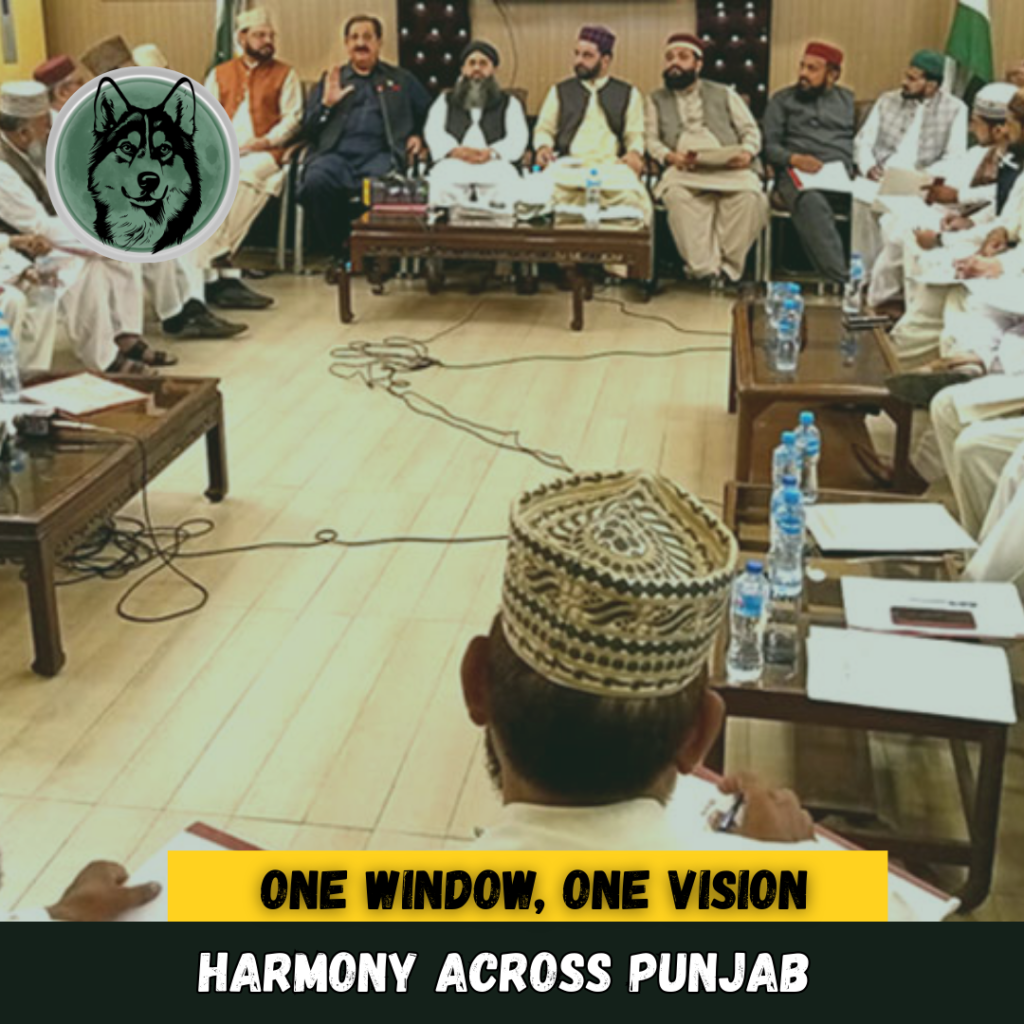
The Cabinet Committee on Law and Order (CCLO) led the initiative. Health Minister Khawaja Salman Rafique chaired the meetings. On Sunday, the committee held two sessions. One took place at Mansoora with Rabta-al-Madaris. The second occurred at the Home Department with Wafaq-al-Madaris Al-Salfia Pakistan.
Dialogue with Rabta-al-Madaris
At Mansoora, officials met senior religious leaders. Participants included Home Secretary Dr Ahmad Javed Qazi and Auqaf Secretary Ehsan Bhutta. They engaged Rabta-al-Madaris president Maulana Abdul Maalik, Naib Nazim-e-Aala Maulana Syed Qutab, and other representatives. They discussed the country’s law and order situation.
Government’s Message: Harmony and Peace
The CCLO chairman emphasized interfaith and intra-faith harmony. He said the Punjab government promotes unity to maintain peace across the province. He praised the role of ulema in stabilizing society. The home secretary highlighted the educational role of religious scholars. He said they guide people toward the true spirit of religion. Maulana Abdul Maalik welcomed the government’s efforts and supported the harmony agenda.
Meeting with Wafaq-al-Madaris Al-Salfia
At the Home Department, officials met Prof Muhammad Yasin Zafar, Secretary General and Nazim-e-Aala, along with the organisation’s Naib Emir. Mr Rafique discussed law and order. He stated that the government must protect lives and property. He acknowledged the ulema’s role in educating youth in both religious and worldly knowledge.
Policy in Progress: Seeking Ulema’s Input
Dr Qazi invited suggestions from religious scholars. He said the department wants to finalise a policy that promotes harmony and peace. The ulema pledged full support. They committed to peace, social welfare, and religious unity.
Critical Analysis
Social Impact
The one-window registration model can reduce mistrust between the state and religious institutions.
Standardisation may improve transparency and discourage misuse. However, success will depend on inclusivity. If authorities ignore smaller or less influential seminaries, the reform may deepen divisions rather than heal them.
Political Dimension
The initiative strengthens state oversight while projecting an image of engagement rather than coercion.
By consulting ulema, the government seeks legitimacy and stability. Yet political actors may also use this framework to manage dissent. Without safeguards, regulation could drift into control.
Economic Implications
Centralised data can improve resource allocation and curb unregulated funding. Clear registration may attract lawful donations and support welfare initiatives. At the same time, compliance costs could burden smaller seminaries. Policymakers must ensure that reform does not marginalize institutions that already operate on limited resources.
Overall Assessment
The policy reflects a pragmatic shift toward governance through partnership. Its long-term value will depend on transparency, fair enforcement, and continued dialogue. If implemented with trust, it can strengthen peace. If enforced rigidly, it risks resistance.