




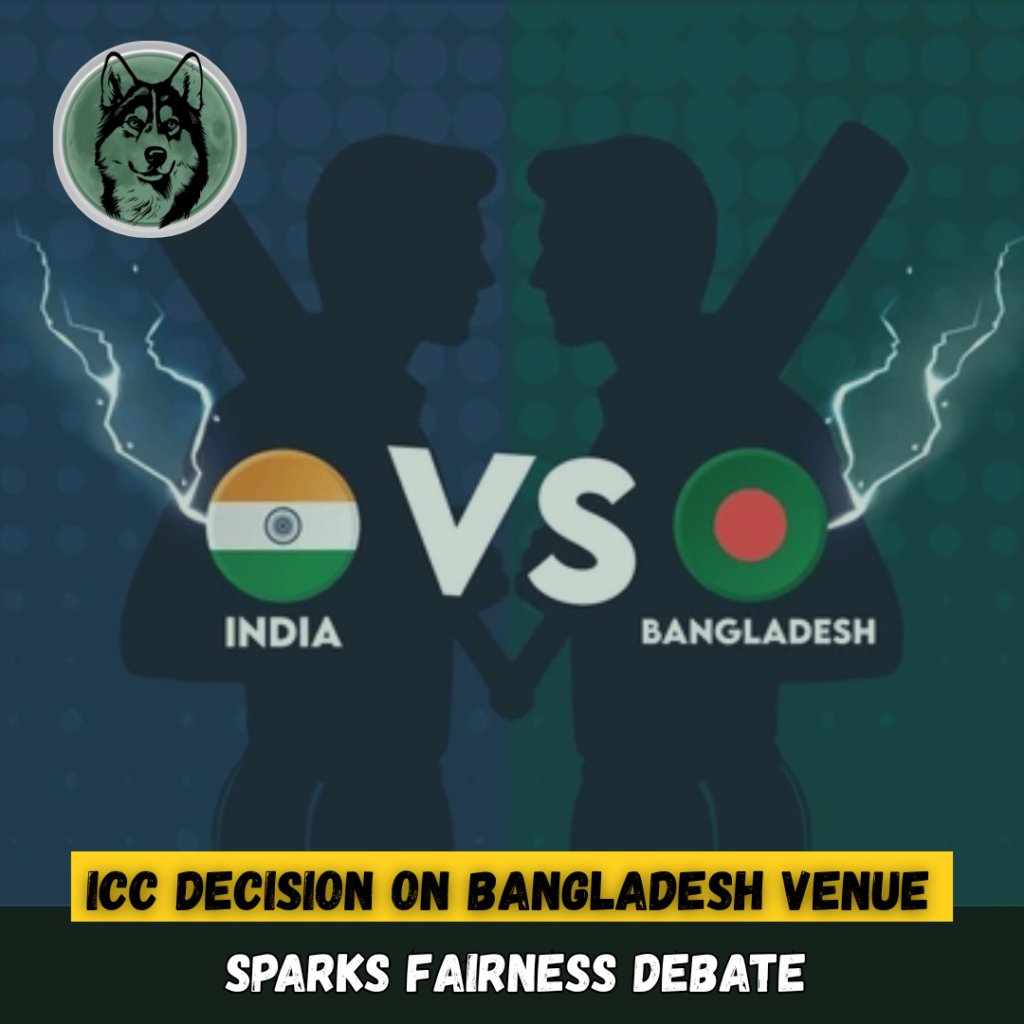
Bangladesh’s logistical and security concerns dismissed as ICC enforces original schedule
ICC Decision Sparks Fresh Controversy
The International Cricket Council (ICC) has once again found itself at the center of controversy after rejecting Bangladesh’s request to move their scheduled matches from India to Sri Lanka. The ruling has triggered widespread debate across the cricketing world, with fans, analysts, and former players questioning fairness, player comfort, and the balance of power in international cricket governance.
The decision means Bangladesh will be required to play all their fixtures in India as originally scheduled, despite raising concerns ahead of the tournament.
What Bangladesh Requested
The Bangladesh Cricket Board formally approached the ICC seeking a change of venue, proposing Sri Lanka as an alternative host instead of India.
According to sources familiar with the matter, Bangladesh cited several reasons for the request, including logistical challenges, player security and travel-related concerns, and a preference for a neutral venue amid sensitive regional cricket dynamics. Officials maintained that the request was administrative in nature and not intended as a political statement.
ICC’s Ruling: No Venue Change
The ICC rejected the appeal outright, making its position clear that the tournament schedule and venues were final and binding. The governing body emphasized that all participating teams are required to honor agreed playing conditions and that last-minute venue changes would not be entertained under any circumstances.
As a result, Bangladesh has effectively been compelled to play in India despite expressing reservations.
ICC’s Justification
From the ICC’s standpoint, altering venues at this stage could compromise tournament integrity and set a precedent that encourages similar demands from other teams. The council also maintained that India, as the host nation, has fulfilled all logistical, infrastructural, and security obligations required under ICC regulations.
However, critics argue that while the ICC strictly enforces rules for smaller boards, it has historically shown greater flexibility when influential cricketing nations are involved.
Reaction From Fans and Experts
The decision has drawn mixed reactions from across the cricketing community. Many fans believe Bangladesh’s concerns were legitimate and should have been accommodated. Others argue that international tournaments demand adaptability from visiting teams.
Several former players and analysts have suggested that the ruling highlights long-standing imbalances in global cricket administration. On social media, discussions around neutral venues and fair treatment have intensified, particularly among Bangladeshi supporters.
Impact on Bangladesh Cricket
For Bangladesh, the ruling adds another layer of pressure. Players will need to perform under conditions they were hoping to avoid, while media attention surrounding the issue could prove distracting. There is also concern that any on-field struggles may unfairly be attributed to the venue controversy rather than cricketing factors.
At the same time, the situation offers Bangladesh an opportunity to demonstrate resilience, professionalism, and competitive spirit on a major stage.
Questions Over ICC Neutrality
The episode has revived a familiar question within international cricket circles: is the ICC truly a neutral governing body, or do powerful boards continue to exert disproportionate influence?
While the ICC operates within contractual and regulatory frameworks, perceptions of imbalance can undermine trust in global cricket governance, a challenge the sport continues to face.
Conclusion
The ICC’s rejection of Bangladesh’s venue change request goes beyond scheduling logistics. It reflects deeper structural issues within international cricket and highlights the tension between regulation, influence, and fairness.
How Bangladesh responds on the field may ultimately shape the narrative, but the debate surrounding cricket diplomacy and governance is unlikely to fade anytime soon.