



Putin claims Europe is “on the side of war” and obstructing peace efforts
What Happened?
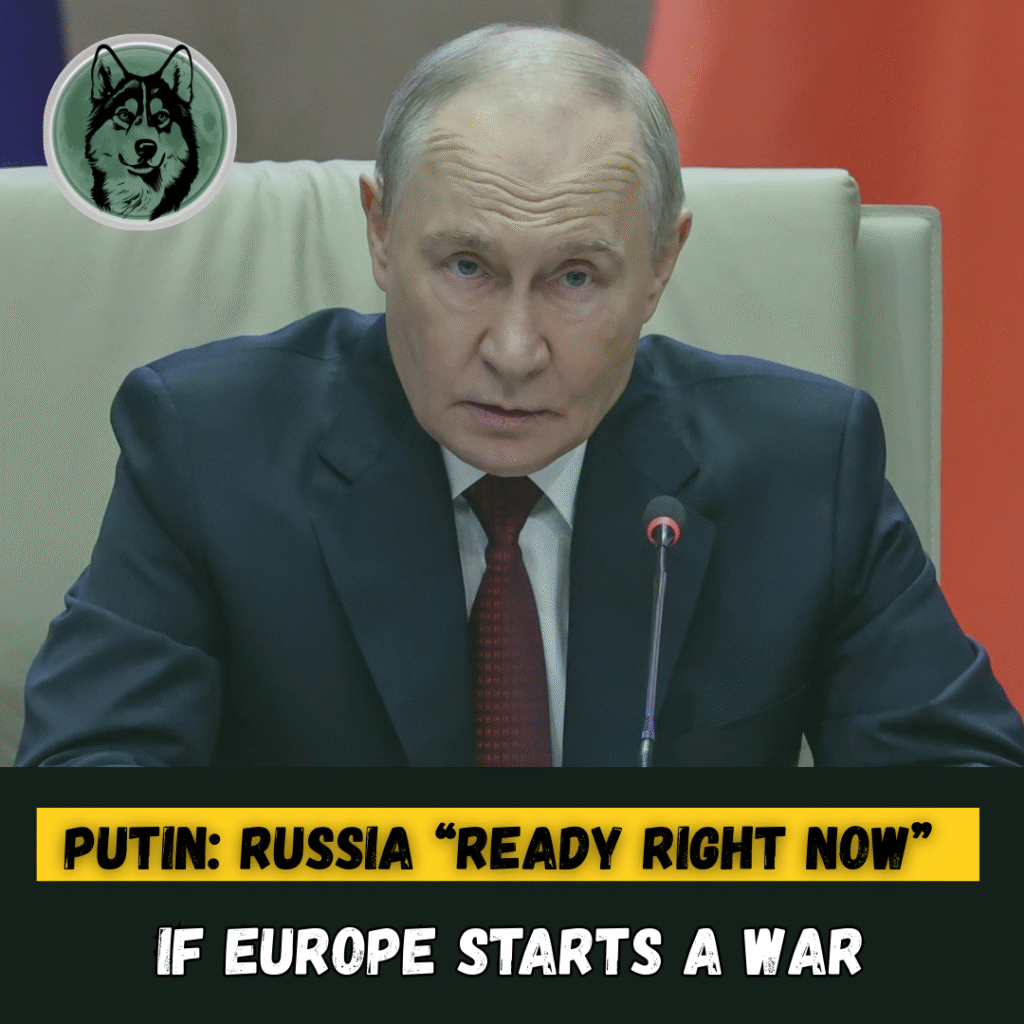
Russian President Vladimir Putin on Tuesday issued one of his most aggressive warnings yet to European powers, stating that if Europe initiates a war against Russia, the response would be so overwhelming that “there would be no one left to negotiate with.”
The remarks come four years into the war in Ukraine, the deadliest European conflict since World War II, where Russian forces have failed to subdue Kyiv despite extensive military campaigns.
Where Were These Comments Made?
Putin delivered the warning during a press briefing, responding to a question referencing remarks by Hungarian Foreign Minister Peter Szijjarto, who suggested that Europe is preparing itself for a potential war with Russia.
Why Did Putin Issue This Warning?
According to Putin, European powers are allegedly escalating their posture while simultaneously obstructing peace efforts particularly those he claims former U.S. President Donald Trump attempted to initiate.
He argued that European nations deliberately propose peace terms that Moscow cannot accept, only to blame Russia for the failure of negotiations.
How Did Putin Justify Russia’s Position?
Putin insisted that:
- Russia does not want a war with Europe.
- If Europe starts one, Russia is “ready right now.”
- The conflict in Ukraine is not a “full-scale war” but a limited “surgical operation.”
- A direct confrontation with European states would not follow this limited approach.
He further claimed that European nations have “locked themselves out” of any future peace talks by severing diplomatic channels with Moscow.
What Broader Threats Did Putin Make?
Putin also warned that Russia may cut off Ukraine’s access to the sea, citing recent drone attacks on Russia’s “shadow fleet” of tankers operating in the Black Sea.
This would significantly escalate the conflict by crippling Ukraine’s maritime and trade lifelines.
Putin’s rhetoric marks a notable escalation not just toward Ukraine but toward Europe at large.
The messaging appears designed for multiple audiences:
1. Europe
Putin’s framing of Europe as the potential aggressor serves to justify any future Russian military escalation. His claim that Europe would be “defeated swiftly” is both psychological warfare and an attempt to deter any increased NATO involvement.
2. Domestic Russian Audience
With the Ukraine war dragging on, strong rhetoric reinforces internal narratives of Western hostility and positions Russia as unshaken and militarily superior.
3. NATO and the U.S.
By portraying European nations as blocking former President Trump’s peace initiatives, Putin indirectly signals that negotiations might only be viable with Washington, not European capitals.
4. Ukraine
Threatening to cut off Ukrainian access to the Black Sea is a significant shift in tone, as such a move would dramatically escalate the conflict and risk direct confrontation with NATO maritime forces. Despite the threatening language, military analysts note that Russia remains heavily tied down in Ukraine, with large manpower and equipment losses. Putin’s aggressive tone may reflect strategic insecurity as much as confidence.