




Mustafa Kamal and MQM-London exchange sharp accusations after Shumaila Farooq’s death
The death of Shumaila Farooq, widow of slain Muttahida Qaumi Movement (MQM) leader Dr Imran Farooq, has reignited one of Karachi’s most bitter political feuds, with rival MQM factions accusing each other of responsibility for the killing that reshaped the party’s history.
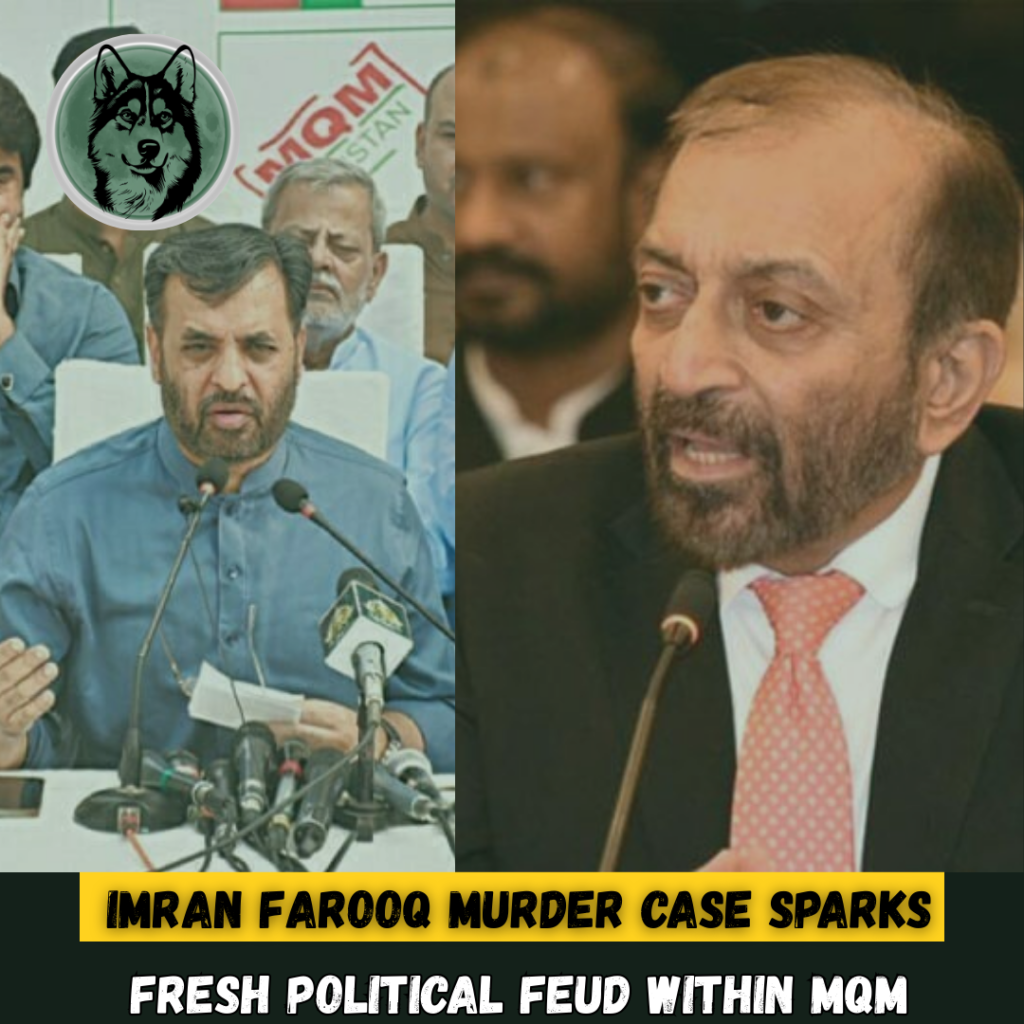
The fresh exchange of allegations began when MQM-Pakistan leader Mustafa Kamal, during a press conference in Karachi, accused MQM founder Altaf Hussain of ordering Dr Imran Farooq’s murder. Kamal alleged the killing was carried out as a “gift” on Altaf Hussain’s birthday, claims that immediately triggered a furious response from MQM-London.
Mustafa Kamal’s Allegations
Kamal described his former political leader as a “theatrical man” who thrives on spectacle and sees himself as a ruler. He accused Altaf Hussain of relying on foreign funding, destroying generations, and continuing to harm people even from exile.
Kamal further claimed that appeals for donations were made in connection with the killing and urged Dr Farooq’s children not to engage with the MQM founder. He said he had remained in contact with Dr Farooq’s widow and children, who were placed under Scotland Yard protection after the murder.
MQM-London Hits Back
Responding sharply, MQM-London Rabita Committee Convener Mustafa Azizabadi rejected Kamal’s claims, calling the press conference a shameful attempt to exploit a grieving family for political gain.
Azizabadi demanded concrete evidence linking Altaf Hussain to the murder, saying Kamal should present proof if his allegations were genuine. He went further, accusing Kamal himself of bearing responsibility for Dr Imran Farooq’s killing and questioned his credibility.
He also claimed that Kamal had fallen out of favour within MQM-Pakistan’s Bahadurabad group, alleging that Kamal only speaks when “his masters pull the strings.” Azizabadi accused him of pursuing an agenda aimed at erasing MQM’s Mohajir identity.
Afaq Ahmed Joins the Controversy
The controversy widened when MQM faction chief Afaq Ahmed also criticised Mustafa Kamal, questioning the motive behind what he described as a sudden and calculated press conference.
“On whose instructions were you compelled to use such harsh language against your former spiritual father?” Afaq asked, while also questioning Kamal’s whereabouts on the day Dr Imran Farooq was murdered.
Political Signals from Bahadurabad
In a development that further exposed internal fractures, Mustafa Kamal unexpectedly arrived at MQM-Pakistan’s Bahadurabad headquarters after months of absence. However, he was not welcomed by any party leader or worker.
MQM sources indicated that the party leadership was aware of Kamal’s planned press conference but deliberately chose to distance itself, reflecting deep unease within the organisation.
The Murder That Still Haunts MQM
Dr Imran Farooq, one of MQM’s founding members and its chief ideological architect, was murdered on September 16, 2010, outside his London home. He was attacked with knives and a brick after returning from work, in a killing that drew international attention.
Having moved to London in 1999 following a security operation against MQM, Dr Farooq remained an influential figure within the party until his death.
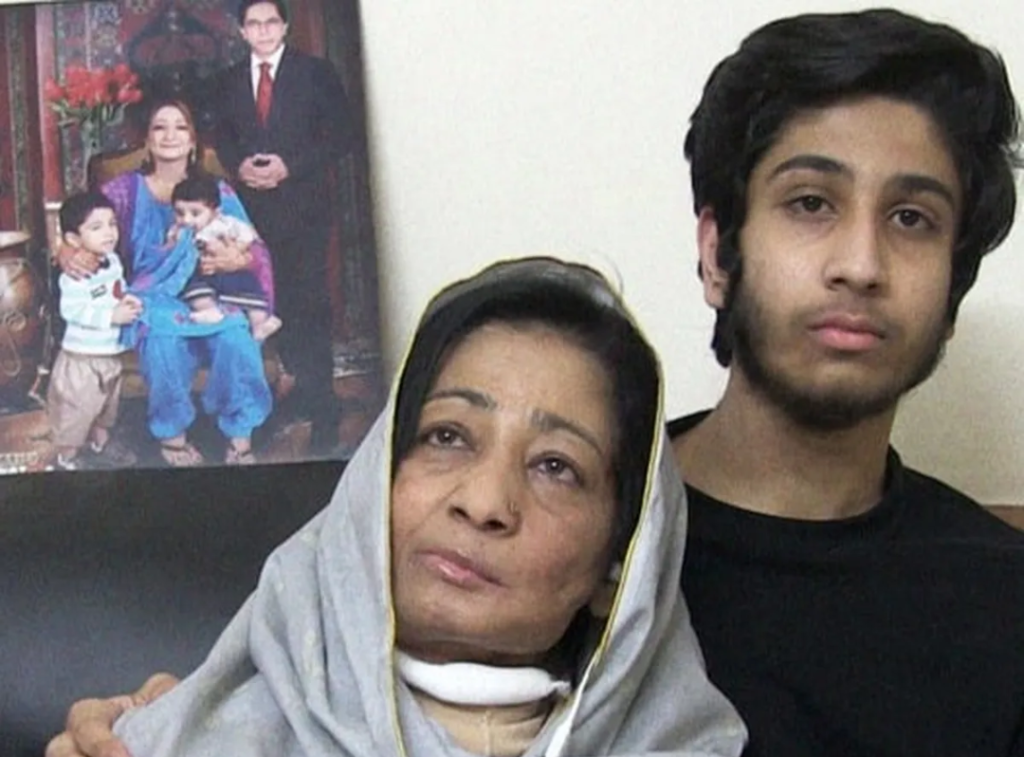
His wife, Shumaila Farooq, passed away in London on December 19 after battling throat cancer. Her body was later brought to Karachi for burial.
Trial and Convictions
In 2020, an anti-terrorism court in Islamabad convicted three MQM members—Khalid Shamim, Mohsin Ali and Moazzam Ali—for Dr Farooq’s murder, sentencing them to life imprisonment and imposing fines of Rs1 million each.
British authorities shared evidence with Pakistan after receiving assurances that the death penalty would not be applied. The court also ordered the seizure of property belonging to four absconding suspects. Subsequent investigations pointed to political motives behind the killing.
A Party Unable to Escape Its Past
The renewed blame game highlights MQM’s enduring inability to resolve its most defining tragedy. While courts have delivered verdicts, political accountability remains contested, allowing factions to weaponise the murder for internal power struggles.
Rather than bringing closure, Dr Imran Farooq’s killing has become a recurring fault line revived whenever leadership legitimacy is questioned. The public exchange of accusations reflects not only deep mistrust but also a broader crisis of moral authority within MQM’s fractured structure.
Until the party collectively confronts its violent legacy with honesty and accountability, the shadow of this murder will continue to limit its political revival.
Conclusion
More than a decade after Dr Imran Farooq’s assassination, the case still divides MQM and fuels bitter political rivalries. The latest war of words suggests that for MQM, the past is not history, it is an unresolved battle that continues to shape its present.
True closure will require more than accusations; it will demand truth, responsibility and reconciliation.