

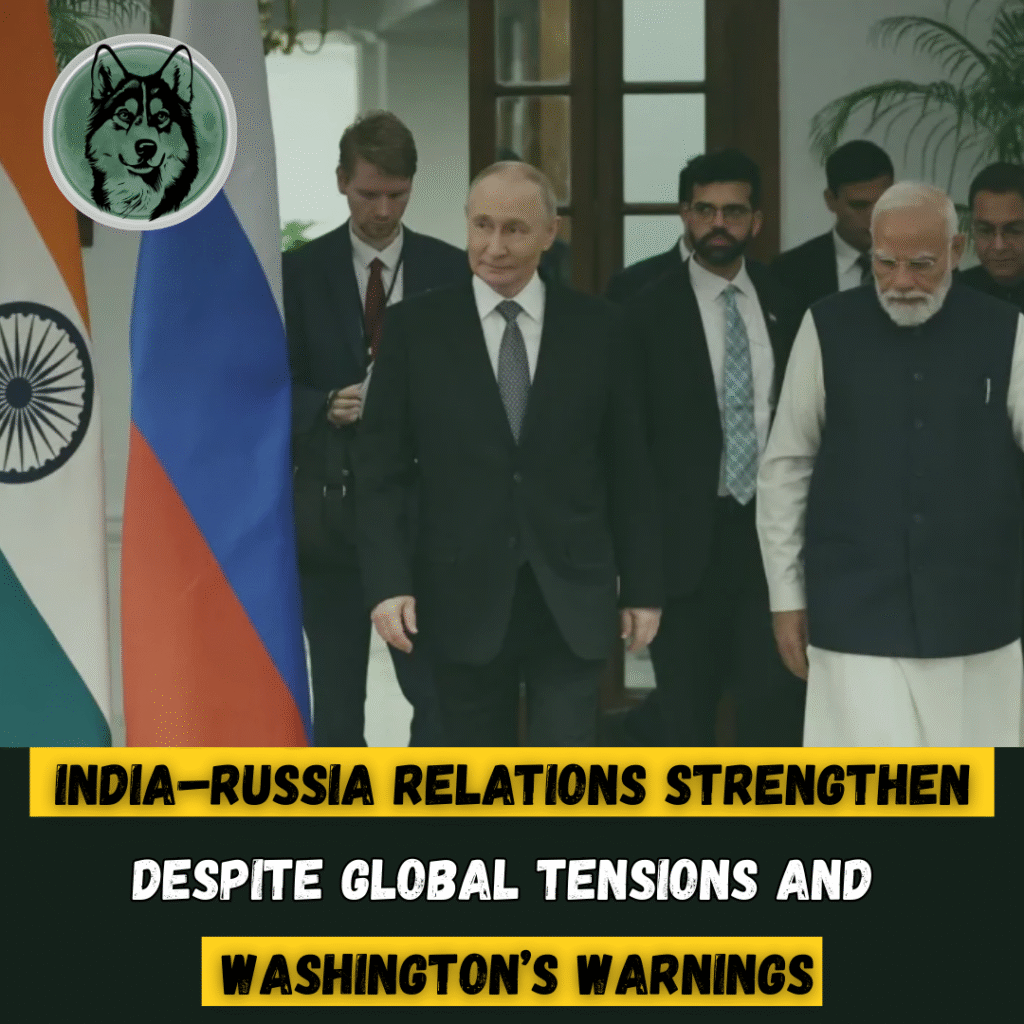
India walks a strategic tightrope, weighing US sanctions against Russian oil incentives.
Putin, Modi Commit to Expanding India–Russia Trade Amid Competing Global Pressures
NEW DELHI: Russian President Vladimir Putin and Indian Prime Minister Narendra Modi agreed on Friday to intensify trade, defence cooperation, and long-term economic collaboration as Moscow seeks a greater flow of Indian goods to help boost bilateral trade to $100 billion by 2030.
Putin, on his first visit to India since the Ukraine war began in 2022, offered New Delhi “uninterrupted fuel supplies” a proposal that India acknowledged carefully against the backdrop of increasing US sanctions and tariff-related pressure.
Russia Pushes for Deeper Trade Ties
Russia said it wants to significantly expand imports from India, aiming to bring trade to a more “balanced and diversified” level.
Putin emphasized Russia’s readiness to maintain reliable fuel shipments, subtly questioning US attempts to discourage India from buying discounted Russian crude.
India, however, signaled caution. Foreign Secretary Vikram Misri stressed that energy companies make decisions based on “commercial realities and market dynamics,” hinting at the challenges posed by sanctions, pricing fluctuations, and geopolitical scrutiny.
Indian refiners, including IOC and BPCL, have reportedly placed new orders only from non-sanctioned Russian suppliers, according to Reuters.
India Caught Between Washington and Moscow
While India remains one of Russia’s top defence customers and a major buyer of seaborne oil, it is also negotiating a trade deal with the United States aimed at reducing tariffs imposed during the Trump administration over India’s continued purchases of Russian crude.
US Deputy Trade Representative Rick Switzer is expected in New Delhi next week, underscoring Washington’s persistent attempt to shape India’s buying patterns.
Analysts say India is pursuing a strategic balancing act, leveraging relations with both powers without allowing either to dominate its foreign or energy policy.
Modi Calls Relationship a “Guiding Star”
Modi described India–Russia ties as a relationship built on “deep trust” that has “withstood global turbulence.”
He announced a new economic cooperation framework extending to 2030, covering investment, trade diversification, agriculture, healthcare, shipping, and the movement of Indian workers to Russia.
Putin was welcomed with full state ceremony, including a 21-gun salute at Rashtrapati Bhavan, signaling India’s commitment to preserving long-standing ties despite Western discomfort.
Defence Cooperation Shifts Toward Self-Reliance
Both leaders agreed to modernize their defence partnership to align with India’s “Atmanirbhar Bharat” (self-reliance) strategy.
Plans include:
- Joint R&D
- Localised production of spare parts
- Co-manufacturing advanced systems
- Long-term support for Russian-origin equipment in Indian service
This shift reflects India’s desire to reduce external dependence while maintaining access to the Russian defence ecosystem.
Putin Takes Aim at Washington
In a televised interview, Putin challenged US pressure on India, arguing that if Washington can purchase Russian nuclear fuel, New Delhi should have the same freedom.
India has called Trump-era tariffs “unreasonable,” noting that the US and EU continue importing billions of dollars in Russian commodities despite sanctions.
India’s strategy illustrates a carefully calibrated foreign policy:
- New Delhi sees value in Russian energy discounts, defence supply chains, and long-standing diplomatic trust.
- At the same time, the threat of US secondary sanctions and tariff retaliation forces India to tread cautiously in public messaging.
- Russia’s push to import more Indian goods is an attempt to correct an overwhelmingly Russia-favoured trade imbalance, raising questions about whether India’s export capacity can meet Moscow’s expectations.
- Analysts say India’s “multi-alignment” approach allows it to remain one of the few major powers engaging both rivals — but this balance is becoming increasingly difficult as global polarization deepens.
What happened?
Putin and Modi agreed to expand India–Russia trade and defence cooperation while Russia offered guaranteed fuel supplies.
Why does it matter?
The agreements come at a time when India faces conflicting pressures from Russia and the United States, making its foreign policy choices more delicate.
Where did it take place?
The discussions occurred in New Delhi during Putin’s two-day state visit.
How will it affect India?
India must weigh the economic benefits of cheap Russian oil against the risk of US sanctions and geopolitical consequences.