




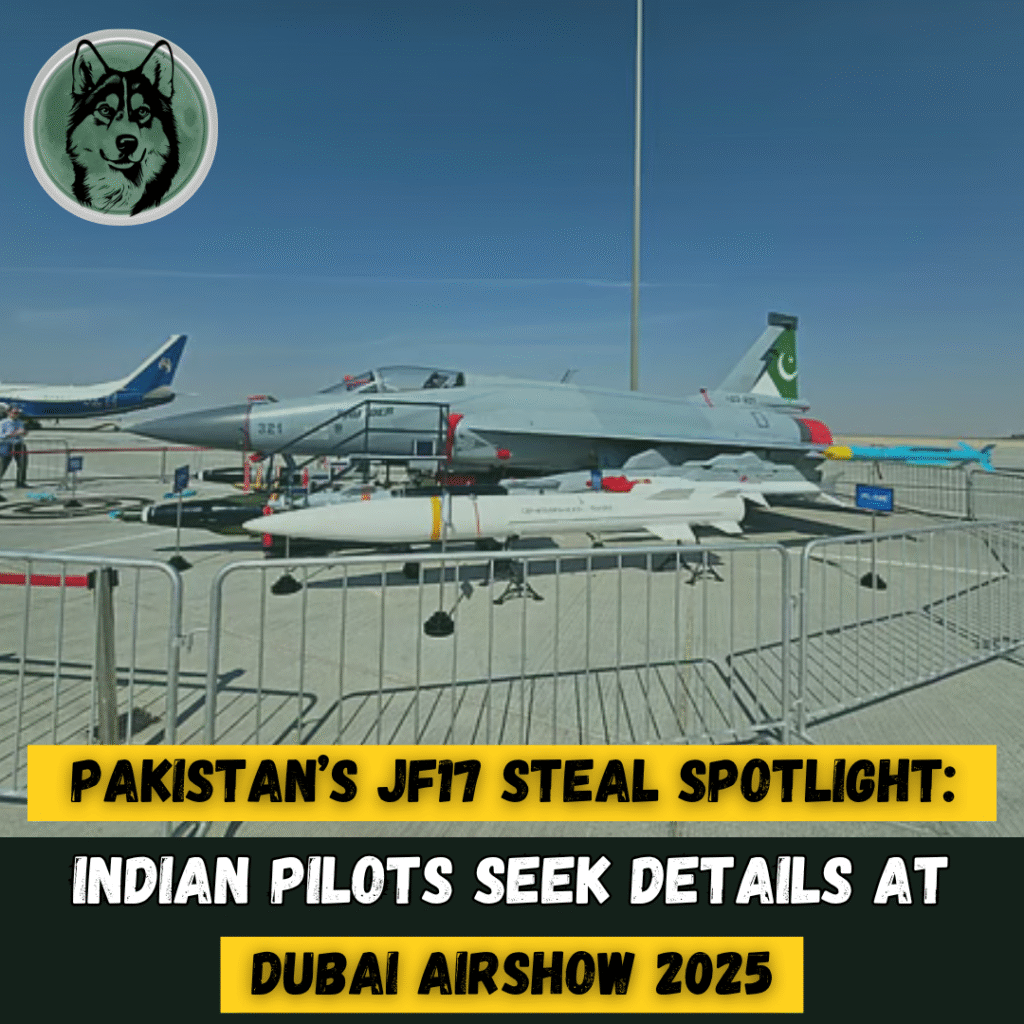
IAF officers ask technical questions, take selfies as JF-17 garners widespread international interest
JF-17 Thunder Steals the Show at Dubai Airshow 2025
Pakistan’s locally produced fighter jet, the JF-17 Thunder, emerged as one of the most talked-about aircraft at the Dubai Airshow 2025, drawing attention not only from international defence delegations but also from officials of the Indian Air Force (IAF).
The Pakistan Air Force (PAF) pavilion reportedly attracted heavy footfall, with the JF-17 standing out as a crowd favourite.
Indian Pilots Visit PAF Pavilion, Seek Technical Details
According to viral images and eyewitness accounts circulating on social media, several IAF pilots and officers visited the PAF display area.
They were seen closely inspecting the JF-17, asking technical questions regarding its performance, avionics, and capabilities.
Eyewitnesses claimed that Indian officers even took selfies with the aircraft, a gesture that generated significant discussion online and highlighted the jet’s rising international appeal.
Growing International Interest in the JF-17
The JF-17 Thunder, jointly developed by Pakistan and China, has progressively gained global attention due to its affordability, modern avionics, multirole capability, and combat-proven performance.
Alongside the buzz at the Dubai Airshow, Pakistan’s defence manufacturing sector has gained further momentum following reports that Azerbaijan will soon receive its first batch of JF-17 fighters.
Officials have indicated that both countries are exploring possibilities of joint production, a move that could strengthen defence and industrial cooperation.
Azerbaijan’s Investment and Bilateral Defence Expansion
Recent statements from Pakistani officials confirm that Azerbaijan’s President Ilham Aliyev has expressed a firm interest in expanding defence ties with Pakistan.
Aliyev has reportedly pledged $2 billion in investments, with agreements expected to finalize during his upcoming visit to Islamabad in April.
Discussions are said to be in the final stages, signaling a potentially transformative partnership for Pakistan’s defence sector.
Why This Happened
1. Rising Credibility of the JF-17
The aircraft’s deployment in real operations by Pakistan and other countries has enhanced its credibility in global defence markets.
2. Regional Curiosity and Competition
Given the strategic rivalry in South Asia, Indian defence officials examining the JF-17 reflects both professional curiosity and competitive assessment.
3. Increasing Global Defence Visibility
Events like the Dubai Airshow serve as international showcases where emerging aircraft platforms compete for attention. The JF-17’s strong performance, modern upgrades, and cost-efficiency make it attractive to many mid-budget defence buyers.
How This Can Affect Pakistan
1. Boost to Pakistan’s Defence Exports
Growing interest from countries like Azerbaijan may open new avenues for defence revenue and long-term partnerships.
2. Enhanced Global Image
The JF-17 receiving attention from even rival-state officials strengthens Pakistan’s image as a capable defence producer.
3. Strengthened Diplomatic Ties
Defence cooperation with Azerbaijan and other nations can lead to deeper political, economic, and strategic partnerships.
4. Increased Competition with Regional Rivals
Indian scrutiny of the aircraft signals that the JF-17 is now perceived as a meaningful competitor to India’s fighter fleet, adding a new dimension to regional airpower assessments.