

US president warns of action if protesters are harmed
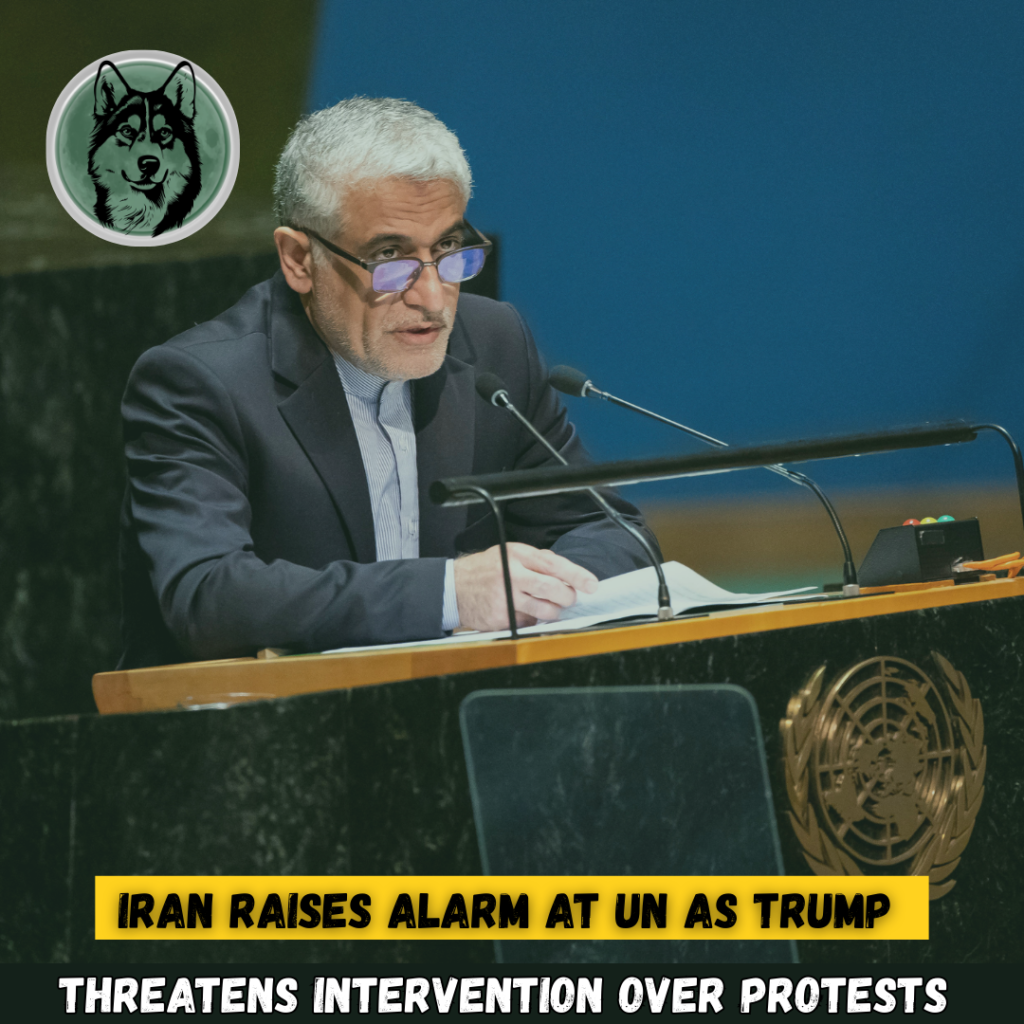
Iran has formally approached the United Nations, seeking an international response to what it described as “reckless” threats by former US President Donald Trump, after he warned that the United States could intervene if protesters in Iran were violently suppressed.
Iran’s Ambassador to the UN, Amir Saeed Iravani, sent urgent letters to UN Secretary-General António Guterres and the President of the UN Security Council, calling for condemnation of Trump’s statements. The letters, released by Iran’s state news agency IRNA, said the remarks amounted to a “serious violation” of the UN Charter and international law.
Iran Warns Against External Interference
In the letter, Iravani stressed that “any attempt to incite, encourage or legitimise internal unrest as a pretext for external pressure or military intervention is a gross violation of the sovereignty, political independence, and territorial integrity of the Islamic Republic of Iran.”
He reaffirmed Iran’s right to defend its sovereignty, warning that the country would respond “in a decisive and proportionate manner” if its national security was threatened.
Trump’s Warning Sparks Diplomatic Reaction
Trump’s comments were posted on his social media platform, Truth Social, where he said the US was “locked and loaded and ready to go” if Iran “violently kills peaceful protesters.” His remarks came amid ongoing demonstrations across several Iranian cities over rising prices and economic stagnation.
Protests have been reported in Tehran, Qom, Mashhad, and Hamedan, with authorities confirming at least nine deaths and 44 arrests. In Qom, officials said one individual died after a grenade exploded in his hand, claiming it was an attempt to incite unrest.
Mixed Signals From Iranian Leadership
Iranian officials have issued varying responses to the unrest and external pressure. Ali Larijani, secretary of Iran’s Supreme National Security Council, warned that any US interference could lead to “chaos across the entire region” and the destruction of American interests.
In contrast, President Masoud Pezeshkian struck a more conciliatory tone, acknowledging government shortcomings and pledging to address public grievances. Analysts noted that this approach marks a departure from Tehran’s traditionally hardline responses to domestic protests.
Heightened Regional Tensions
The diplomatic standoff unfolds against the backdrop of already heightened tensions following a June US bombing of Iranian nuclear sites, which Trump previously described as a “very successful attack.” More recently, he also warned Israel that the US would respond forcefully if Iran advanced its nuclear or ballistic missile programmes.
As protests continue and strikes by shopkeepers in Tehran add to the pressure, regional and international observers remain concerned about the potential for further escalation.