


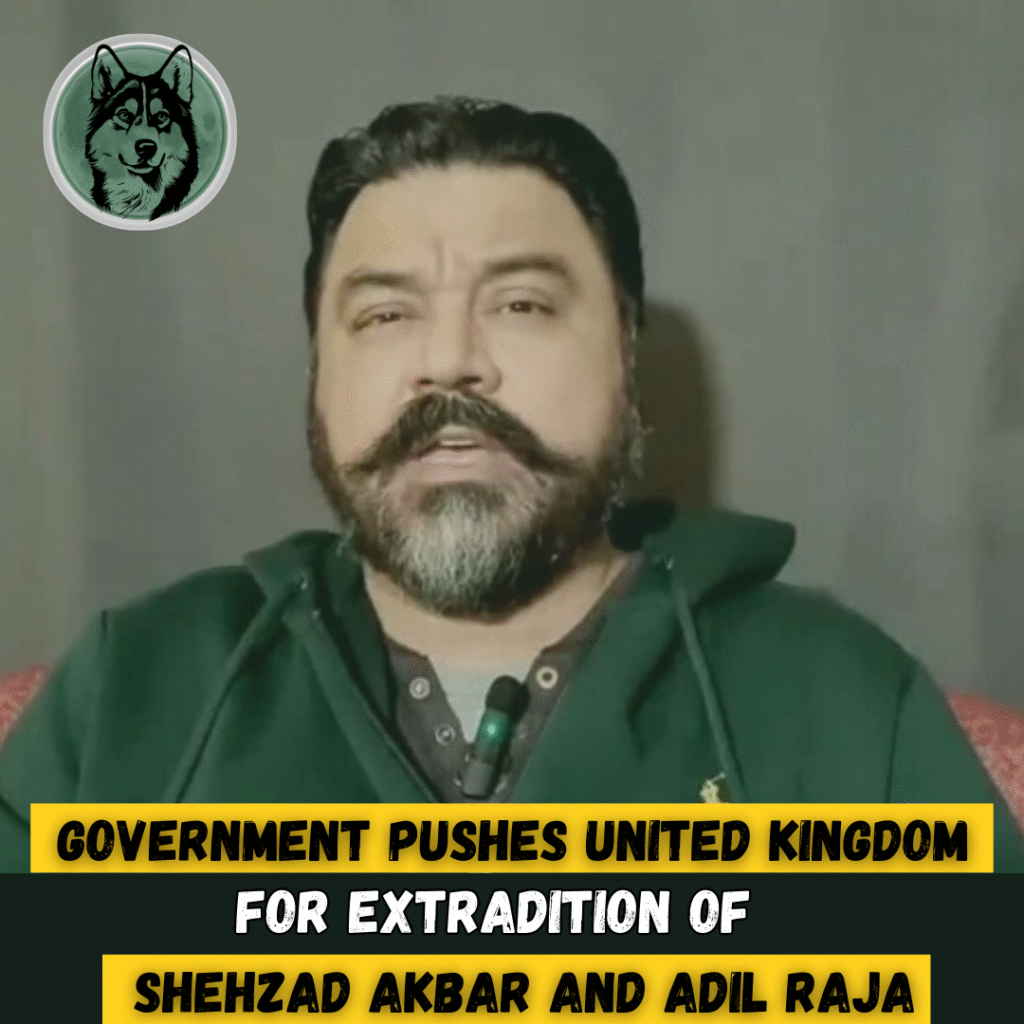
Interior Minister Mohsin Naqvi says both individuals are wanted and must be returned
Pakistan submits extradition requests for Shehzad Akbar and Adil Raja to the United Kingdom
Pakistan has formally submitted extradition documents for Shehzad Akbar and Adil Raja to the British High Commissioner in Islamabad, urging their immediate return to face legal proceedings at home. Interior Minister Mohsin Naqvi said both individuals are officially wanted in Pakistan and should be handed over without delay.
Akbar, a central figure of the Pakistan Tehreek e Insaf and former advisor to incarcerated former Prime Minister Imran Khan, has been named in multiple inquiries. Raja, a YouTuber and retired Pakistan Army Major, is accused by the State of spreading anti Pakistan propaganda from abroad.
High level meeting between Pakistan and United Kingdom
The extradition request was conveyed during an important meeting between Interior Minister Mohsin Naqvi and British High Commissioner Jane Marriott. The session covered Pakistan United Kingdom relations, security cooperation, and other bilateral matters.
Officials confirmed that the Ministry of Interior has initiated the legal process through the Ministry of Foreign Affairs, marking one of the most assertive steps taken in the government’s ongoing push against overseas based commentators accused of targeting national institutions.
Government presents evidence of alleged propaganda
Naqvi briefed the British delegation about the activities of Pakistani citizens abroad who, according to the government, regularly disseminate fake news and defamatory content against state institutions.
“I fully support freedom of expression, but fake news is a challenge for every country,” Naqvi said. “No country allows its citizens to malign or defame the state and its institutions from abroad.”
He said that substantial evidence had been provided to the British side, and that cooperation was expected under international legal frameworks.
Senior officials including Federal Secretary Interior Muhammad Khurram Agha were present during the meeting.
Why this matters for Pakistan and its diaspora
The move reflects the government’s stronger stance on digital regulation and its growing intolerance for what it labels as foreign based anti state activity. It also raises questions about how nations balance free expression with national security, especially when political commentary originates from abroad.
If the United Kingdom responds positively, the decision could set a major precedent for future extradition requests involving politically exposed individuals and digital influencers operating outside Pakistan’s jurisdiction. Conversely, any rejection or delay may widen diplomatic debate over the limits of speech, political asylum protection, and the credibility of evidence submitted by states.